Writing Interzone
Follow words between books, screenplay records, typed pages and the rooms where Bill works.

The machine has instructions.
The writer has a body.
Enter Interzone through its writing machines, fabricated creatures, drawings and documents. Follow the work beneath a hallucination, compare a surviving prop with its screen appearance, and trace the film into campaign art and music editions.
Follow words between books, screenplay records, typed pages and the rooms where Bill works.
Follow a designed body through fabrication, operation, performance and its surviving material record.
Connect acting and clothing with light, cuts, voices, sound effects and the Shore–Coleman collaboration.
Browse all 19 collections ↓ · 18 visual studies · 47 object records
Find a person, passage, creature, drawing, object or source. Choose a result to open its collection and detailed record.
Collections explain the research; visual studies compare selected images; object records identify individual drawings, props, photographs and editions. Source labels identify the evidence behind each account.
Bill Lee makes his living killing insects. Once his typewriter begins giving orders, writing becomes another kind of assignment: report, confess, obey, keep producing. Naked Lunch turns the act of composition into a material world of machines, bodies, employers and contraband.
Cronenberg’s screenplay combines Burroughs’s fictional world with episodes associated with the writer’s life. Peter Weller’s Bill Lee is the film’s constructed protagonist. The two Joans, the talking machines and the return to a fatal shooting form a drama about writing and repetition; they do not make the film a literal biographical record.
Sources: Criterion: Naked Lunch · Gary Indiana: The Naked Lunch Report · Lynn Snowden: Burroughs and CronenbergIn the joint Esquire interview, Burroughs and Cronenberg discussed the film as the meeting of their work. That is a useful point of entry. The film does not merely illustrate a difficult book: it invents a procedure for imagining how such a book might be written. A page leaving the machine is both literary work and evidence submitted to an unstable authority.
Rodley traces Cronenberg’s longstanding interest in Burroughs alongside Nabokov. The affinity predates this adaptation. From the disembodied professional speech of the early films to the transformations of Videodrome and The Fly, Cronenberg repeatedly gives an idea a physical instrument through which it can act.
Sources: Chris Rodley: So Deep in My Heart…In his separate essay for Everything Is Permitted, Gary Indiana reads addiction as a model of social control as well as bodily dependence. That interpretation makes the film’s reports, diagnoses and instructions politically suggestive: the writer’s predicament concerns who can organize his experience and demand an account of it.
Sources: Gary Indiana: BurroughsBurroughs told Kimber that he and Cronenberg agreed against a cameo: his recognizable presence would disrupt the invented world. His absence from the cast and his presence in the workshop photographs therefore belong together. The film transforms an author into Bill Lee while the production archive preserves the author as a visitor.
Sources: Gary Kimber: William S. Burroughs, Possessed by Genius · Ira Silverberg, editor: Everything Is PermittedBack to collections ↑The adaptation brings together Burroughs scholarship, published excerpts, screenplay records and photographs from Everything Is Permitted.
Burroughs supplies more than the title and a set of creatures. Sentences travel between books, mouths and the page inside the machine. Cronenberg told the Pinewood audience that his permissions extended to Queer, Interzone and Exterminator!. The resulting film can draw a workplace from one text and a routine from another, then give them a new dramatic relationship.
Sources: Cronenberg: the 1992 Pinewood DialogueChristophe Becker’s textual comparison identifies these borrowings. His map makes the adaptation’s range concrete: a single title on the poster covers material drawn from several books.
Scroll sideways to read all columns. Keyboard: focus the table, then use the arrow keys.
| Material in the film | Literary connection identified by Becker | Locator in his study |
|---|---|---|
| The talking-asshole routine | Naked Lunch: a spoken performance about a body part taking control. | p.17; he cites Grove Press, pp.66–67. |
| The recollection beginning “I shall never forget” | Queer: a comic-grotesque declaration of sexual identity. | p.17. |
| The exterminator’s preference between two treatments | Exterminator!: professional work becomes the language of the opening. | p.17, note 45, which prints the corresponding prose. |
| The dealer’s refusal to supply drugs | Interzone: a short exchange reused within the film’s drug economy. | p.17, note 46, which supplies the prose context. |
In Burroughs’s routine, a novelty act becomes an autonomous speaker and appetite. The performer loses command of his body; his ordinary mouth closes, while the new organ keeps the eyes it still needs. Authority migrates within the same anatomy.
Sources: William S. Burroughs: the talking-asshole routineRead beside the Clark-Nova’s speaking body, the routine offers a way to understand the adaptation’s machinery. An instrument acquires a voice, then starts directing the person who expected to use it. This is a thematic correspondence between text and design; the film’s insect typewriters also have their own documented development in the effects workshop.
Sources: Jody Duncan: Borrowed Flesh · Naked Lunch: frame collection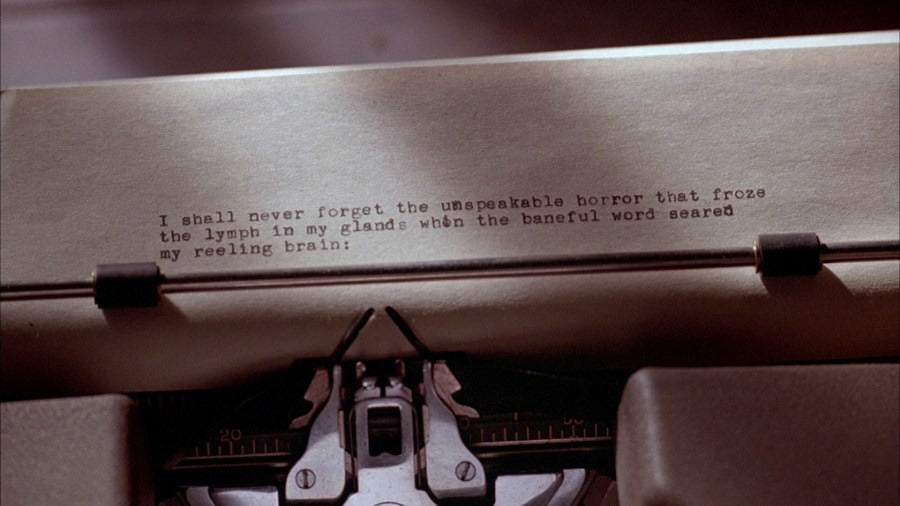
The typed sheet carries the opening words of the passage Becker associates with Queer. Recognizing the language changes the image: it is a literary fragment being made into an object within the fiction. The visible colon suspends the declaration at the point where the text promises to name its horror. The roller and type guide place that suspension inside an ordinary writing action.
Sources: Christophe Becker: Burroughs as Ur-text · Criterion Forum: 2013 Blu-ray frame gallerySilverberg says the routine was written for Queer and first published in Naked Lunch. Grove dates the writing of Queer to 1952 and its publication to 1985.
Sources: Ira Silverberg: a routine across two adaptations · Grove Press: Queer and its publication historyGrove’s displayed opening of Naked Lunch: The Restored Text begins with flight through New York’s subway and a narrator turning an encounter into performance. The prose is already staging an audience and a speaker. The film’s writing rooms make that relationship physical: another person, a machine or an institution can become the audience to whom Bill must account for himself.
Sources: Grove Press: Naked Lunch, The Restored TextThe restored edition credits James Grauerholz and Barry Miles and includes editorial corrections and manuscript variants. Its pagination is therefore a different reference from the older Grove edition cited by Becker. A book’s edition, a screenplay’s draft and a film’s transfer each identify a particular state of the work. Keeping them distinct makes the connections more useful.
Sources: Grove Press: Naked Lunch, The Restored TextContinue through the two-page visual comparison, the history of revised objects and earlier adaptations, and the separate work of voice, sound and music.
In the same set interview, Cronenberg describes asking Burroughs about borrowing from Exterminator, Queer and Interzone. He understood the author’s answer as permission to treat the writing as a continuous body of work. This gives the film’s movement between books an explicit basis in their conversations.
Sources: Michael Rowe: David Cronenberg Gets NakedJeremy Thomas recalled travelling to Tangier with Burroughs, Cronenberg and James Grauerholz while the project was taking shape. The visit gave the filmmakers a concrete place to study. The finished film was nevertheless shot in Toronto: Thomas is explicit that no Tangier footage was used.
Sources: Jeremy Thomas interviewed by Ian SchultzThe chronology survives in different kinds of record. A creator’s recollection describes how a project felt; a dated draft fixes one stage of its writing. Keeping those records together reveals a development process without treating every later account as a production diary.
Scroll sideways to read all columns. Keyboard: focus the table, then use the arrow keys.
| Stage | Documented trace |
|---|---|
| 1984–1989 | Duncan’s contemporary production account places Cronenberg’s meeting with Burroughs in 1984 and sustained screenplay work in 1989. |
| Early first draft, catalogued 2/12/90 | Script City R0542 identifies an early first draft under this numeric date. It is a dealer description, distinct from the account of writing in 1989. |
| 5 March 1990 | NYU lists a second draft in MSS.110, Box 46, Folder 29. Script City A1704 separately lists 3/5/90 2ND. |
| 20 January 1991 | A separately catalogued fifth-draft copy carries this date; WalterFilm records 95 pages. |
| 1991 | The same collection separately lists a shooting script, Folder 35, and a fifth draft, Folder 36. |
| Toronto production | Thomas’s recollection and Indiana’s contemporary set visit place the constructed Interzone in Toronto. |
Tim Lucas describes an earlier, unproduced route. In his retrospective interview with Jonathan Monovich, he recalls writing two drafts over a year while Cronenberg was occupied with Total Recall, corresponding with Burroughs and Grauerholz. Lucas drew on Junkie, Queer and the William Tell incident. He says Cronenberg found the work useful in clarifying his own approach but did not want to make that screenplay. Lucas distinguishes his attempt from the completed film’s script and says he had no writing contract. Cronenberg remains the film’s credited screenwriter.
Sources: Tim Lucas: an earlier screenplay route · Criterion: Naked LunchAt the January 1992 Pinewood Dialogue, Cronenberg recalled beginning the screenplay on a Toshiba 1200 while travelling to act in Nightbreed. He also identified permissions to draw on Queer, Interzone and Exterminator! alongside the title novel.
Sources: Cronenberg: the 1992 Pinewood DialogueTIFF identifies Recorded Picture Co. and Naked Lunch Productions Ltd. as the production companies. These belong to the film’s business history, separate from the fictional Interzone Incorporated.
Sources: TIFF: Canadian Film EncyclopediaCronenberg described an independently produced film distributed in the United States by Fox. He credited video presales with helping make the financing possible.
Sources: Cronenberg: the 1992 Pinewood DialogueA first-draft label records a version’s identity, not necessarily the day writing began. The dealer’s early-1990 label and the contemporary account of work in 1989 answer different questions. Likewise, NYU’s shooting-script and fifth-draft entries remain separately described archival items; their relation becomes a textual question when the pages are compared.
Sources: First draft: the early 1990 listing · NYU Fales: Ira Silverberg Papers · Jody Duncan: Borrowed FleshThe draft sequence belongs alongside the production’s changing geography. A dated screenplay, a planned location and a finished set each fix a different stage in the making of Interzone.
Palmer’s contemporary set report records how readily a doorway joined the Toronto warehouse’s Tangier and New York streets. Cronenberg told him the Morocco cancellation prompted a rewrite in less than a day. He welcomed the concentration on an invented Interzone over a travelogue.
Sources: Robert Palmer: The Novelist, the Director, and the MugwumpsCronenberg told Kimber that financing delays extended the preparation period. CWI sent videotaped effects tests to Toronto; telephone discussions let him request changes before filming. Delay became rehearsal time for the creatures.
Sources: Gary Kimber: Cronenberg / Naked LunchBack to collections ↑Several different histories converge in Naked Lunch: attempts to adapt the book, revisions to Cronenberg’s production and choices made while giving a creature its working body. Following those histories separately makes the finished film’s inventions more precise.
In The Third Mind (1978), Gysin introduces a published excerpt from the proposed adaptation associated with Antony Balch. Benway operates in a lavatory, changes into bullfighter’s clothes to music from Carmen, then joins his baboon assistant Violet in a nightclub number. William Lee observes and challenges him. Stage directions and songs make the musical conception concrete.
Sources: Brion Gysin: the earlier Benway scenarioBurroughs later described Gysin’s approach as burlesque musical comedy, contrasting it with Cronenberg’s effects-driven film. The published passage supplies a useful companion to that recollection: Benway’s authority is already theatrical, but its form is overt song and performance.
Sources: Gary Kimber: William S. Burroughs, Possessed by Genius · Brion Gysin: the earlier Benway scenarioIn Cronenberg’s film, the doctor’s office and Fadela disguise distribute that authority across consultation, concealment and revelation. Comparing these forms reveals different uses of the same character; the earlier scenario is a separate adaptation, not a deleted sequence from the 1991 film.
Sources: Naked Lunch: frame collection · Cinefantastique: production and effectsScroll sideways to read all columns. Keyboard: focus the table, then use the arrow keys.
| Record | Stage | The change and its consequence |
|---|---|---|
| Gysin’s Benway sequence | Published excerpt of an unproduced adaptation | Surgical farce becomes a musical performance. Its surviving text preserves an earlier route through the book, independent of Cronenberg’s shooting script. |
| Tim Lucas’s two drafts | Unproduced screenplays, described by their writer | Lucas recalls combining Burroughs texts and the William Tell incident. His account belongs to the project’s development, without making him a credited writer of the completed film. |
| Tangier to Toronto | Location plan revised for production | Thomas, Spier and Palmer describe the shift into constructed interiors. McAteer’s market drawing and the framed city views show how a location problem became designed space. |
| Clark-Nova keyboard | Creature-design revision | Isaac recalls moving the keyboard from beneath the wings to the head. Typing and speaking occupy distinct parts of the same fabricated anatomy. |
| Mugwriter dialogue | Performance revised around a mechanical limit | Duncan reports that its oversized mouth made lip-syncing difficult. Dialogue planned for the Mugwriter was reassigned to the full-size Mugwump. |
| Clark-Nova after death | Editing choice, explained by the director | An ordinary typewriter gives another account of the insect’s death. The cut changes how the preceding encounter can be understood. |
| Opening titles | Abandoned design direction | Balsmeyer describes setting aside historical Pop-art imagery for an abstract treatment prompted by a crew-hat logo. The completed titles were built through multiple photographic exposures. |
The Mugwriter change connects design to dramatic allocation. A device imagined as a speaker becomes difficult to perform, and another fabricated body inherits the exchange. This production account gives a specific reason for a changed use of the creature, alongside the mechanical demands of the other puppets.
The workshop’s specialized rigs and the collection’s surviving objects answer different questions. A rig count describes the means of producing actions; an exhibition record describes one retained object. Neither is a count of fictional characters. Duncan’s thirteen Clark-Nova rigs and Isaac’s nine remain different reported totals, while both accounts establish a character assembled through specialized versions.
Sources: Jody Duncan: Borrowed Flesh · Cinefantastique: production and effects · TIFF / Volumina: David Cronenberg: EvolutionThat distinction is visible in the intact Clark-Nova, the beaten puppet and the screen comparison. Their differences are production information: apparent continuity depends on objects that do different jobs.
The dated draft register follows the screenplay as a changing production document. The administrative dialogue map follows the claims made inside the finished story. A dialogue transcription preserves a different kind of evidence from a draft’s scene headings, action descriptions and revisions. Keeping those records distinct lets names and lines become points of comparison without turning a later transcript into a production script.
The same principle clarifies the Benway reveal. The paired production photographs show Mercure and Scheider carrying complementary parts of the illusion. A transformation can be continuous in the story while changing performers, materials and operating conditions.
The score-development account adds a musical example to these changed bodies and images. Reading its working decisions alongside the effects revisions makes revision a process shared across departments, rather than a matter confined to screenplay pages.
Weller told Vié that the film closely followed the first script he read, apart from removed sexual material.
Sources: Caroline Vié: Peter Weller’s Lunch BreakBill moves among friends, hosts, lovers and handlers. Their relationships are easier to follow when the film’s credited identities remain distinct from the literary and biographical figures behind them. The doubled Joan is an explicit performance choice; every similarity elsewhere does not automatically make a character a literal portrait.
Scroll sideways to read all columns. Keyboard: focus the table, then use the arrow keys.
| Screen identity | Performer | Relationship and function |
|---|---|---|
| Bill Lee | Peter Weller | Exterminator, writer and recipient of assignments. His efforts to explain events become part of the events themselves. |
| Joan Lee / Joan Frost | Judy Davis | Bill’s wife and the woman he encounters in Interzone. One performer makes recognition recur across two identities. |
| Tom Frost | Ian Holm | Joan Frost’s husband and a fellow writer; literary hospitality becomes entangled with suspicion. |
| Yves Cloquet | Julian Sands | An urbane presence whose courtesy gives predation a social surface. |
| Dr Benway | Roy R. Scheider | Medical authority and the figure revealed beneath Fadela’s exterior. |
| Fadela | Monique Mercure | A commanding presence in the Frost household and the film’s drug economy. |
| Hank | Nicholas Campbell | A writer friend and the named recipient of Bill’s visible letter. |
| Martin | Michael Zelniker | Another writer friend; paired with Hank in the film’s account of Bill’s work. |
| Kiki | Joseph Scorsiani | Bill’s companion in Interzone, drawn into Cloquet’s threatening intimacy. |
| Hans | Robert A. Silverman | A separate credited character in the Interzone ensemble; distinct from Hank. |
| Creature voices / second exterminator | Peter Boretski | A vocal presence across the creature world and a separate human appearance in Bill’s profession. |
Scroll sideways to read all columns. Keyboard: focus the table, then use the arrow keys.
| Credited identity | Performer |
|---|---|
| A.J. Cohen | Howard Jerome |
| Hauser | John Friesen |
| O’Brien | Sean McCann |
| Hafid | Yuval Daniel |
| Pawnbroker | Michael Caruana |
| Exterminators 1–4 | Kurt Reis; Peter Boretski; Justin Louis; Julian Richings |
| Forgeman | Claude Aflalo |
| Interzone boys | Laurent Hazout; Joe DiMambro |
The supporting credits extend the world beyond its famous writers and creatures. Some identities are personal names; others are occupations or group designations. That difference belongs to the film’s social texture: people can enter the story as employers, officials, tradesmen or members of a workforce.
Names become part of the film’s machinery of trust. A friend can be addressed on paper, a host can explain local customs, and a professional can supply a diagnosis. The people and the speaking devices compete to tell Bill what sort of story he inhabits.
The film gives uncertainty an administrative form. An insect speaks as a case officer. A typewriter evaluates Bill’s reports. A doctor supplies an explanation that folds treatment back into dependency. Each encounter seems to clarify the system while drawing Bill deeper into it.
Scroll sideways to read all columns. Keyboard: focus the table, then use the arrow keys.
| Figure or institution | Role in Bill’s world | Material expression |
|---|---|---|
| Interzone Incorporated | A covert organization in the film’s account of Bill’s work. | Orders, reports and the authority of the writing machine. |
| Dr Benway | The professional face of treatment and an organizer of exploitation. | Frosted office lettering, bottles and the later dispensary. |
| Case officer beetle | A handler who turns an interrogation into a new assignment. | A small speaking body surrounded by ordinary packing material. |
| Clark-Nova | Bill’s machine and an interested interpreter of his situation. | Keys, paper, mouth, wings and a demand for continued writing. |
| Annexia border | A final demand that Bill demonstrate his occupation. | Uniformed scrutiny beside a car rather than a conventional writing desk. |
Scroll sideways to read all columns. Keyboard: focus the table, then use the arrow keys.
| Name or title | What the dialogue assigns to it |
|---|---|
| City Narcotics | Hauser and O’Brien identify themselves as police and arrest Bill over the powder. |
| Control | The case-officer beetle invokes a superior authority when issuing its instructions. |
| Interzone Incorporated | The beetle calls Joan its agent; the Clark-Nova later identifies Fadela as her controller. |
| Annexia | Benway describes a former medical appointment there and proposes a new assignment for Bill. |
| The border officials | They demand evidence of Bill’s profession, turning admission into a test of authorship. |
These statements compete to explain Bill’s actions. The Clark-Nova’s account of a programmed killing offers relief from guilt; Bill resists it. The hierarchy is something the speakers construct, not an impartial diagram of the world. Their authority rests partly on making an explanation sound like an instruction.
Sources: Released-film dialogue: employment and control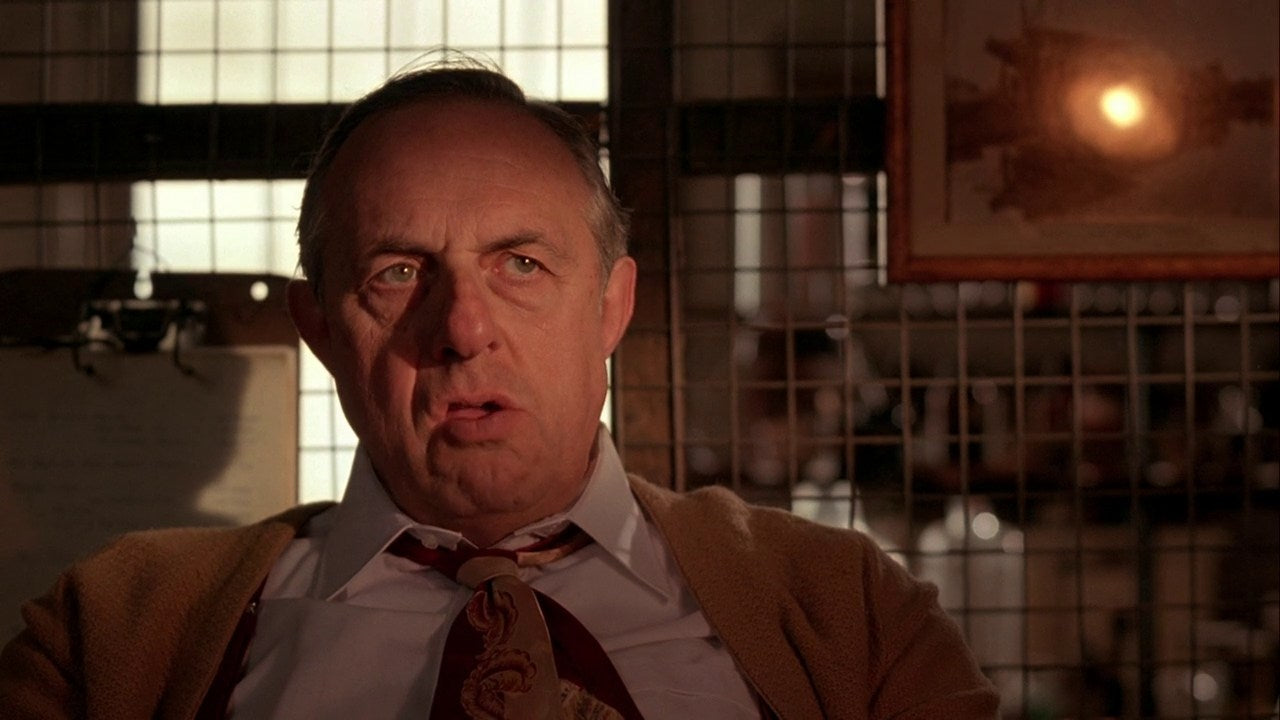
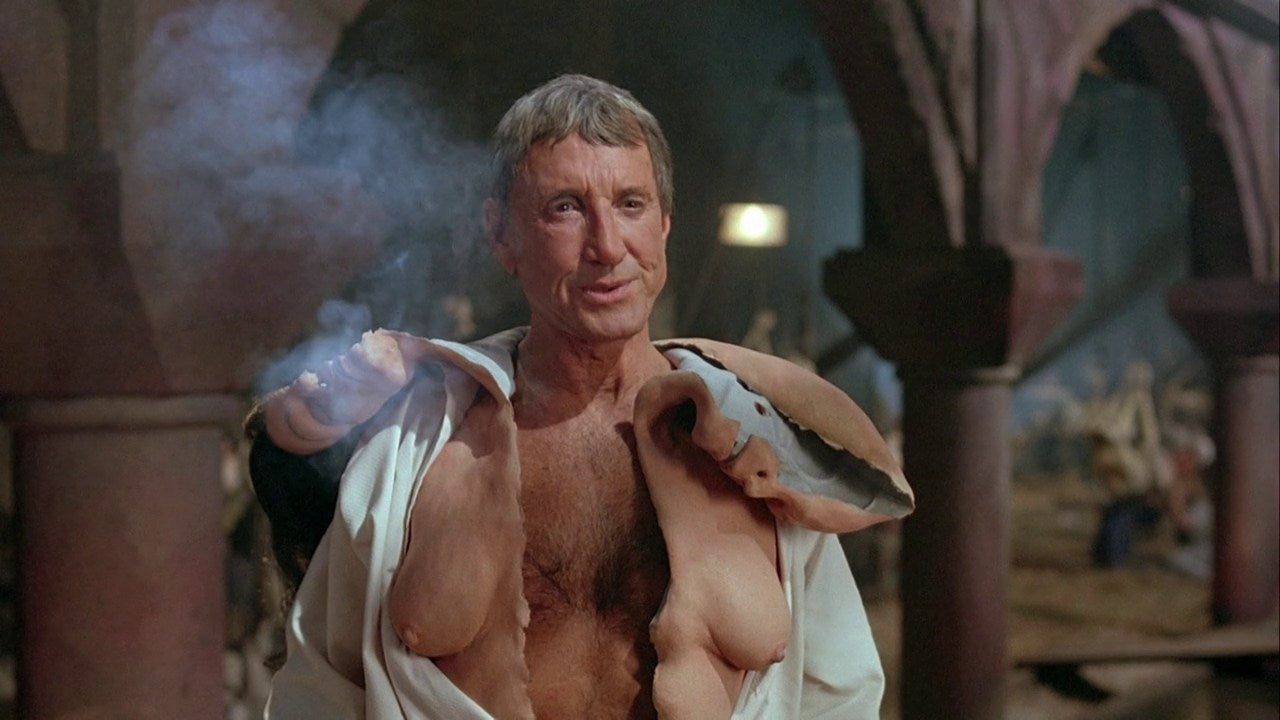
The office portrait encloses its speaker within a rigid grid. The clipboard and framed picture fill out a recognisable workplace, while the loosened tie gives its authority a worn, everyday appearance. Benway’s portrait uses a different enclosure: arches surround him, and a discarded human exterior hangs from his shoulders. The two images connect administrative command with the bodies that perform it.
Sources: Naked Lunch: frame collectionBenway’s office sign, Interzone Incorporated, the machines’ brands and the border’s paperwork give authority a series of distinct forms.
Benway also carries his professional identity on a business card. Its script name and compact professional line give the doctor a portable version of the authority displayed on the office glass. The card-and-window comparison connects that small printed object to the room and, ultimately, to the disguise beneath which Benway reappears.
Sources: John Coulthart: Benway’s printed identity · Naked Lunch: frame collection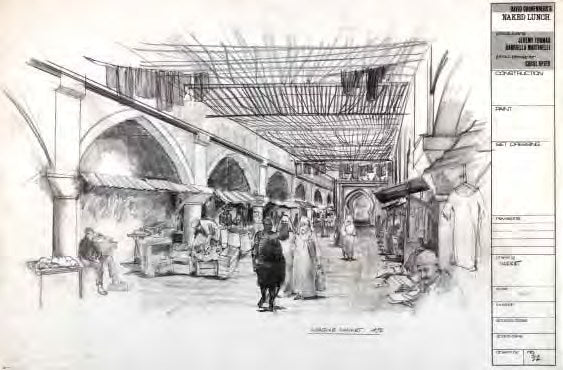
Carol Spier’s production design places the film’s cities within a shared vocabulary of worn surfaces, thresholds and enclosed working rooms. Indiana’s set visit describes the mixture of New York and Tangier inside a Toronto factory building. The assembled city belongs to Bill’s experience: convincing enough to inhabit, unstable enough to become another room in his mind.
Sources: Criterion: Naked Lunch · Gary Indiana: The Naked Lunch ReportThe five McAteer drawings preserved in the Evolution catalogue give individual spaces their own construction. The market spreads outward through clustered facades. The seaside restaurant organizes an approach through an entrance. Yves’s bedroom concentrates attention inside a decorative enclosure. These are separate design problems within one imagined geography.
Sources: TIFF / Volumina: David Cronenberg: EvolutionSpier told Gary Kimber that McAteer stayed an extra day in Tangier taking photographs. Those references and older National Geographic material informed the Toronto reconstruction. She described moving beaches indoors and reducing the streets’ scale as the production became more interior.
Sources: Cinefantastique: production and effectsReporting from the Toronto market set, Regina Weinreich describes animals disrupting a take as Davis leads Weller between food stalls. A centipede butcher belongs to the same crowded passage: the creature effect enters an environment already alive with competing movement.
Sources: Weinreich: on setCompare the market’s drawn spaces with Davis’s account of acting within them.
In Laura Salvini’s published excerpts from an October 2001 interview, Spier identifies four set relationships:
Scroll sideways to read all columns. Keyboard: focus the table, then use the arrow keys.
| New York space | Interzone counterpart | Transformation she describes |
|---|---|---|
| Cohen’s extermination depot | Hans’s factory | Redressing and Moroccan architectural details. |
| Moroccan restaurant | Frost apartment | Window backdrops alternate snowy Central Park and Tangier. |
| Greasy spoon | Café Central | Grilles and camels change its identity. |
| Market | Interzone market; Mugwump barn | One setting supports three uses. |
She also places New York mailboxes and a subway entrance within Interzone’s geography.
Follow the market drawing, the dispensary comparison and the extermination office to examine the surviving visual evidence.
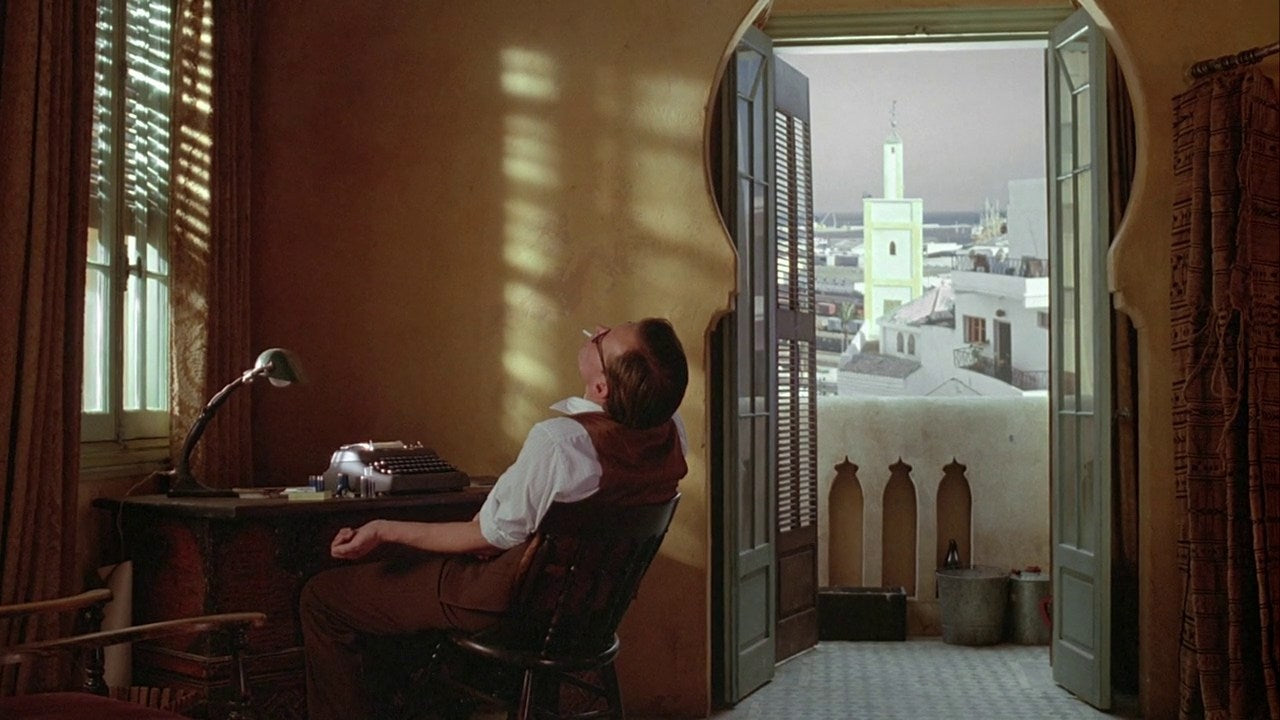
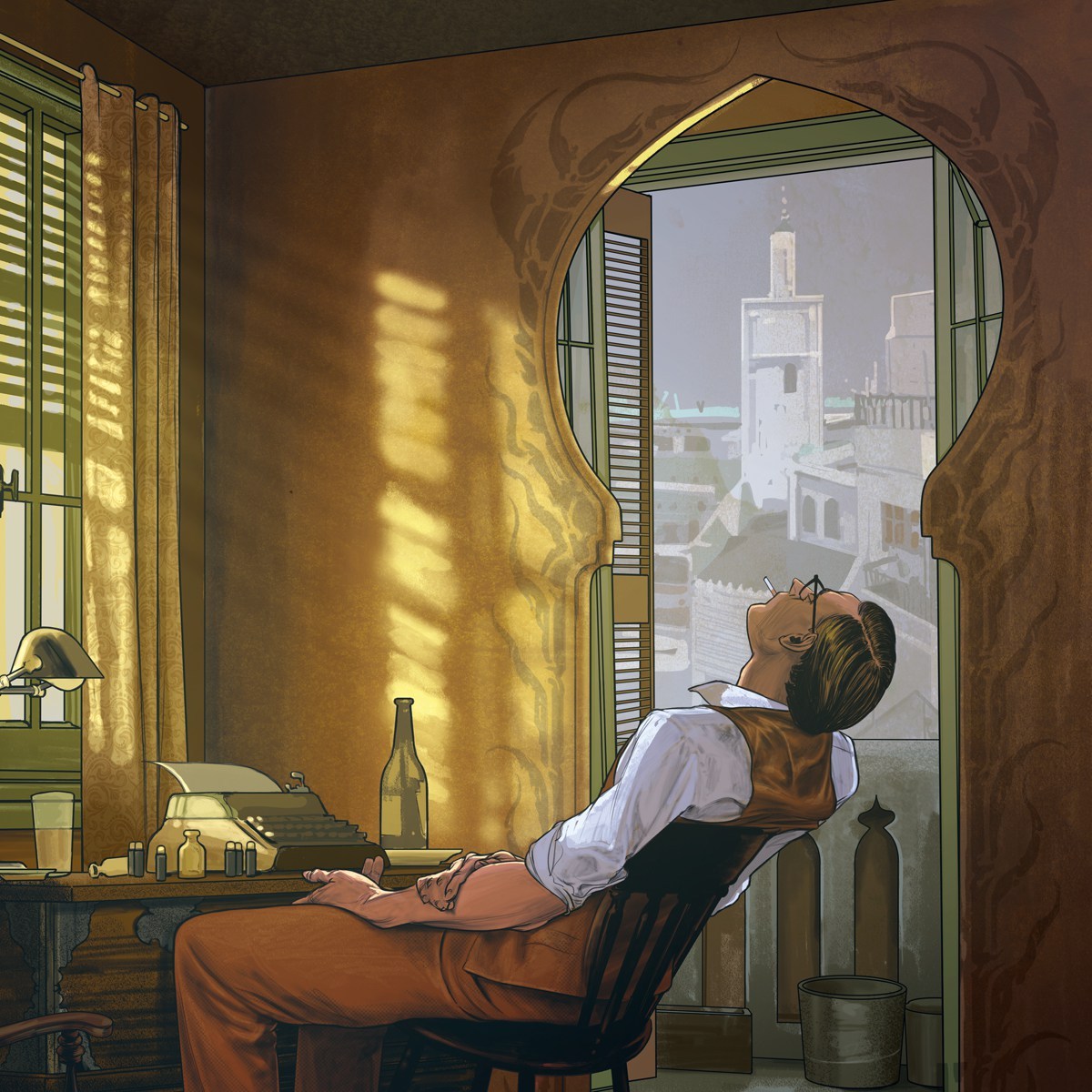
Bill’s open shutters are especially effective. A broad yellow wall and a narrow desk dominate the foreground; the city is delivered through a single tall aperture. The outside world appears reachable, but the act of writing still occupies the room. Curtains, door leaves and balcony arches turn the landscape into a series of frames.
Sources: Naked Lunch: frame collectionDavis remembered the cancelled Morocco shoot as a change to the film itself. Speaking to Scott Marks in 2016, she recalled wartime restrictions on transporting film and the replacement of the proposed location with a Toronto studio. Her account adds the performer’s perspective to the designers’ descriptions of the rebuilt city.
Sources: Judy Davis: remembering the move to TorontoCronenberg told Rowe that the Tangier reconnaissance produced photographs, videotapes and drawings. Interiors allowed invention; balconies and walls would connect them to planned exteriors. Those references remained available when Morocco filming fell through. He singled out Spier’s wall surfaces for a practical reason: he could film crawling centipedes close enough that inadequate detail would have exposed the set. Conviction had to survive a change in camera distance.
Sources: Michael Rowe: David Cronenberg Gets Naked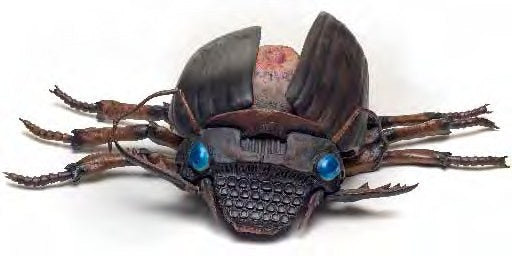
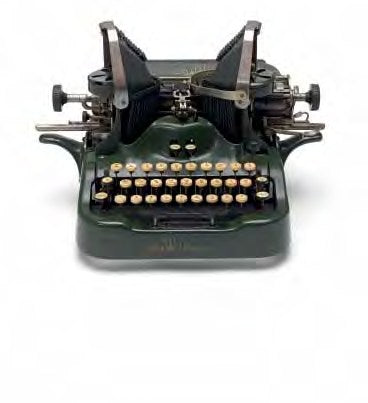
The writing machines are rivals, sexual intermediaries and unreliable advisers. Their keys remain recognizable even when the casing becomes flesh. That surviving interface matters: Bill can continue doing the ordinary work of typing while the object beneath his hands becomes increasingly impossible.
Scroll sideways to read all columns. Keyboard: focus the table, then use the arrow keys.
| Machine | Distinctive identity |
|---|---|
| Clark-Nova | An insect body encloses the keyboard. The surviving hard-foam prop and mechanized beaten puppet preserve different production states. |
| Martinelli | The rival machine in the typewriter conflict. Duncan describes three versions made for different actions. |
| Mujahadeen / Mujahaddin | The Arabic-character machine at the Frost apartment. The catalogue and Cinefex use different spellings. |
| Mugwriter | A Mugwump head adapts a face into a writing interface; Bill’s hands enter the mouth. |
The catalogue records the Arabic characters as additions to the keys. That physical intervention is more precise than calling the object an authentic Arabic model. An existing machine was made legible as another instrument within the film’s invented economy.
Sources: TIFF / Volumina: David Cronenberg: EvolutionAcross these forms, an object associated with private authorship becomes a partner that can speak, demand, fight and fail. The desk stops being the secure place from which Bill describes the world; it becomes one of the places where the world addresses him.
Back to collections ↑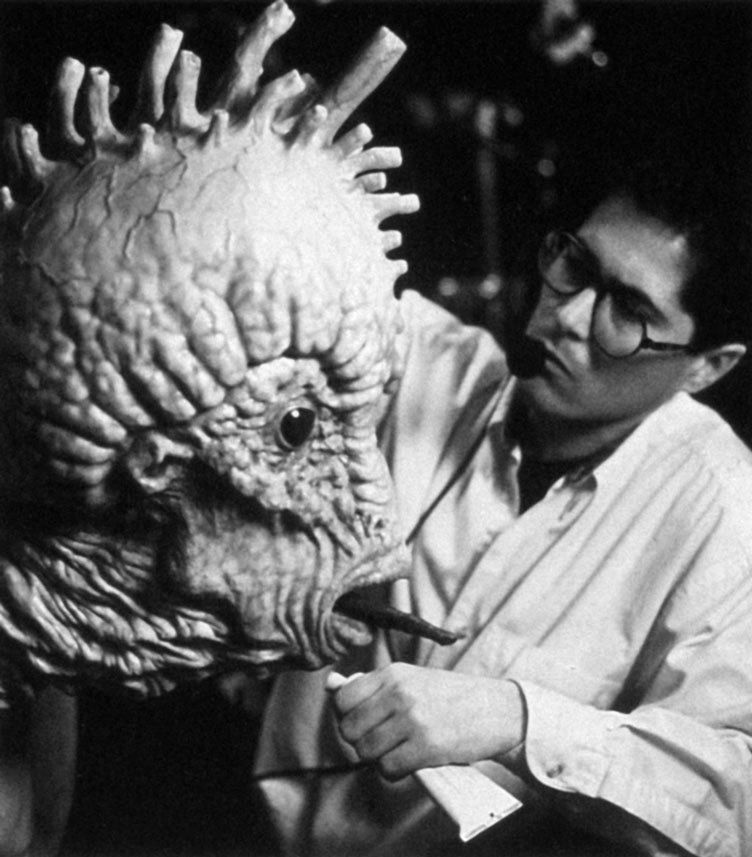
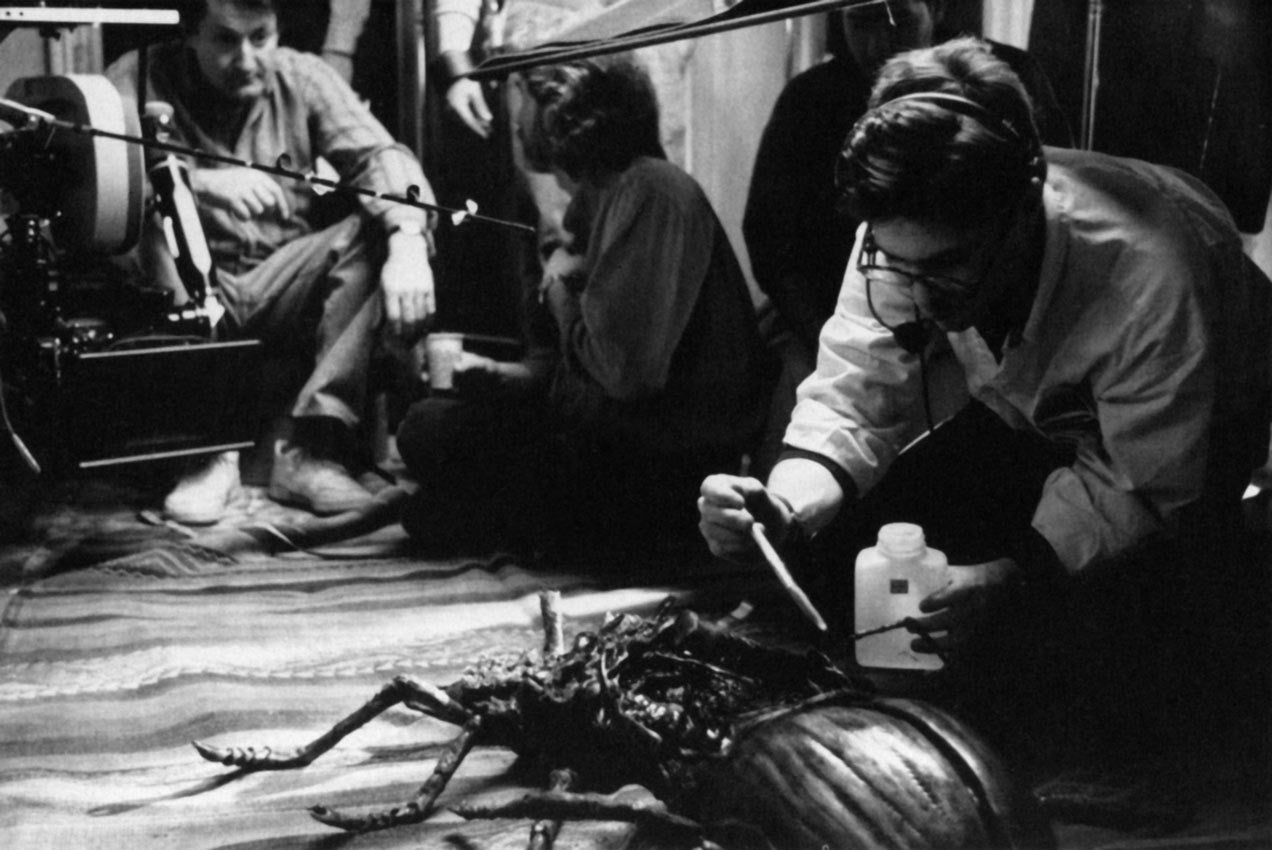
Chris Walas Incorporated supplied the creatures, with Jim Isaac supervising the effects. Duncan records five case-officer variants and thirteen Clark-Nova rigs. Different actions required different objects; the character’s apparent continuity was assembled from specialized mechanisms.
The Mugwump bar set stood above working space for puppeteers. Cables and supports passed through the furniture. This joins effects and production design at a practical level: the room had to conceal the means by which one of its occupants performed.
Sources: Jody Duncan: Borrowed FleshScroll sideways to read all columns. Keyboard: focus the table, then use the arrow keys.
| Action | How the workshop made it possible | Follow the evidence |
|---|---|---|
| Speaking at the bar | Bryan Dewe rehearsed the Mugwump’s lip movements to recorded dialogue for about four weeks. | Mugwump preparation · The bar and its furniture |
| Moving across the room | The Martinelli’s operating rod passed through slots in an elevated floor. | Typewriters prepared on set · The four machines |
| Breaking under Bill’s shoe | Brittle urethane beetles carried a soft filling for the impact. | Case officer and controls |
| Filling the dispensary | More than fifty Mugwumps were constructed; two were mechanized, only one fully mechanical. | Model and population |
These are different kinds of engineering. Speech requires repeatable small movements; a chase requires a route through the set; a breakaway body must fail convincingly. A populated room creates another problem again: enough repeated forms to turn an individual creature into an environment. Read the voice and sound credits alongside these mechanisms: moving a mouth and giving it an audible presence are connected jobs, with distinct contributors.
The surviving objects reveal different constructions. The catalogued intact Clark-Nova is hard foam; its beaten counterpart includes keys, wires and mechanized parts. The case officer retains hand-operated levers.
Sources: TIFF / Volumina: David Cronenberg: EvolutionThe period accounts disagree on one workshop total: Duncan reports thirteen Clark-Nova rigs; Jim Isaac describes nine in Lawrence French’s interview. Both describe specialized variants. Isaac also recalls moving the keyboard from beneath the wings to the head, a design revision that changed the creature’s working anatomy.
Sources: Jody Duncan: Borrowed Flesh · Cinefantastique: production and effectsThe workshop photographs offer another kind of performance study. Several people surround a body that will seem to act alone. A hand rests on a component, an operator watches for a cue, and the scenery becomes a working surface. Once the film removes that surrounding labour, the creature can occupy the same social space as Weller.
Later museum photographs expose the cables gathered beneath a surviving creature. Read alongside the workshop images, they reveal the physical equipment that a finished shot can keep outside its frame.
Follow Performing/recording the world ↗
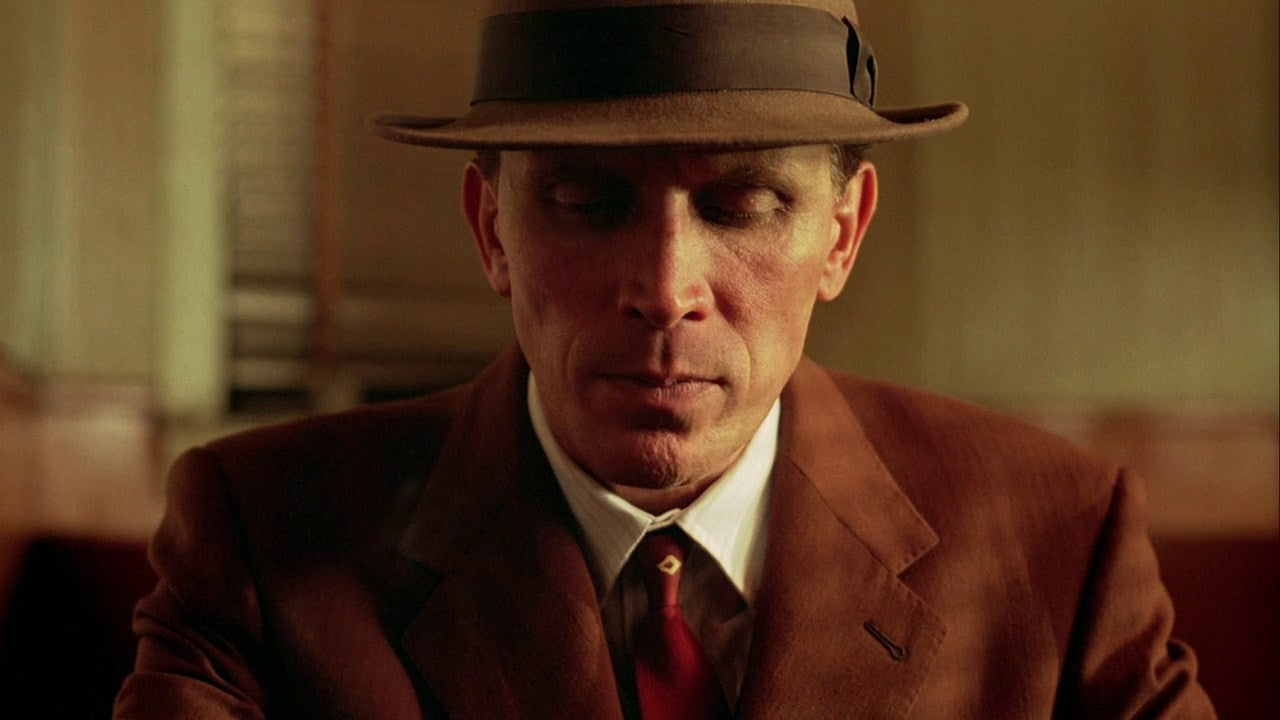
Weller’s Bill carries the appearance of a working man through situations that continually change the terms of his work. The hat, suit and glasses give him a recognizable outline; his measured presence allows the room’s strange inhabitants to speak without turning every encounter into a reaction shot. Maslin’s contemporary review singles out the dry comic control of Weller and Davis.
Sources: Janet Maslin: Drifting in and out of a Kafkaesque Reality · Naked Lunch: frame collectionWeller’s release-era interview with AP’s Bob Thomas gives that restraint an active history. Having read the novel repeatedly since he was eighteen, he wrote to Cronenberg as soon as he heard about the project. He recalled receiving the role in May 1990 and spending months in discussion with Cronenberg and Burroughs. During shooting, the director checked how difficult Bill’s emotional changes were for him; Weller said those changes felt accessible at the time. His quiet surface should therefore be read alongside the emotional movement he described, rather than assumed to mean an unvarying performance.
Sources: Bob Thomas: Peter Weller’s dream role
Weller told Caroline Vié that the live effects made these exchanges straightforward: the typewriter stood in front of him, available to address as another actor. He contrasted this with imagining an unseen rat during Of Unknown Origin. His preparation also included conversations and letters with Burroughs, whose personality supplied details for Bill Lee. The photograph brings that encounter down to hands, keys and the machine’s damaged surface.
Sources: Caroline Vié: Peter Weller’s Lunch BreakFollow the operating mechanisms and the Clark-Nova variants behind this performance.
Davis plays both Joan Lee and Joan Frost. The recurrence is built into the casting before it is interpreted by the story. A familiar face can be encountered as another person in another place; recognition becomes inseparable from Bill’s inability to escape the earlier death.
Sources: Criterion: Naked LunchIn her March 1992 conversation with Terry Gross, Davis welcomed the contrast between her Naked Lunch roles and her repressed character in Where Angels Fear to Tread. Asked whether moving between extremes was difficult, she treated that variety as part of acting’s attraction and repetition as its danger. Her response places the double role within a wider pursuit of difference, alongside the visual recurrence of her face.
Sources: Judy Davis with Terry Gross, 1992On set, Davis described Cronenberg’s detailed script and clear intentions as compatible with interpretive freedom. Precision did not require a fixed reading of her role.
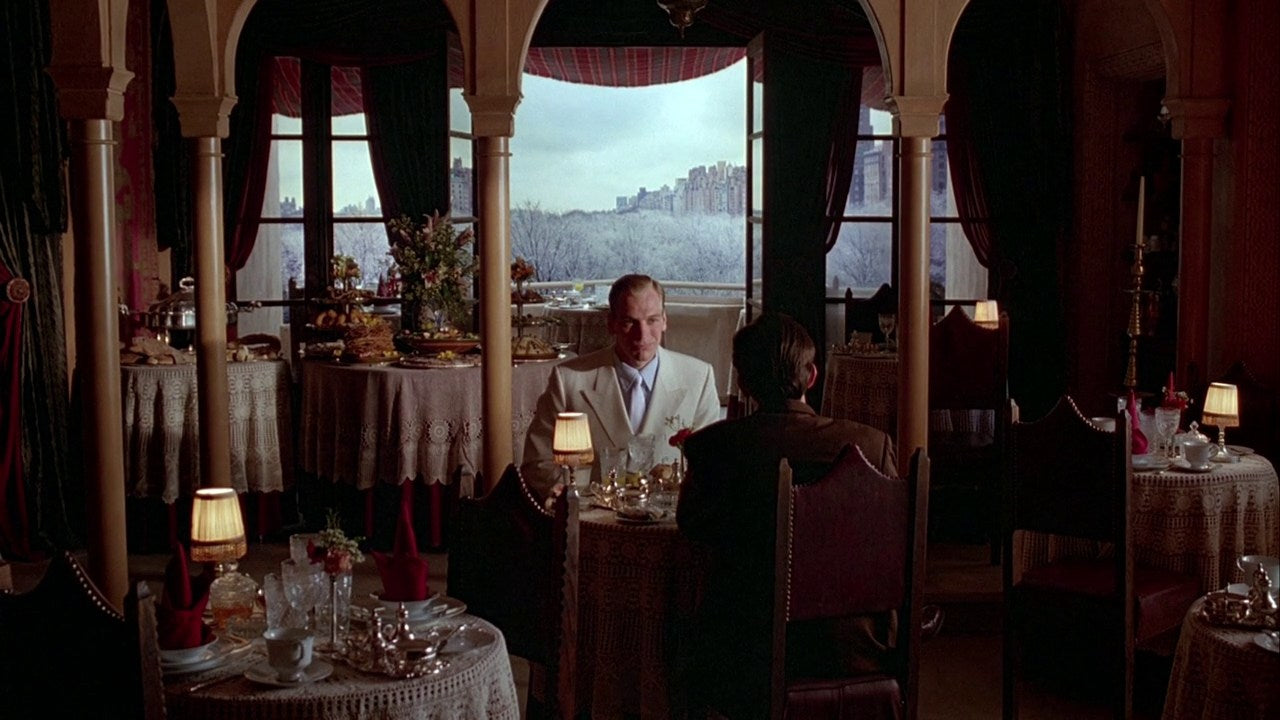
Sources: Weinreich: on setIan Holm’s Tom Frost, Julian Sands’s Yves Cloquet and Roy Scheider’s Benway each supply a different form of conversational authority. Courtesy, insinuation and professional assurance make the fantastic world socially navigable. Monique Mercure’s Fadela brings a contrasting physical command to the household and the dispensary.
Sources: Criterion: Naked LunchThe final Benway reveal makes identity into something worn. In the effects photograph, a discarded exterior hangs around the actor’s shoulders. Performance continues through a visible change of surface: the body beneath the disguise becomes another person with the confidence to explain what Bill has seen.
Howard Hampton’s later reading of Davis emphasizes the difference within the doubling: Joan Lee’s weary, sardonic intelligence and Joan Frost’s polished, uneasy glamour. The two roles make recognition disorienting without making the women interchangeable.
Sources: Howard Hampton: Double ExtremityThomas told Kimber that he considered other actors before returning to Cronenberg’s choice, Weller; he named no alternatives. Mercure described Fadela’s world in political terms, as a story about an artist being manipulated. These accounts complicate the apparent inevitability of the finished casting.
Sources: Gary Kimber: Cronenberg / Naked Lunch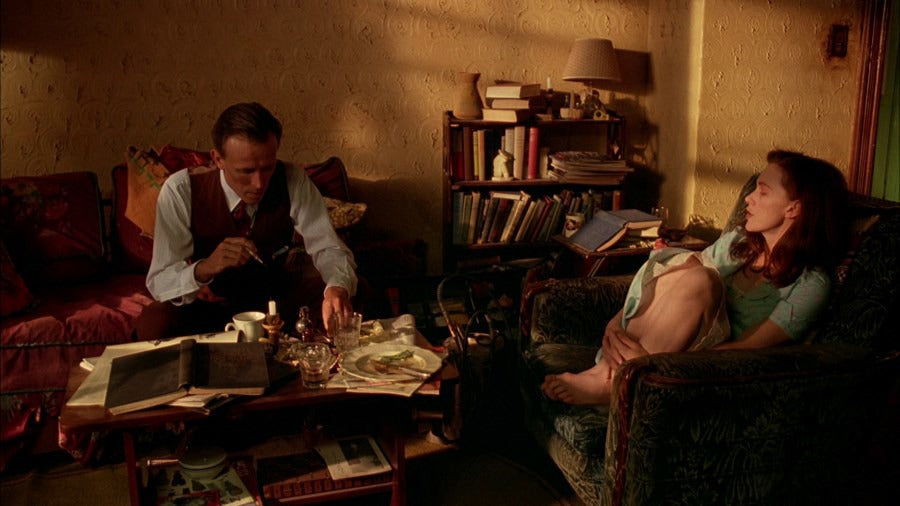
The wider domestic frame makes the actors’ contrasting postures visible. Bill bends over a table crowded with cups, glasses, dishes and paper. Joan folds her legs into the armchair and turns toward him. Books gather on the shelf and the floor between them; the table keeps their bodies apart while giving Bill’s hands a place to work. Denise Cronenberg’s clothing and Spier’s furnished room establish the lived-in setting through which the performances move.
Sources: Criterion Forum: 2013 Blu-ray frame gallery · Criterion: Naked LunchCronenberg told Jaehne that the ensemble’s disparate acting styles suited figures with symbolic force rather than a naturalistic social group. That account gives the contrast between Bill’s restraint and the surrounding characters a deliberate dramatic purpose.
Sources: Karen Jaehne: Dead Ringers Do Naked LunchPeter Boretski supplies the creature voices and also appears as the second exterminator. His credit adds another performer to the conversations organized around Weller. Isaac’s production account describes actors reading creature dialogue on set so the puppeteers could coordinate movement and Weller could respond to a partner. The speaking body is consequently a collaboration among vocal performance, physical operation and the actor listening.
Sources: EOFFTV: expanded cast and department credits · Cinefantastique: production and effectsIn Michael Rowe’s set report, Isaac treats consistent puppeteering as a question of character: each creature needs a motive and a thought behind its movement. Cronenberg likewise insists that actors must relate to these fabricated partners as people. Their account makes the sustained conversation, rather than the isolated reveal, the central performance problem.
Sources: Michael Rowe: Cronenberg Does Lunch
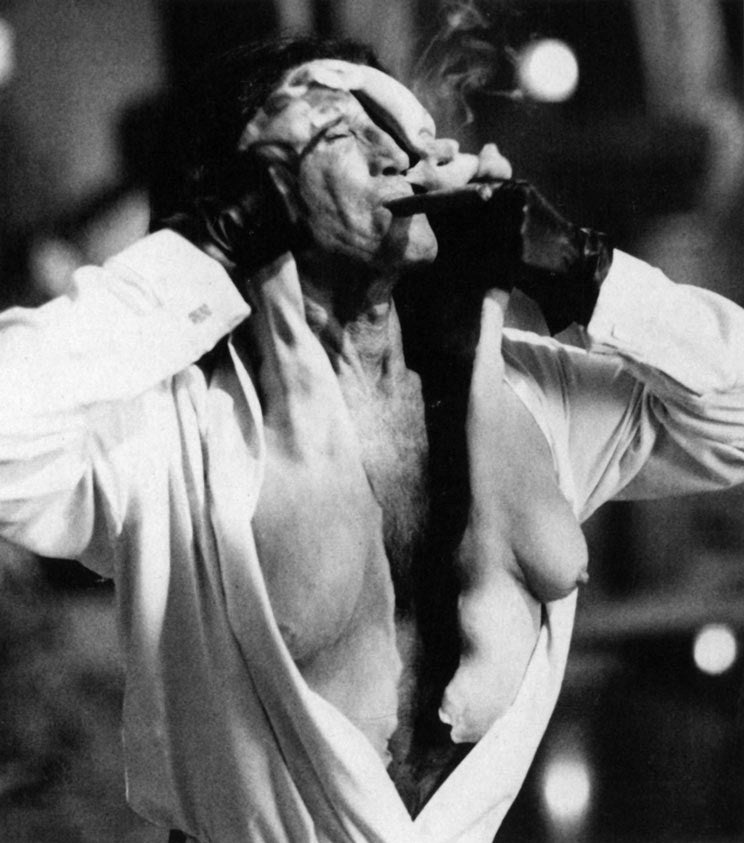
The reveal crosses between two actors and two fabricated surfaces. Mercure’s photograph places a male chest beneath Fadela’s opened clothing; Scheider’s places Fadela’s exterior around Benway. The matching illusion depends on a change of performer as well as a change of skin.
Jim Isaac told Lawrence French that Scheider’s split face-and-chest appliance took almost two hours to apply and obscured his sight. Isaac guided him into position. Elsewhere, a live microphone performance let the Mugwump’s puppeteers follow dialogue; the creature’s conversation was coordinated on set.
Sources: Cinefantastique: production and effectsThese working conditions connect makeup to acting. A performer must arrive on a mark, find a partner and deliver a line while the physical apparatus limits movement or sight. The finished transformation compresses that coordinated work into a moment of apparent revelation.
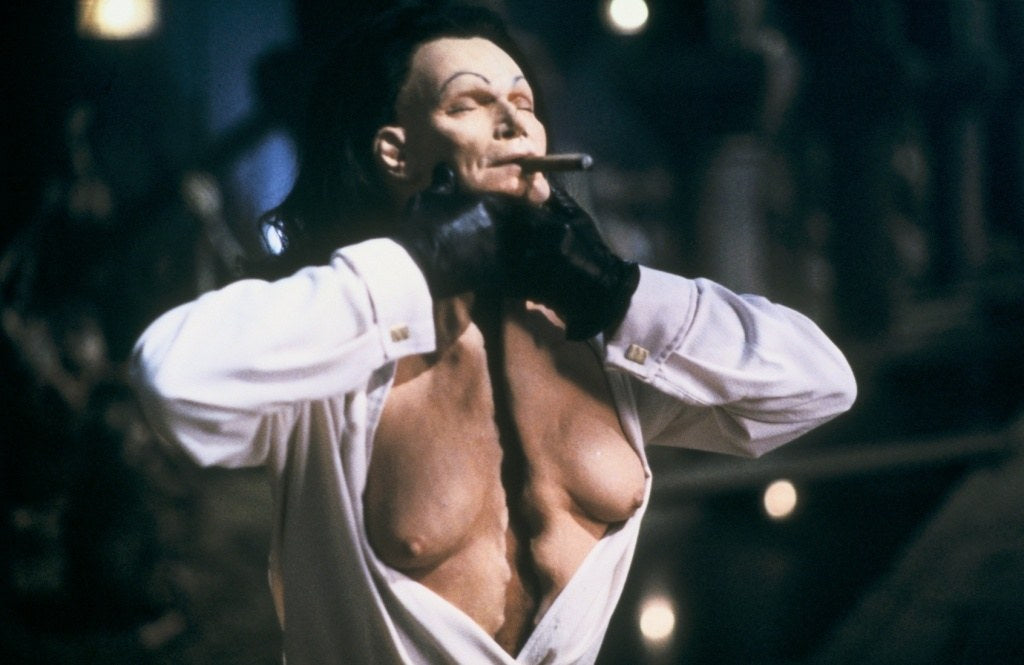
The colour publicity image makes the join between clothing and anatomy unusually clear. Compare the white cuffs and gloves with the separate production photographs above.
Sources: Arrow / Fetch: publicity and edition record · Cinefantastique: production and effectsThe general makeup and hair credits sit beside the creature-effects work: the expanded credit list names Christine Hart for makeup, Veronica Ciandre as hairstylist and Ted Ross for floor special effects. These departmental identities help distinguish the maintained appearance of the human cast, effects performed on the set, and CWI’s specialized creature fabrication.
Sources: EOFFTV: expanded cast and department creditsBack to collections ↑Connect clothing, performance and image ↗
Denise Cronenberg’s design credit is documented by Criterion. The clothing discussion below is a reading of the cited frame reproductions, not a reconstruction of her design process. Film-specific maker testimony and garment documentation remain open. Credit source ↗
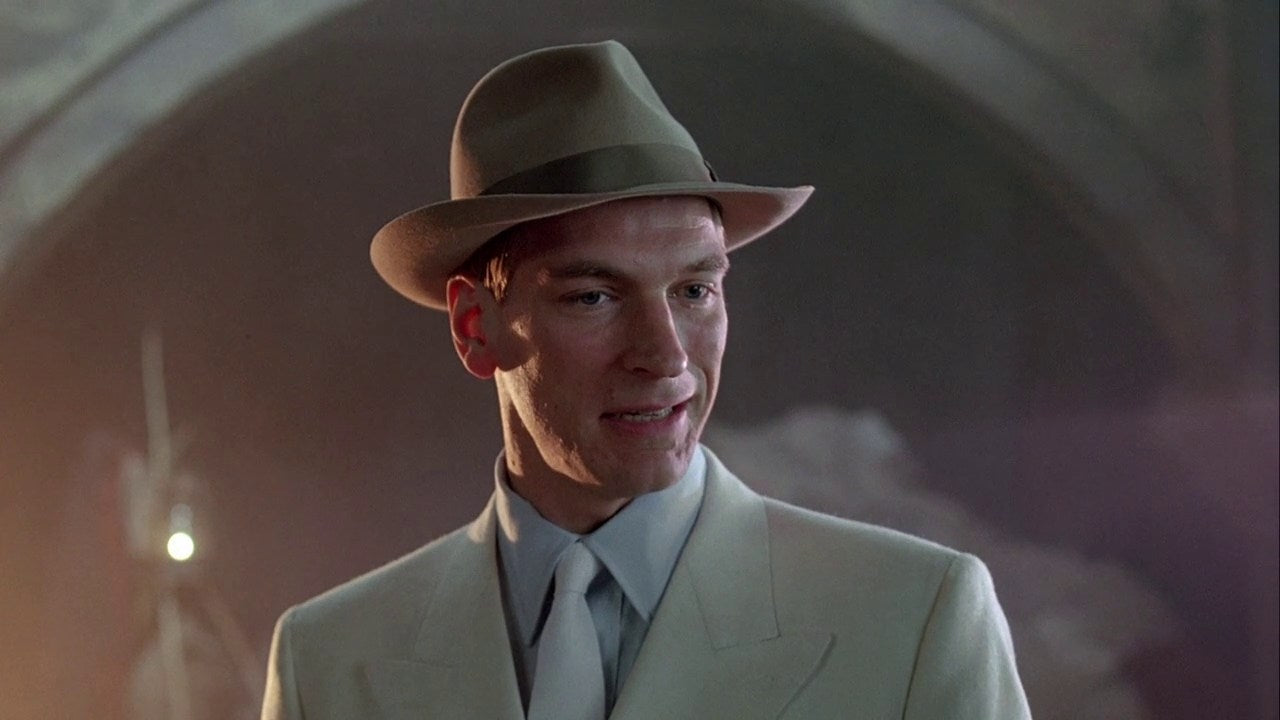
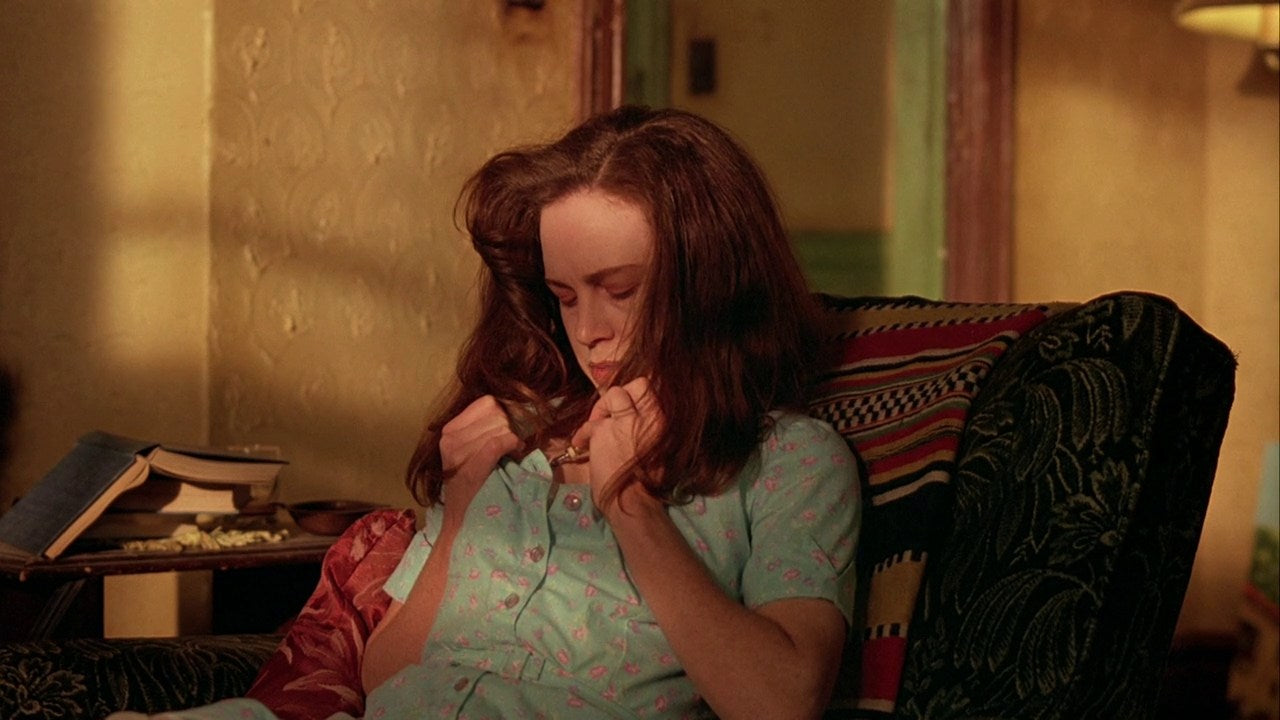
Denise Cronenberg’s costume design places conventional garments against unconventional bodies. Bill’s jacket, collar and tie make a steady vertical arrangement. His hat gives the silhouette a portable edge: a small piece of urban formality carried from office to bar, street and border.
Sources: Criterion: Naked Lunch · Naked Lunch: frame collectionCloquet’s pale jacket, light shirt and closely related tie reduce the contrast within his outfit. The darker hat draws the eye back to his face. Bill’s red tie and dark jacket in the earlier portrait make a different arrangement. The shared vocabulary of tailoring does not erase the distinction between the two men.
Joan Lee’s dress belongs to the softer pattern of the domestic room. Its small motif sits against the larger design of the upholstery. Clothing makes her body part of this lived-in interior before the film turns familiar domestic space into the site of an irreversible event.
The creatures complicate this distinction between a body and its covering. A machine’s shell opens; a human disguise comes away; the dispensary displays a repeated population by its exposed anatomy. Ordinary clothes remain one of the film’s most persistent assurances that the world can still be read.
Back to collections ↑Connect performance, photography and sound ↗
Cronenberg’s interviews and contemporary criticism illuminate the film’s editing and its treatment of recurring images.
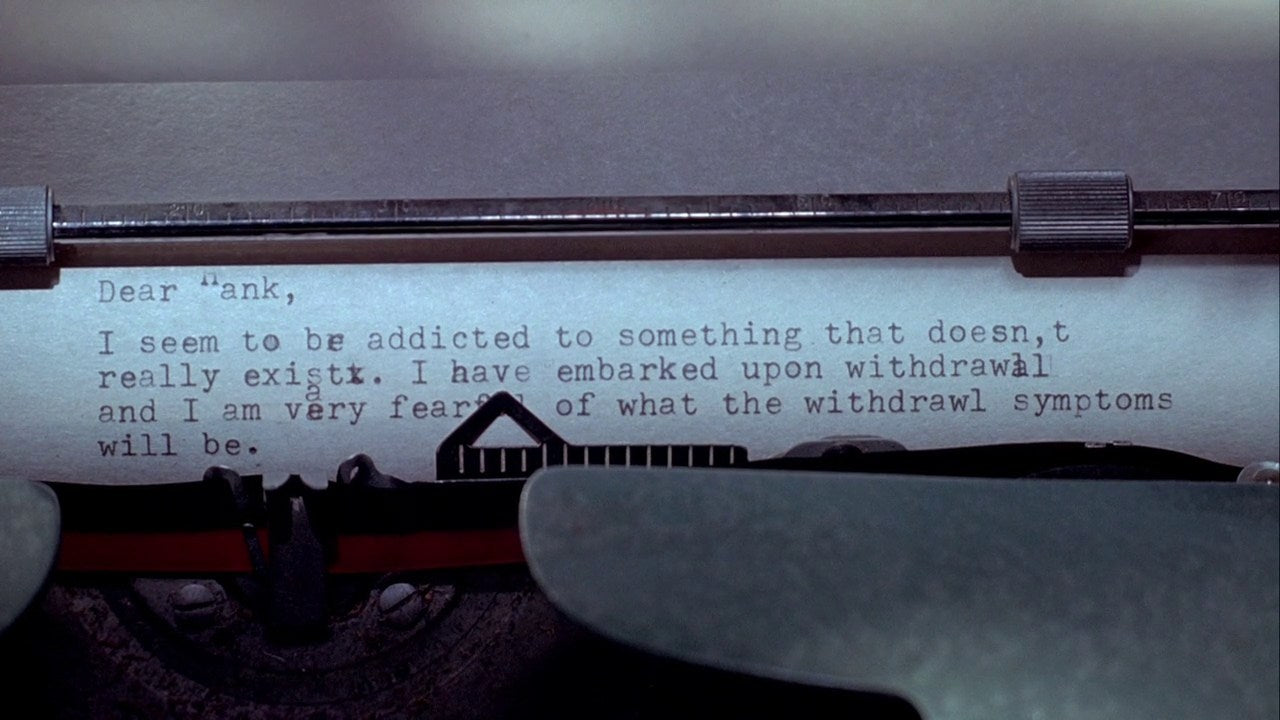
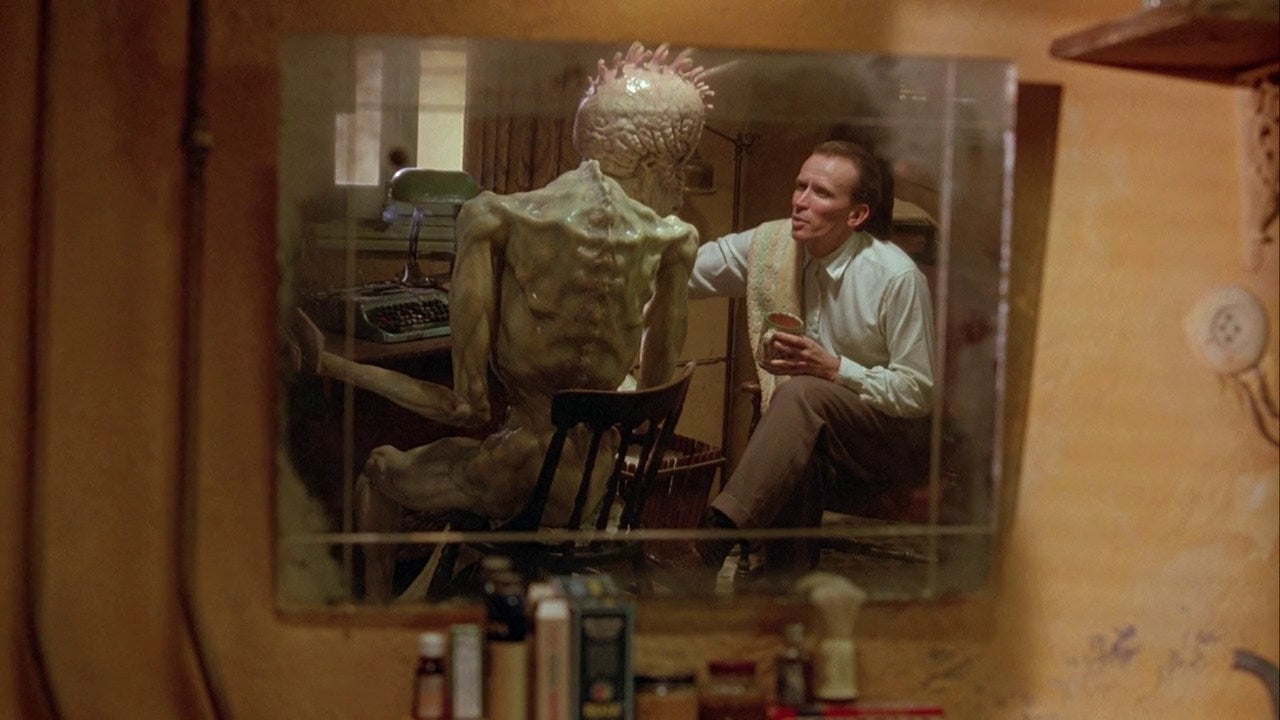
Peter Suschitzky’s photography and Ronald Sanders’s editing give the invented world its finished spatial and temporal form. Within the selected frames, reflective glass, desk edges and doorways repeatedly provide a structure around the unstable bodies. The images retain enough ordinary geometry for the impossible object to have a location.
Sources: Criterion: Naked Lunch · Naked Lunch: frame collectionSuschitzky later recalled proposing an Expressionist design for Bill’s hallucinations. Cronenberg insisted that the picture remain grounded in reality, a decision the cinematographer came to endorse. That testimony gives the familiar rooms and furniture a specific creative context: their apparent normality is a deliberate support for the strange things placed inside them.
Sources: Peter Suschitzky: grounding the hallucinationIn a June 2015 interview with Lindsay Coleman, Suschitzky recalled the challenge of varying the small-room scenes. He avoided obvious photographic signals between reality and hallucination. He worked from the screenplay without reading the novel, treating the film as an independent work. For the creatures, light direction had to reveal shape and texture; Weller’s strongly modelled features offered a different photographic opportunity, though acting came first.
Sources: Peter Suschitzky: light, texture and the screenplayThe face-and-shell study connects that account to two visible surfaces. The actor and the fabricated body both acquire weight through the distribution of light. This is a meeting point between the performance history and the effects workshop.
The close view of the typed letter changes the scale of attention. A pale page is trapped between dark machine parts; the salutation identifies Hank as its addressee. Writing becomes something the viewer can inspect. The image makes the report materially specific without resolving whether the surrounding experience can be trusted.
The mirror image works differently. It brings Bill and the creature into one reflective plane. Their shared enclosure is immediately visible, even while the mirror reminds us that an image can hold things together without explaining their relation.
Cronenberg gave Indiana a specific editing example: after the insect typewriter’s death, a view of an ordinary machine offers an external reference. The cut permits another account of Bill’s activity. A small, familiar object briefly changes the terms on which the preceding encounter can be understood.
Sources: Gary Indiana: The Naked Lunch ReportIn his conversation with David Breskin, Cronenberg defended the sustained close-up and the expressive human face. That stated preference offers a useful context for reading these conversational encounters. A fantastic speaker does not automatically require a frantic visual response: the encounter can remain organized around a face, a voice and the person listening.
Sources: David Breskin interviews CronenbergThese arrangements connect the film to Cronenberg’s earlier enclosed worlds. The clinic in Dead Ringers organizes bodies through professional space; Naked Lunch places the writer inside a similarly persuasive workplace, then allows the equipment to answer back.
In the longer Breskin interview, Cronenberg identifies several brief cues that loosen Bill’s control of the image. A creature leaving a window becomes ordinary equipment on landing; the dying insect also yields to a conventional typewriter. For the Cloquet–Kiki encounter, he describes pleasurable sounds followed by Bill’s horrifying vision, which he interprets through jealousy and fear. Sound and image can therefore offer different accounts of one event.
Sources: David Breskin: Cronenberg in Inner ViewsDiscussing the ending with Kimber, Cronenberg described the second shooting as Bill’s repetition of an earlier trauma, rather than a second literal killing. This is the director’s interpretation of the recurrence. The doubled image remains open to the objections raised by contemporary critics.
Sources: Gary Kimber: Cronenberg / Naked Lunch · Gary Indiana: The Naked Lunch ReportTwo photographed sheets make the writing itself available for comparison. The letter to Hank and the second typed page differ in address, layout and surface. The page is an acted-on object as well as a carrier of words: paper guides, roller, ribbon and type guide remain visible around the text.
Sources: Naked Lunch: frame collection · Criterion Forum: 2013 Blu-ray frame galleryKim Foss finds the shifts from Lee’s perceptions to an apparently objective reality close to a stylistic rupture. Set beside Cronenberg’s explanation of the ordinary-typewriter insert, his response identifies a precise disagreement about the device: does an external view deepen the hallucination, or interrupt its logic?
Sources: Kim Foss: Udryd al rationel tænkning · Gary Indiana: The Naked Lunch ReportThe disagreement makes the contemporary reception part of the formal analysis. An account of what a cut is intended to do and an account of how it is experienced can illuminate each other without arriving at the same judgment.
Howard Shore described building a structure within which Ornette Coleman could improvise. In the Fresh Air conversation, he relates the collaboration to the artistic moment shared by Coleman and Burroughs. The score places an individual instrumental voice within a composed environment, a productive parallel to Bill moving through an already arranged world.
Sources: Howard Shore with Terry GrossCronenberg recalled a temporary mix using earlier Shore scores and Coleman’s Jajouka recording. Its success helped lead to Coleman’s participation; Shore then wrote the opening and closing music with his improvisation in mind.
Sources: Cronenberg: the 1992 Pinewood DialogueAt the 1998 Cinesonic conference, Shore described setting slow accompaniment beneath Charlie Parker’s fast recorded solos. Coleman declined to remake those solos and proposed his own bebop material. The trio included Barre Phillips on bass and Denardo Coleman on drums. During the orchestral sessions, Denardo’s drumming reached his father through headphones, helping the saxophone sustain its quicker movement against the slower ensemble.
Sources: Howard Shore: composing with a wide paletteThe arrangement offers a musical counterpart to the film’s conversations. A voice can inhabit an organized environment without moving at the same pace as everything around it. This is an interpretive connection with Weller’s measured presence and the creatures’ coordinated performances: the whole depends on parts retaining different kinds of motion.
Shore also recalled mixing two alternative pieces for one scene. His account leaves that scene unnamed. The choice expands the film’s revision history into the soundtrack: an alternative could become a simultaneous layer.
Sources: Howard Shore: composing with a wide paletteIn his statement dated December 1991, reprinted in the Lincoln Center programme, Coleman treats music, dialogue, colour and objects as equal participants. His idea of harmolodics joins the score to the film’s other materials, extending the collaboration beyond an orchestral backdrop with a featured soloist.
Sources: Lincoln Center: a score returns to performanceTIFF’s grouped sound credit names David Appleby, Don White and Peter Maxwell. Composition, musical performance and the film’s sound work are separate contributions; an album record cannot stand in for the complete sound credits.
Sources: TIFF: Canadian Film EncyclopediaJane Tattersall’s professional biography identifies the creature sound work on Naked Lunch as the source of her first Genie in 1992. Her contribution belongs beside the music and puppetry: the fabricated bodies also had to become audible inhabitants of the film’s world.
Sources: Jane Tattersall: sound workTattersall later identified one precise joke in the effects track: when the beetle runs into a door, the impact uses a typewriter’s margin bell. She credits Foley artist Andy Malcolm and sound-effects editor David Evans. The collision lets the insect’s mechanical identity survive through sound even when its body is moving like an animal.
Sources: Jane Tattersall: Sounds RightScroll sideways to read all columns. Keyboard: focus the table, then use the arrow keys.
| Music object | What it preserves |
|---|---|
| Original album | Eighteen listed tracks. The discography separately credits Coleman compositions and Thelonious Monk’s “Misterioso.” |
| 2014 expanded edition | Sixteen minutes of previously unreleased music, according to the label announcement. |
| 2016 vinyl edition | Two LPs with new artwork by Rich Kelly; a later interpretation of the film’s imagery. |
| Live to projection | Orchestra and jazz trio; the Belfast premiere in November 2000 reunited Shore and Coleman. |
The album’s track titles map the film’s invented material culture: “Mugwumps,” “Mujahaddin,” “Clark Nova Dies” and “Cloquet’s Parrots.” Bodies and objects become the landmarks of the listening edition.
Shore’s 2017 note identifies “Midnight Sunrise” as a 1973 recording and “Ballad/Joan” as a 1966 piece recorded again for the film. The soundtrack’s materials therefore have histories before 1991. He also distinguishes a 1992 Tokyo concert from the first live accompaniment to the film, in Belfast in 2000.
Sources: Lincoln Center: a score returns to performanceScroll sideways to read all columns. Keyboard: focus the table, then use the arrow keys.
| Date and place | Performance record |
|---|---|
| 1992 · Pan Hall, Tokyo | Score in concert, recalled by Shore; distinct from the later projection format. |
| 10 November 2000 · Waterfront Hall, Belfast | Ulster Orchestra, conducted by Shore, with Ornette Coleman, Charnett Moffett and Denardo Coleman. |
| 26 March 2001 · Barbican, London | BBC Concert Orchestra and the same trio, with Shore conducting. |
| 11 July 2017 · Alice Tully Hall, New York | Ensemble Signal, Brad Lubman conducting; Ravi Coltrane and Henry Threadgill on saxophones, with Moffett and Denardo Coleman. |
The New York programme identifies a DCP screening. Its named performers make this a specific new event, rather than a replay of the original recording. The score, the album sequence and the concert arrangement each organize the material for a different encounter. Read them beside the film’s presentation history and the later vinyl sleeve: a work can continue to change its setting after the production has ended.
Scroll sideways to read all columns. Keyboard: focus the table, then use the arrow keys.
| Contribution | Attribution | What the record establishes |
|---|---|---|
| Creature voices | Peter Boretski | Vocal performance, listed separately from his on-screen exterminator role. |
| Sound mixing | Bryan Day | The reference credit list identifies the sound mixer. |
| Creature sound work | Jane Tattersall | Her professional biography identifies the work recognized at the 1992 Genies. |
| The beetle’s typewriter-bell impact | Andy Malcolm and David Evans | Tattersall names the Foley artist and sound-effects editor responsible for this specific effect. |
| Music | Howard Shore with Ornette Coleman | Composition and instrumental performance have their own history and recorded editions. |
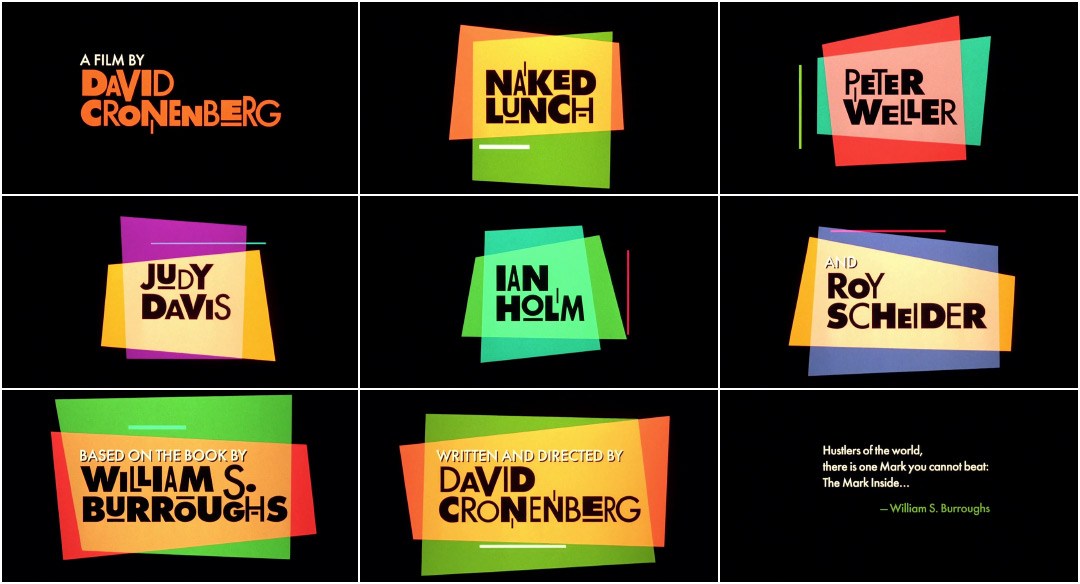
Randall Balsmeyer recalls abandoning historical Pop-art imagery after repeated development visits. A logo on crew hats suggested an abstract direction. Balsmeyer and Mimi Everett’s titles use coloured planes, lines and irregular lettering.
The sequence was photographed through repeated exposures: black shapes on clear cels, backlit colour gels and high-contrast name mattes. Overlapping exposures produced the mixed colours. A final pass supplied white lettering. The animation was assembled photographically, with a motion-control camera.
Sources: Randall Balsmeyer: designing the titlesAgainst the black field, the panels behave like loosely stacked sheets. Their tilted edges make each name slightly unstable without sacrificing legibility. The opening establishes a graphic vocabulary of overlap before the film begins combining machines, bodies and identities.
Back to collections ↑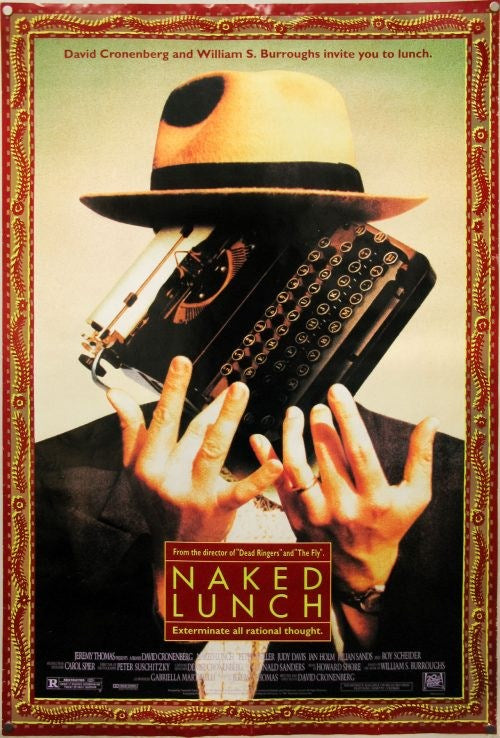
The US one-sheet replaces a man’s face with a typewriter. Hat, collar and tie keep the figure readable as a person while the machine occupies the place where the viewer expects identity. Its campaign line, “Exterminate all rational thought,” joins Bill’s original occupation to the invitation offered by the film.
Sources: Film on Paper: US one-sheetThe US image has a recoverable design history. Sobieszek’s Ports of Entry catalogue identifies Steven Twigger and credits Rod Dyer’s art direction at Dyer/Mutchnick Group. Posteritati also assigns the sheet to Steve Twigger. These role-specific credits sharpen an attribution left blank in the Film on Paper record.
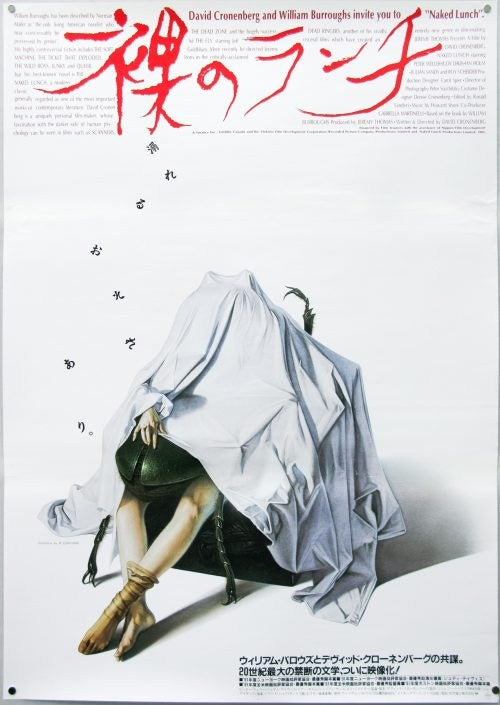
Sources: Robert A. Sobieszek: Ports of Entry · Posteritati: US one-sheet attributionThe Japanese bug-style B2 sets a draped insect body and human legs against a pale, open field. Film on Paper credits the illustration to H Sorayama and dates the poster to 1992.
Sources: Film on Paper: Japanese bug-style B2These two campaigns select different scales of transformation. One reorganizes a human portrait; the other brings an insect body into an erotic, draped figure. Later packaging adds further readings: Neil Kellerhouse’s Criterion cover, Gilles Vranckx’s Arrow artwork and Rich Kelly’s vinyl sleeve belong to their respective editions, rather than to the original theatrical campaign.
Sources: Criterion: Naked Lunch · Arrow: restored edition and supplements · Mondo / Howe: Naked Lunch on vinyl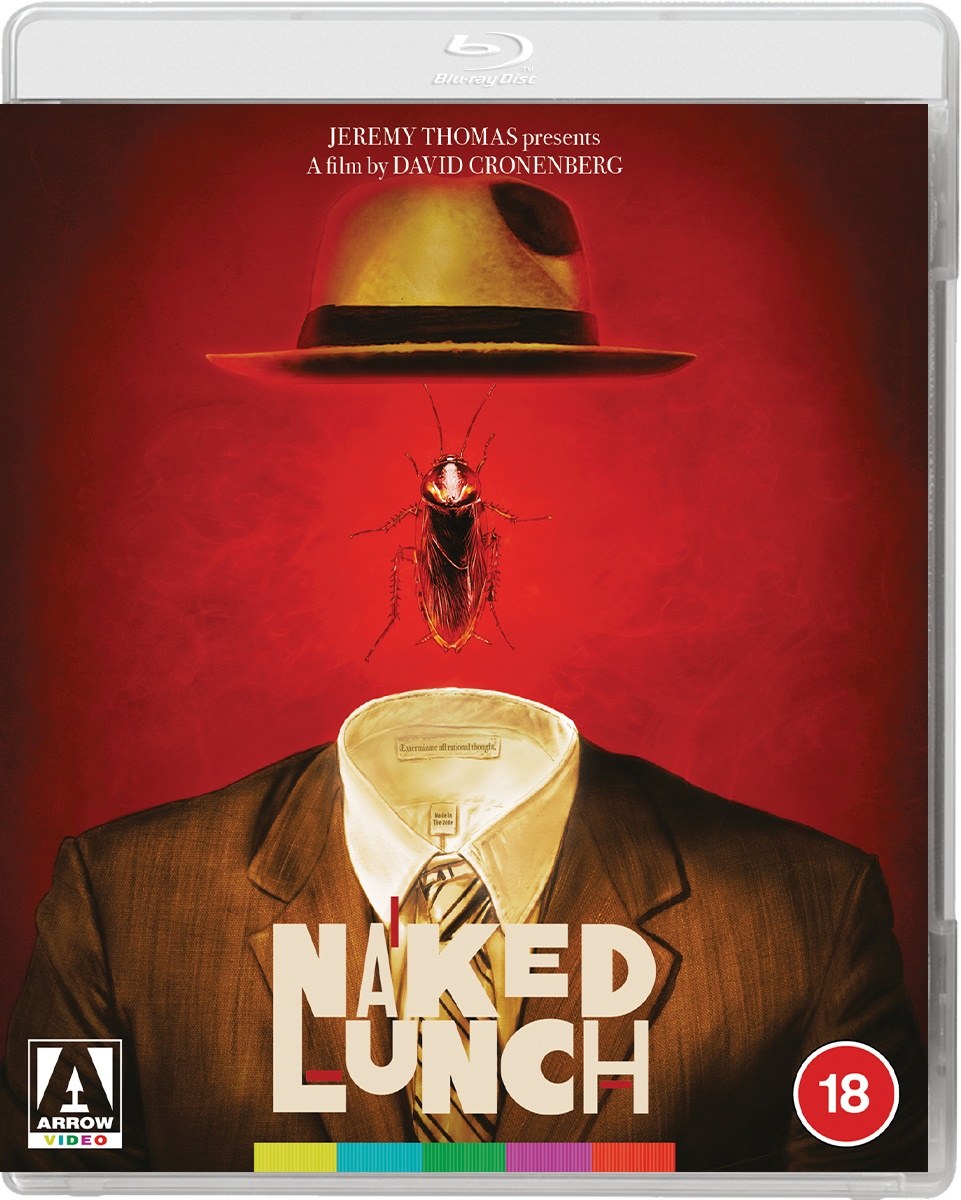
A floating hat, empty suit and crimson field turn the writer into an absence. The later sleeve condenses transformation through silhouette.
Sources: Arrow / Fetch: publicity and edition recordThe UK quad changes the invitation’s format. Film on Paper describes a close-up of Weller above a centipede; its horizontal sheet gives the performer and creature a different relationship from the US substituted face. Japan’s campaign includes a separately catalogued red-style B2 as well as the Sorayama bug image. A territory can have several treatments, and an illustration credit belongs to a particular treatment.
Sources: Film on Paper: UK quad · Film on Paper: Japanese red-style B2 · Film on Paper: Japanese bug-style B2Compare the format and attribution table. The dates below follow the recorded sheets; they are not a substitute for a theatrical-release chronology.
Maslin’s release-day review admires the film’s dry humour, its performances and its solution to adaptation, while arguing that its later excess weakens the control of the opening. This is a useful contemporary response because enthusiasm and reservation coexist in the same reading.
Sources: Janet Maslin: Drifting in and out of a Kafkaesque RealityIndiana’s report asks a different question: what happens to Burroughs’s sexual and political disturbance when it is organized around Bill and Joan? His conversation with Cronenberg tests the relation between personal tragedy, homosexual desire and a story that repeatedly returns to the death of a woman. The disagreement belongs to the film’s reception, not to a later consensus imposed upon it.
Sources: Gary Indiana: The Naked Lunch ReportJonathan Rosenbaum’s January 1992 review treats the film as an exceptional account of writing, tracing its force to the combination of Burroughs texts with an invented version of the author’s life. He reads creative compulsion alongside loss and psychic confinement. His praise concerns the particular film Cronenberg constructs, rather than fidelity to a single literary source.
Sources: Jonathan Rosenbaum: Sex and Drugs and Death and WritingDan Persons reaches a sharply different judgment in Cinefantastique. He values the spoken Burroughs material but argues that its literal embodiment in elaborate effects reduces the imagination and savage humour of the writing. Where Rosenbaum finds a productive transformation, Persons sees the loss involved in making the imagined thing visible.
Sources: Dan Persons: Cronenberg’s Impossible DreamTogether these responses resist a simple “unfilmable book successfully filmed” narrative. Cronenberg’s adaptation supplies a route through the material; that route also determines what is emphasized, displaced or made legible.
Jaehne’s 1992 interview presses the adaptation at its most contested point: why does the film reduce Burroughs’s homosexual life while returning to Joan’s death? Cronenberg acknowledged limiting that material because he did not feel equipped to portray its full intensity. He defended the repeated shooting as recurring trauma, not a woman’s removal to enable male creativity. The exchange preserves an important distinction between the director’s intention and the consequences his interviewer challenges. Approval by the source author does not settle that disagreement.
Sources: Karen Jaehne: Dead Ringers Do Naked LunchIn Kosmorama’s winter 1992 issue, Kim Foss admires the fusion of fiction and biography, yet finds Hank and Martin’s literary talk caricatural. Kassandra Wellendorf’s adjoining essay presses a different objection: she reads the insect imagery as linking homosexuality with illness and treats the repeated sacrifice of Joan as an unresolved sexual impasse.
Sources: Kim Foss: Udryd al rationel tænkning · Kassandra Wellendorf: Kropsforskrækkelsen i Cronenbergs filmRead beside Jaehne and Rosenbaum, these responses sharpen a persistent argument over the adaptation. Its invented world can be formally persuasive while its representation of desire remains disputed. A reception history has to preserve both the achievement and the objections.
Sources: Karen Jaehne: Dead Ringers Do Naked Lunch · Jonathan Rosenbaum: Sex and Drugs and Death and WritingFollow the disagreement over shifts in viewpoint back to the film’s ordinary machines and the accounts they offer of Bill’s experience.
Scroll sideways to read all columns. Keyboard: focus the table, then use the arrow keys.
| Record | Presentation or timing |
|---|---|
| Criterion edition | 115 minutes; 1.78:1 high-definition presentation. |
| 2023 restoration / Arrow | 1.85:1; restoration from the 35mm negative, supervised by Suschitzky and approved by Cronenberg. |
| BBFC, cinema, 27 January 1992 | 115 minutes 24 seconds; First Independent Films. |
| BBFC, cinema, 28 February 2023 | 115 minutes 17 seconds; Arrow Film Distributors. |
| BBFC, video, 18 August 1992 | 110 minutes 27 seconds; a separately timed home-video submission. |
| BBFC, video, 6 January 1994 | 110 minutes 26 seconds. |
| BBFC, video, 17 May 2004 | 110 minutes 27 seconds; Optimum Releasing. |
Edition records specify the aspect ratios, allowing comparisons of the space around a typewriter or at a doorway’s edge. BBFC durations describe individual submissions, with differences in playback speed, logos and presentation.
At the Pinewood Dialogue, Cronenberg described accommodating theatrical and television framing in his compositions.
Sources: Cronenberg: the 1992 Pinewood DialogueThe supplement collections preserve different routes into the production. Criterion lists the Cronenberg–Weller commentary, Rodley’s documentary and effects and marketing material. Arrow’s later inventory adds interviews with Thomas, Weller, Suschitzky, Walas and Shore, alongside further critical material. Each edition is also an archive assembled after the film’s release.
Sources: Criterion: Naked Lunch · Arrow: restored edition and supplementsTurbine packages an SD open-matte 4:3 “retroversion” alongside the 1.85:1 restoration. These presentations give the film distinct rectangular fields: framing is part of an edition’s identity, separate from its running time.
Sources: Turbine: restoration and retroversionArrow’s official publicity credits the concept-art gallery to Stephan Dupuis and specifies a fresh scan of Rodley’s own 16mm documentary print.
Sources: Arrow / Fetch: publicity and edition recordBack to collections ↑The film’s archive is distributed across objects, drawings, scripts, photographs and recordings. The Evolution catalogue brings surviving creature forms beside James McAteer’s set designs. NYU’s Ira Silverberg Papers retain a different part of the history: the writing, publicity and book-production trail.
Scroll sideways to read all columns. Keyboard: focus the table, then use the arrow keys.
| NYU MSS.110 — Box 46 | Listed material |
|---|---|
| Folder 21 | Lists of shots and locations |
| Folder 27 | Cast and crew interviews and biographies |
| Folder 29 | Second draft, 5 March 1990 |
| Folder 31 | Film-book release information, correspondence, agreement and production history |
| Folder 33 | Film press kit |
| Folders 35–36 | Shooting script and fifth-draft screenplay |
| Folder 37 | Layouts, captions and synopsis |
These holdings make the archive richer than a collection of famous creatures. A set drawing records an imagined space; a mechanized puppet records an action; a script records a proposed arrangement of scenes; a poster records a way of addressing an audience. Their differences are the point of keeping them together.
Sources: TIFF / Volumina: David Cronenberg: EvolutionThe making-of book is itself a production artifact: Everything Is Permitted was edited by Ira Silverberg. Its photographed page 57 places Burroughs beside a fabricated writing creature; page 58 brings author and director together on set. Their presence shifts the archive from fictional bodies to the people encountering the manufactured world.
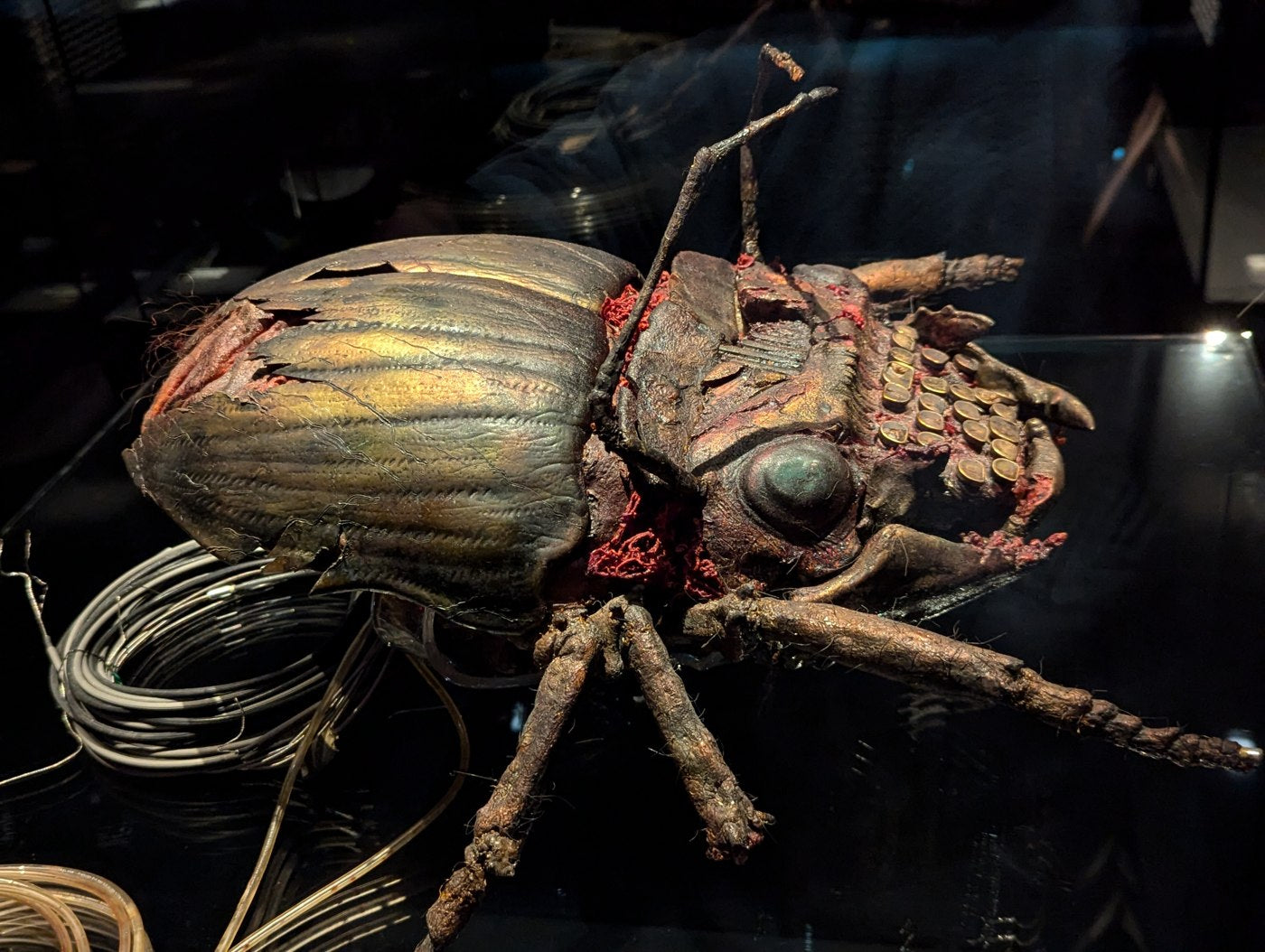
Sources: Ira Silverberg, editor: Everything Is PermittedTwo dated photographs bring the Clark-Nova’s exhibition history into view: an oblique study from October 2024 and a frontal photograph from February 2025 at the Academy Museum in Los Angeles. The paired visual study follows the keyboard into the shell and its visible operating cables, then sets these views beside the earlier catalogue’s distinction between intact and beaten variants.
Sources: Clark-Nova at the Academy Museum: front view · Clark-Nova at the Academy Museum: side view · TIFF / Volumina: David Cronenberg: EvolutionSchottlaender’s bibliography describes the 1991 Fox kit as a folder of separate units: 42-page and two-page promotional texts, eight pages of credits, nine colour slides with captions numbered NL-C-1–8, a six-still mini-set, and a larger still group. It also records a separate First Independent prospectus.
Sources: Brian E. C. Schottlaender: Anything But RoutineThis structure matters to the campaign history. A loose publicity photograph and a complete kit are different archival objects. Numbers, captions and folder context can establish which set a print belongs to; a familiar image alone cannot. The NYU holdings offer a separate institutional route into the production paperwork.
Sources: NYU Fales: Ira Silverberg Papers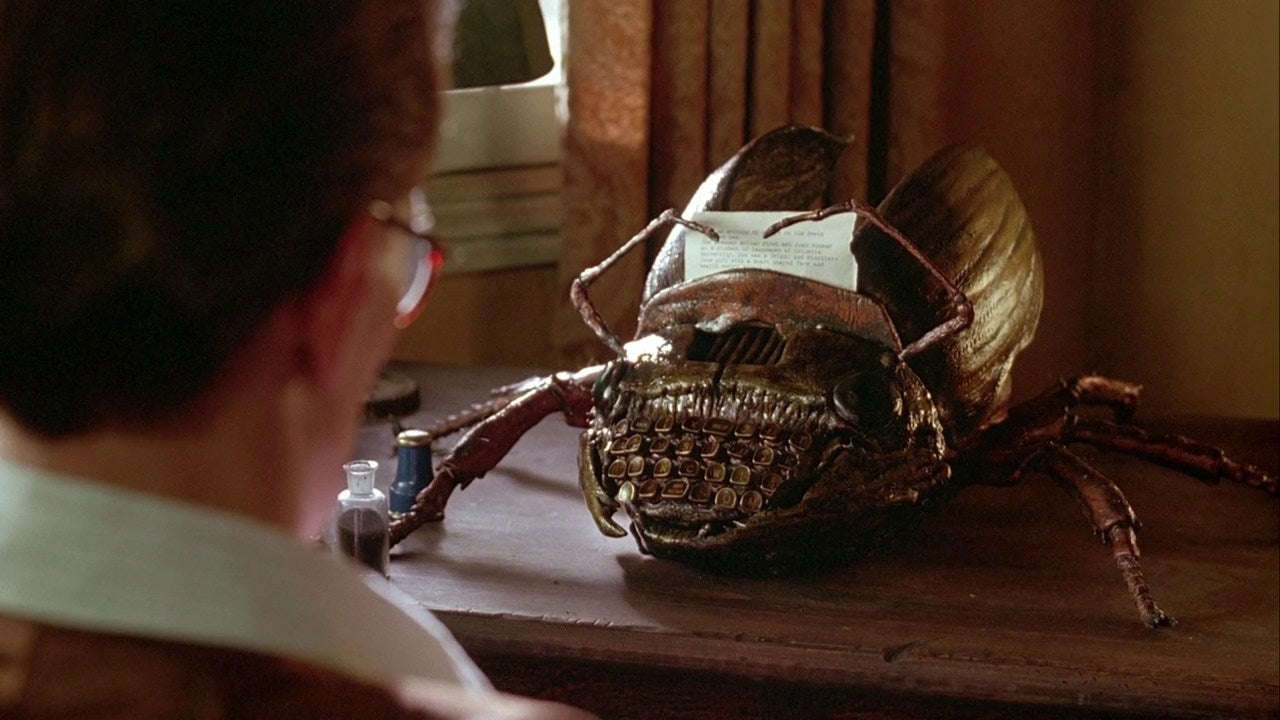
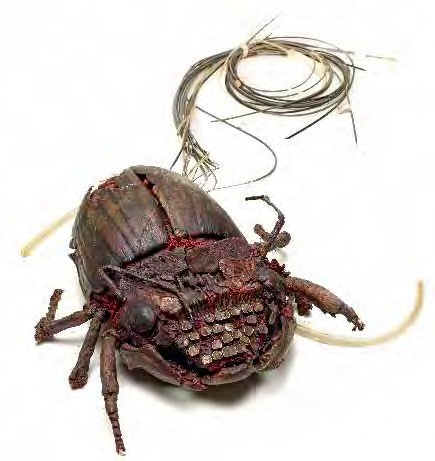
In the film frame, paper rises between the opened wings and the keyboard. The machine still presents a place to work. In the catalogue photograph, the damaged object exposes a much less orderly assembly of cables and components. The two views connect a character’s visible condition to the specialized object made to perform it.
Scroll sideways to read all columns. Keyboard: focus the table, then use the arrow keys.
| Look for | Why it matters |
|---|---|
| Keys retained at the front | The object remains recognizable as an instrument of writing. |
| Paper between raised wings | A familiar task continues inside unfamiliar anatomy. |
| Visible wires on the beaten puppet | The surviving object records mechanism as well as appearance. |
Read Weller’s account of acting opposite the live machines alongside these physical variants.
Back to collections ↑The drawing distributes attention across streets and facades; the film frame concentrates it through one opening. From their different viewpoints, one offers a field to explore while the other makes the city part of a room’s composition.
Sources: TIFF / Volumina: David Cronenberg: Evolution · Naked Lunch: frame collectionSee Spier’s account of reused spaces for the production context of this comparison.
Follow the drawing into the working market set.
Back to collections ↑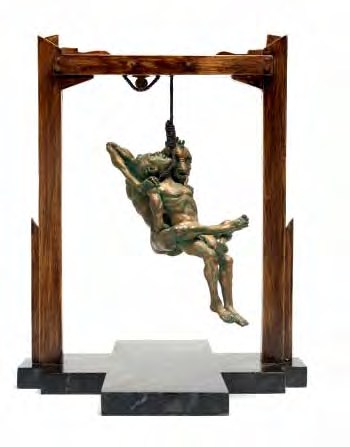
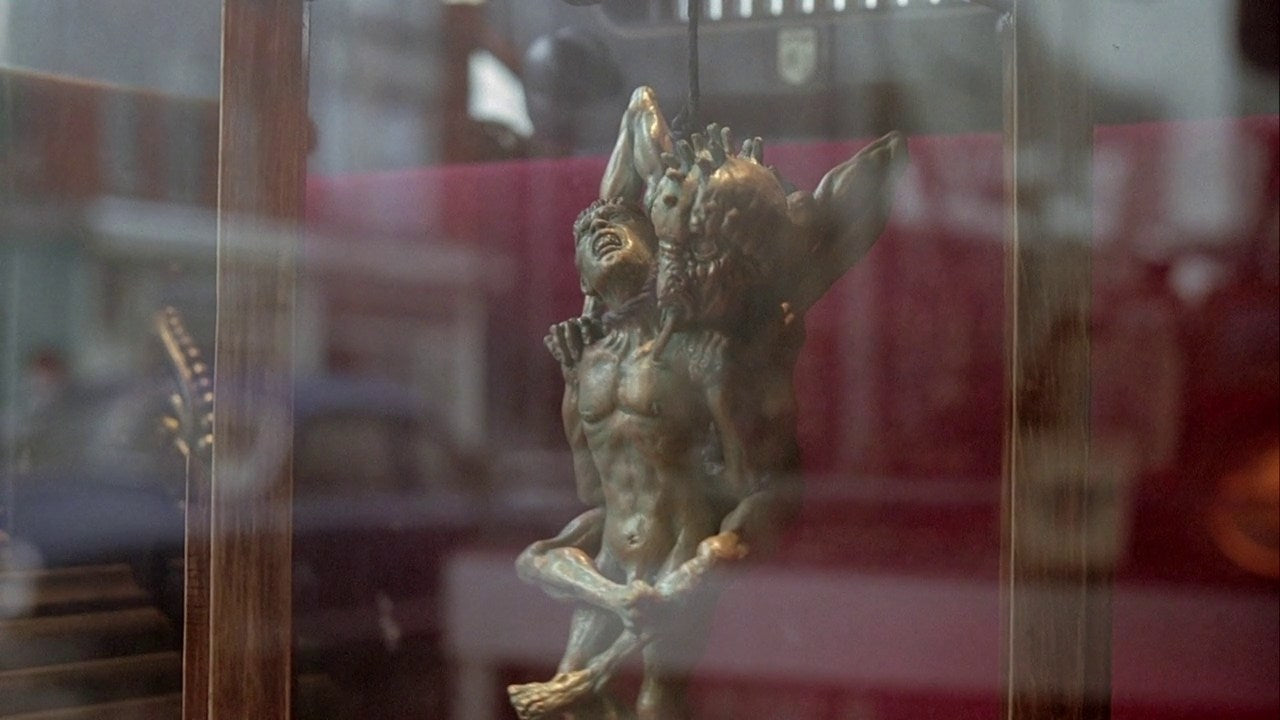
The catalogue removes the object from its setting, making the joined figures and base easier to examine. The screen image returns reflection, glass and the street around it. A fantastical body has become a collectible thing inside the film itself. That change of scale is central to the image: the creature can be an interlocutor, a specimen and a small commodity.
Sources: TIFF / Volumina: David Cronenberg: Evolution · Naked Lunch: frame collectionBack to collections ↑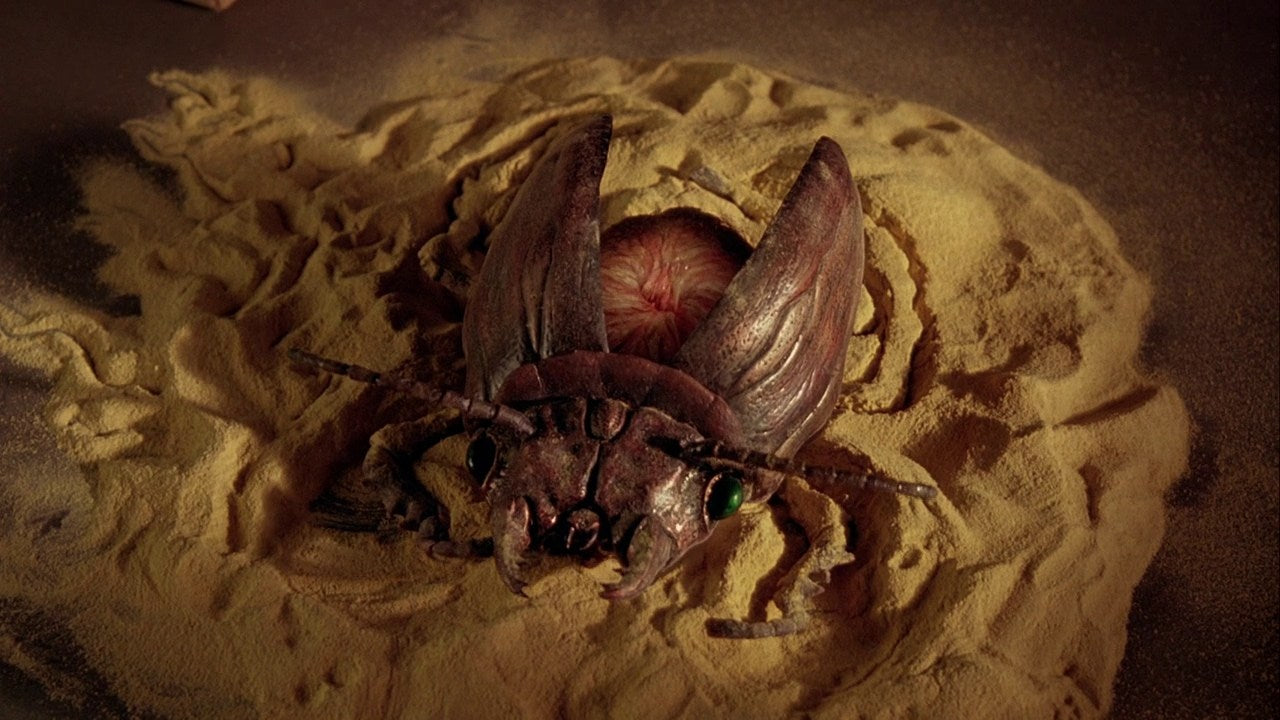
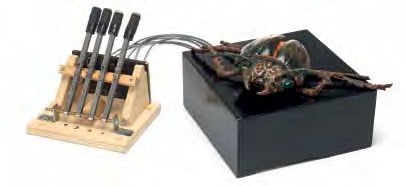
The screen image isolates the speaking insect in a small, ordinary container. The catalogue widens the object’s identity to include its controls. What the character hears as authority is supported by a device that can be held and operated. The photograph gives the performance a second scale: the insect’s size within the story and the apparatus required to make it act.
Sources: Naked Lunch: frame collection · TIFF / Volumina: David Cronenberg: Evolution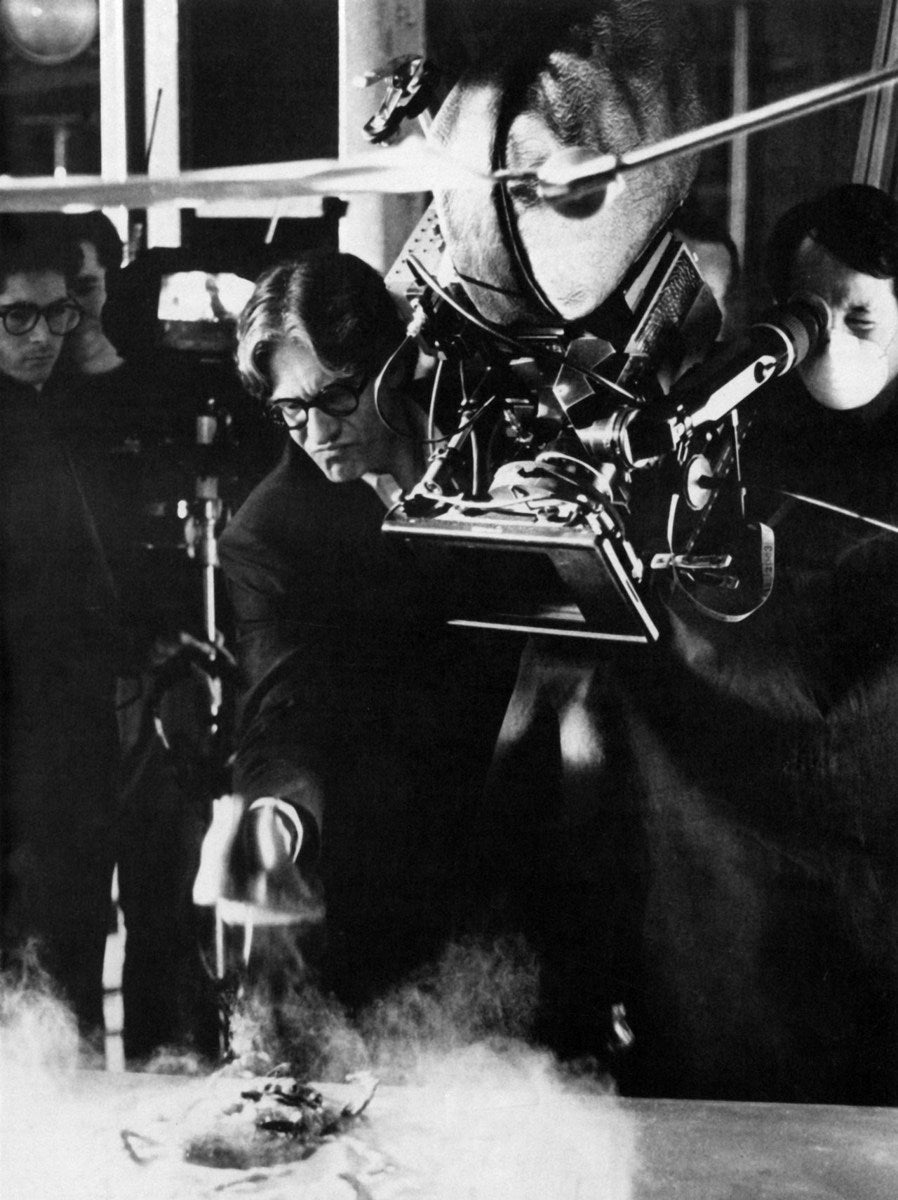
The production photograph makes another division of labour visible. The shoe and small body occupy a narrow playing area beneath the camera; the people making the close view fill the space around it. Compare the insert photograph with the workshop’s action-specific bodies.
Sources: Jody Duncan: Borrowed FleshBack to collections ↑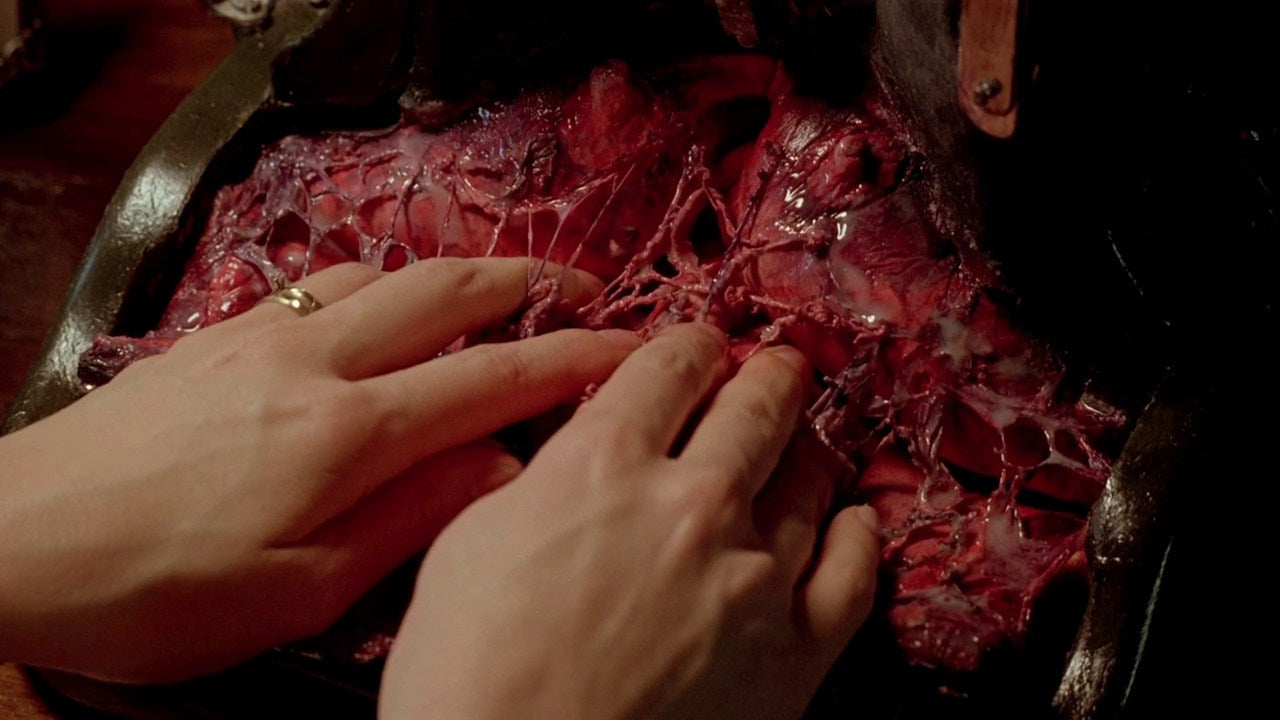
The first image makes language a modification of a familiar mechanism. The second replaces the expected hard interface with a yielding-looking mass. Both depend on the recognition of a hand using an instrument. The transformation becomes legible because the gesture remains recognizable even when the surface changes.
Sources: TIFF / Volumina: David Cronenberg: Evolution · Naked Lunch: frame collectionBack to collections ↑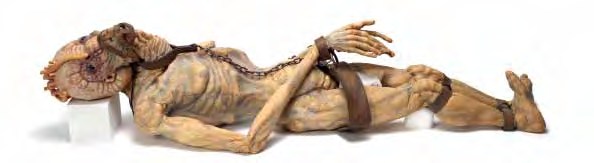
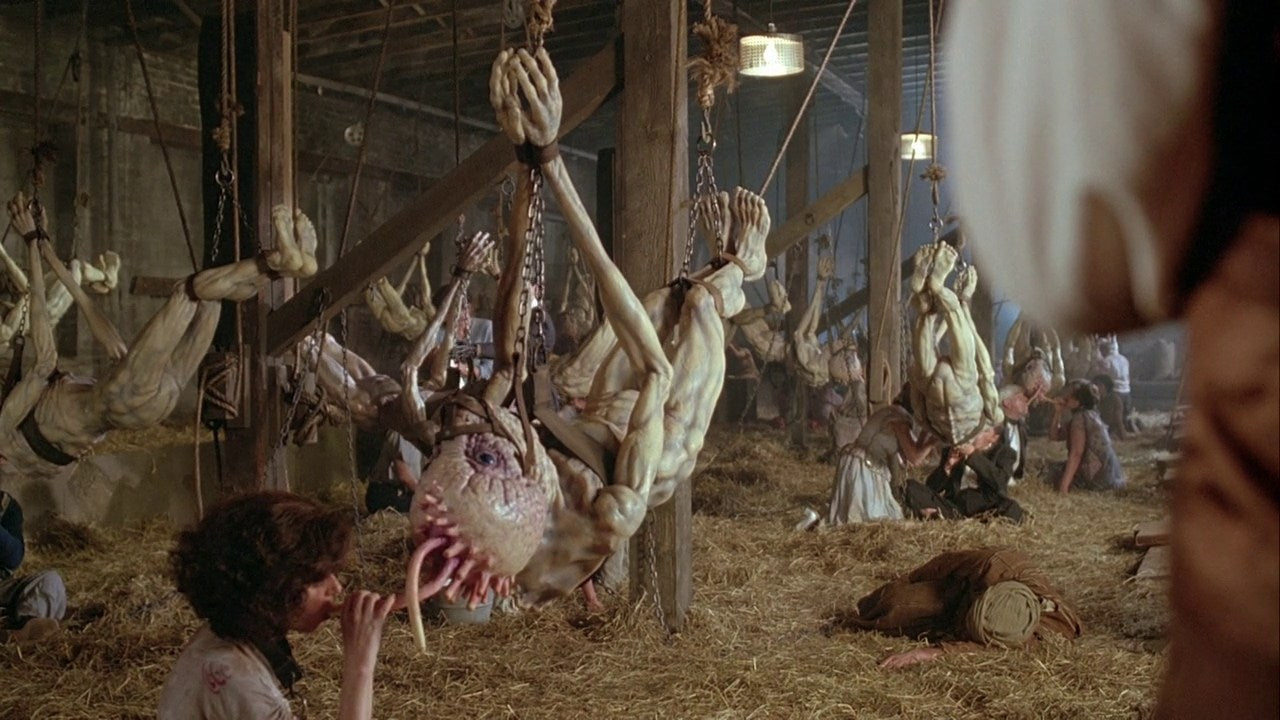
The isolated model shows belts, chain, long limbs and the internal support implied by its pose. The screen turns repetition into an industrial environment. Straw, ropes and hanging anatomy replace the social intimacy of the bar. A creature once encountered as an individual becomes part of an organized supply.
Sources: TIFF / Volumina: David Cronenberg: Evolution · Naked Lunch: frame collectionThe catalogue’s wood-supported model and the Mugwump being prepared for a speaking scene preserve different forms of construction. Set beside the production account, they show why a crowd figure and a conversational performer should be catalogued separately. The screen can make both belong to one species while their physical demands remain different.
Sources: TIFF / Volumina: David Cronenberg: Evolution · Jody Duncan: Borrowed FleshThe set-transformation table connects this study to the architecture collection.
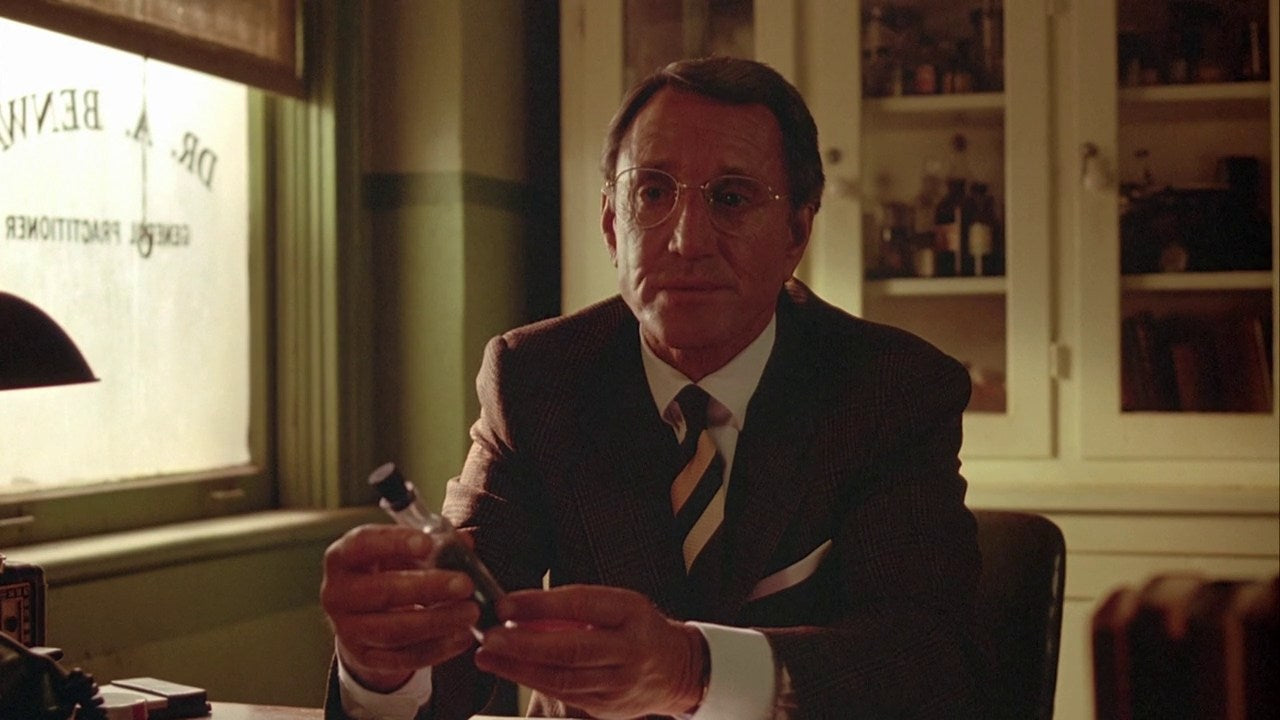
Back to collections ↑The consulting-room image places the face within the familiar signs of a profession. The effects photograph exposes another way of making a person convincing: a surface that can be removed. Read together, they make Benway’s authority seem constructed twice, through institutional surroundings and through the body’s visible exterior.
Sources: Naked Lunch: frame collection · Jody Duncan: Borrowed FleshBack to collections ↑The US composition uses the hat and shoulders to stabilize a portrait whose centre has become machinery. Sorayama’s illustration places human legs and an insect body beneath a white drape. The first image asks what has happened to the man; the second stages an unstable relation between body and covering. Their separate dates, territories and credits remain part of their identities.
Sources: Film on Paper: US one-sheet · Film on Paper: Japanese bug-style B2Scroll sideways to read all columns. Keyboard: focus the table, then use the arrow keys.
| Sheet | Recorded format and date | Credit and identity |
|---|---|---|
| US one-sheet | 1991; double-sided; measured example 26¾ × 39 11/16 in. | Twigger; art direction Dyer / Dyer/Mutchnick. The collector’s actual measurement and the dealer’s nominal size describe different records. |
| UK quad ↗ | Catalogued 1991; single-sided; 30 1/16 × 40 in. | Designer unassigned. The collector describes Weller’s face with a centipede. |
| Japanese bug-style B2 | 1992; single-sided; 20 6/16 × 28 15/16 in. | Illustration: H Sorayama. The draped figure belongs to this specific treatment. |
| Japanese red-style B2 ↗ | 1992; single-sided; 20 6/16 × 28 14/16 in. | A separate catalogued style; artist and designer unassigned. |
Format is part of the argument. The two reproduced vertical sheets make a transformed body into a central emblem. The quad’s reported face-and-centipede pairing promises an encounter. Each printed object selects a route into the film; none is a neutral inventory of its creatures.
The campaign collection separates these theatrical sheets from later disc and record sleeves.
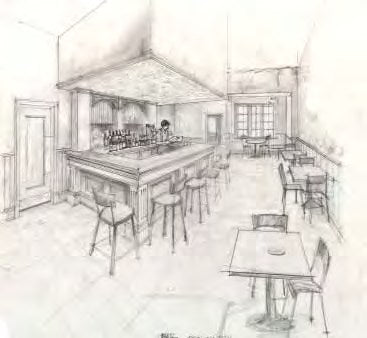
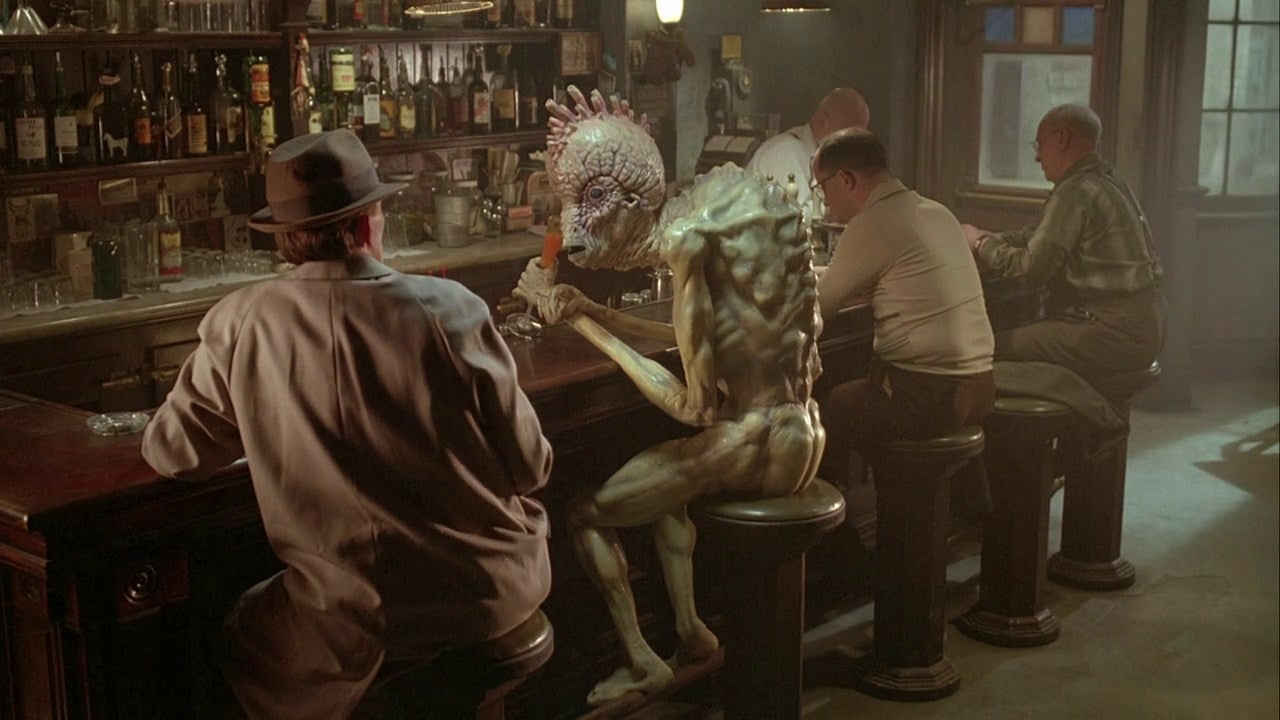
The preliminary drawing establishes a room through a counter, regular stools, small tables and a rear window. The film frame places the creature inside that familiar arrangement. Its feet, elbows and glass give it the same practical relationship to the furniture as the other customers. The Mugwump is conspicuous, but the room supplies it with a place.
From different viewpoints, the drawing and frame organize a social interior around a working counter. Anatomical impossibility enters a room whose uses are already clear.
Sources: TIFF / Volumina: David Cronenberg: Evolution · Naked Lunch: frame collection · Peter Suschitzky: grounding the hallucinationDuncan reports a six-foot elevation beneath the bar set. Kelly Lepkowski describes a stool designed to conceal cables and a support rod while permitting sideways movement.
Sources: Jody Duncan: Borrowed FleshThat hidden vertical space changes how the image can be read. The stool is both believable furniture and an interface with the apparatus below. Compare the preparation photograph with the creature’s relaxed place at the counter: the set organizes the labour that the finished composition keeps out of sight.
Back to collections ↑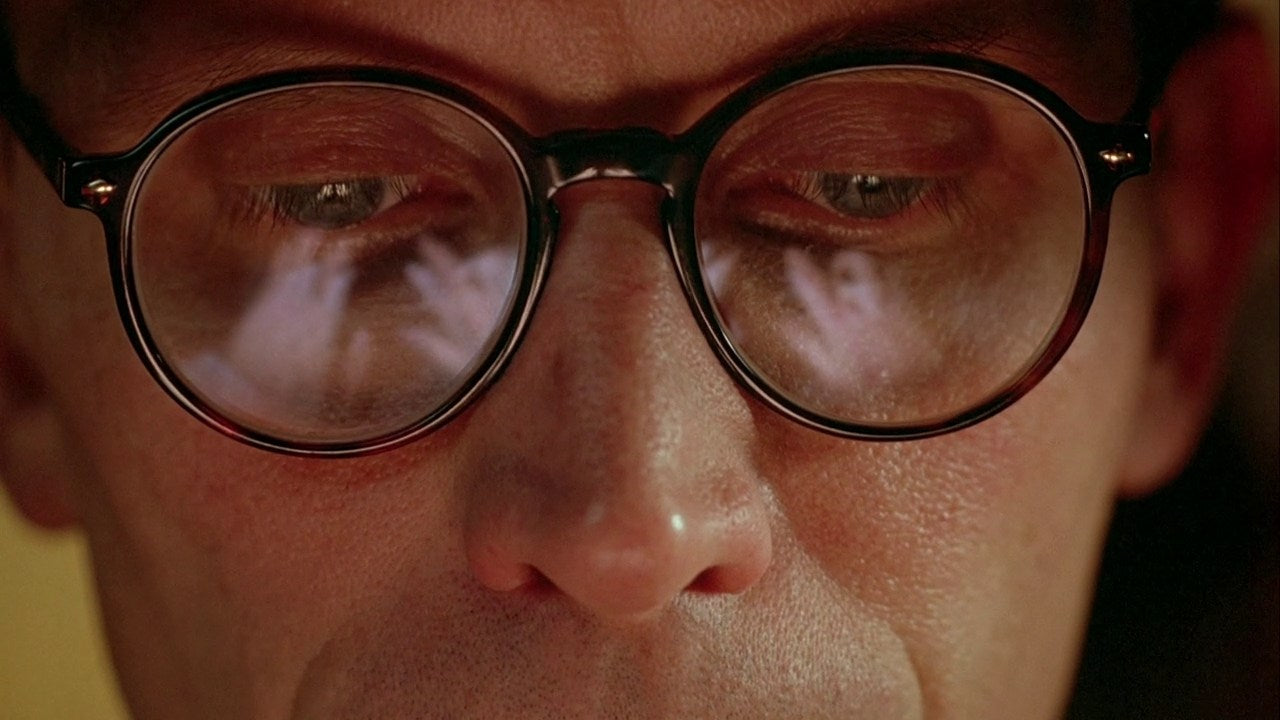
The spectacles bring another image directly onto Bill’s face. His eyes remain visible behind the reflected forms, so looking and being seen occupy the same small area. In the mirror composition, the reflected world expands to include a room and a second body. The two images use an ordinary reflective surface to complicate the boundary between a person and what surrounds him.
Neither still establishes the duration of the shot. What can be compared is the construction of the image: two lenses isolate vision at the scale of the face, while the mirror encloses an encounter at the scale of the room.
Sources: Naked Lunch: frame collectionBack to collections ↑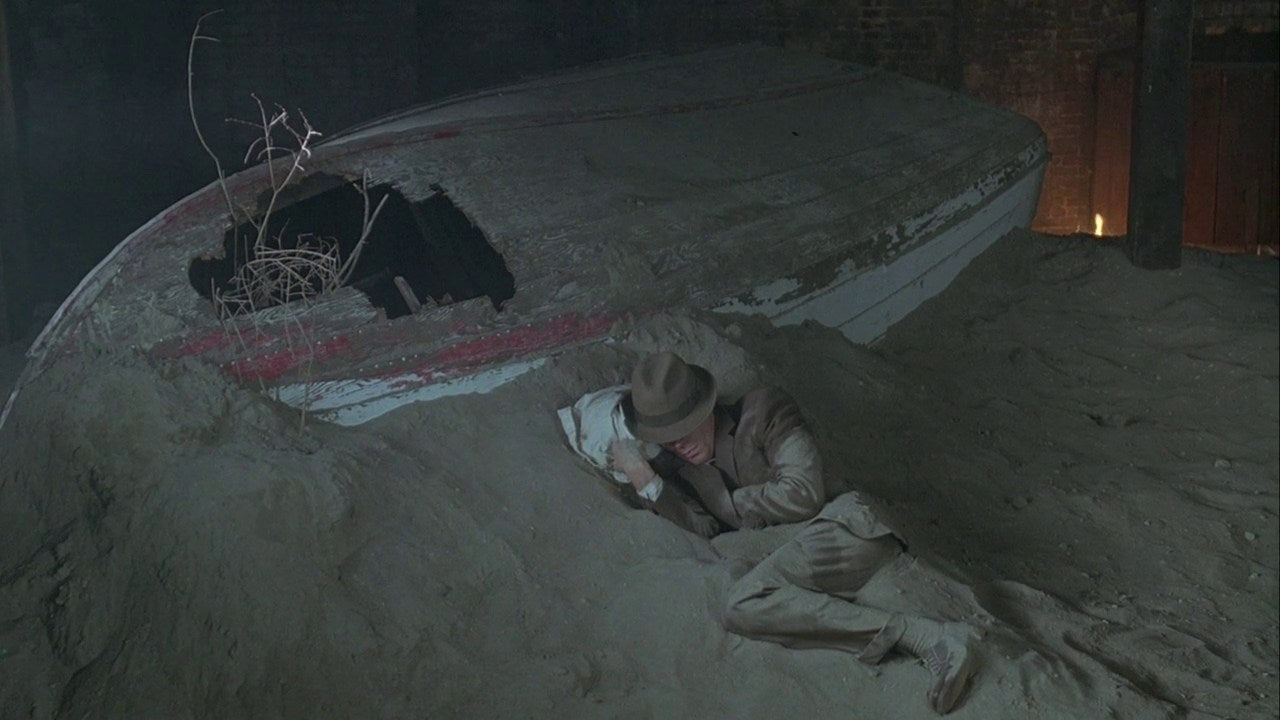
One image brings a city to the edge of a writing room; the other brings the texture of a shore inside an enclosure. The boat has the weathering expected of an outdoor object, but the upright posts and background wall prevent the sand from becoming an open coast. Both images make a landscape available in a restricted space.
This visual relationship is especially revealing beside Spier’s account of the indoor beaches. The set does more than substitute for a distant location: its limits become part of the film’s geography.
Sources: Naked Lunch: frame collection · Cinefantastique: production and effectsBack to collections ↑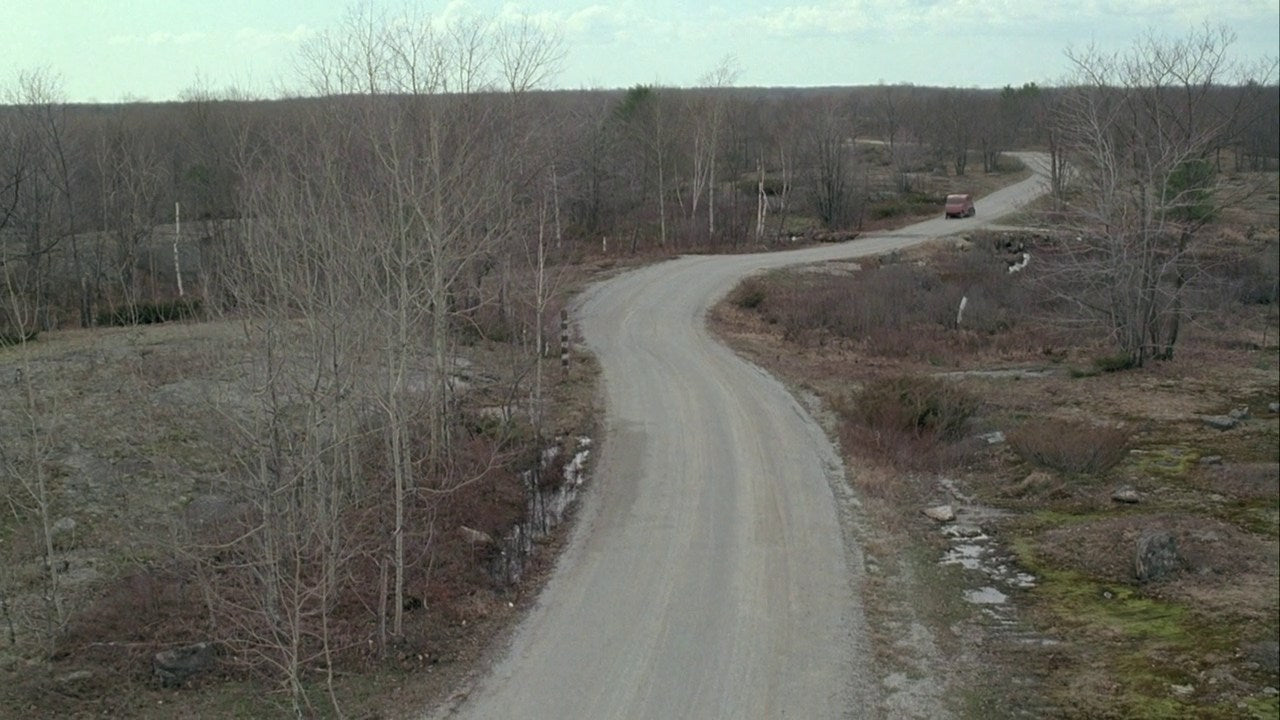
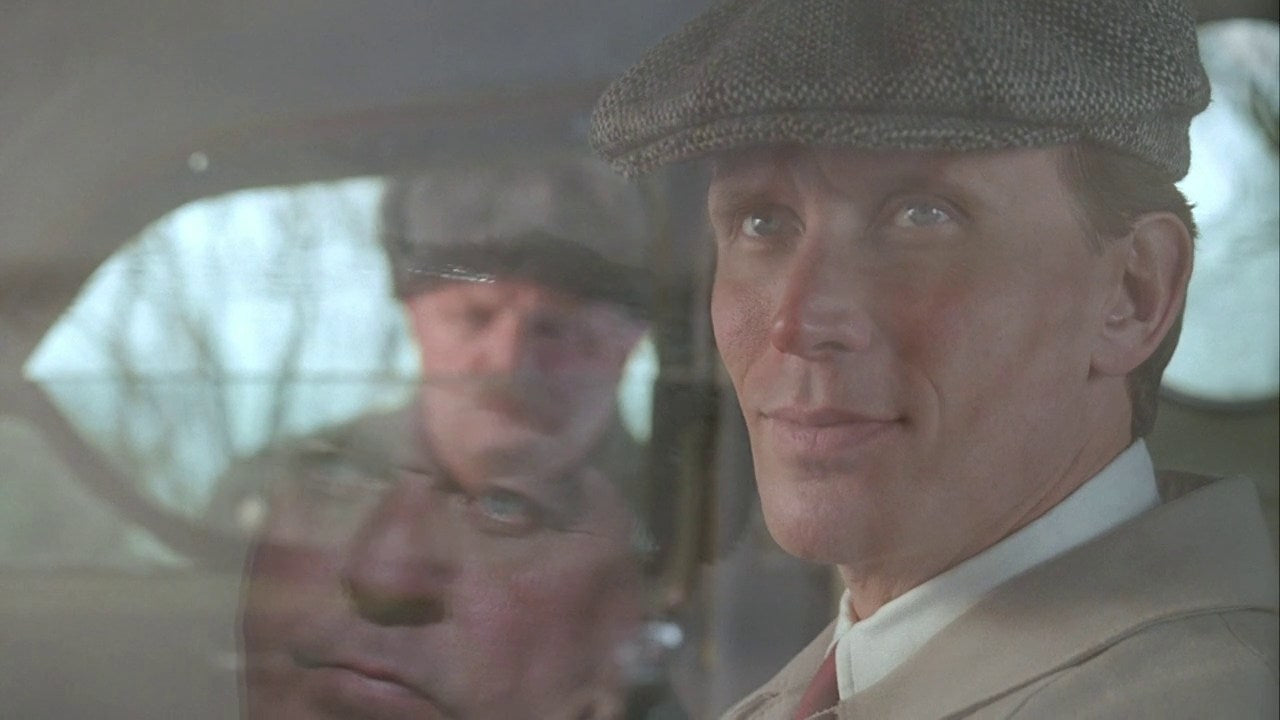
After the enclosed streets and rooms, the broad road offers an unusually long view. A small vehicle is held within the curve rather than filling the image. The border frame contracts that freedom back to a human encounter. An apparently open route leads to another demand that Bill establish who he is.
The contrast can be read spatially before it is read as an ending: distance opens, then authority intervenes. The film returns its writer to the problem of providing acceptable evidence of his occupation.
Sources: Naked Lunch: frame collection · HanWay: film and restoration recordBack to collections ↑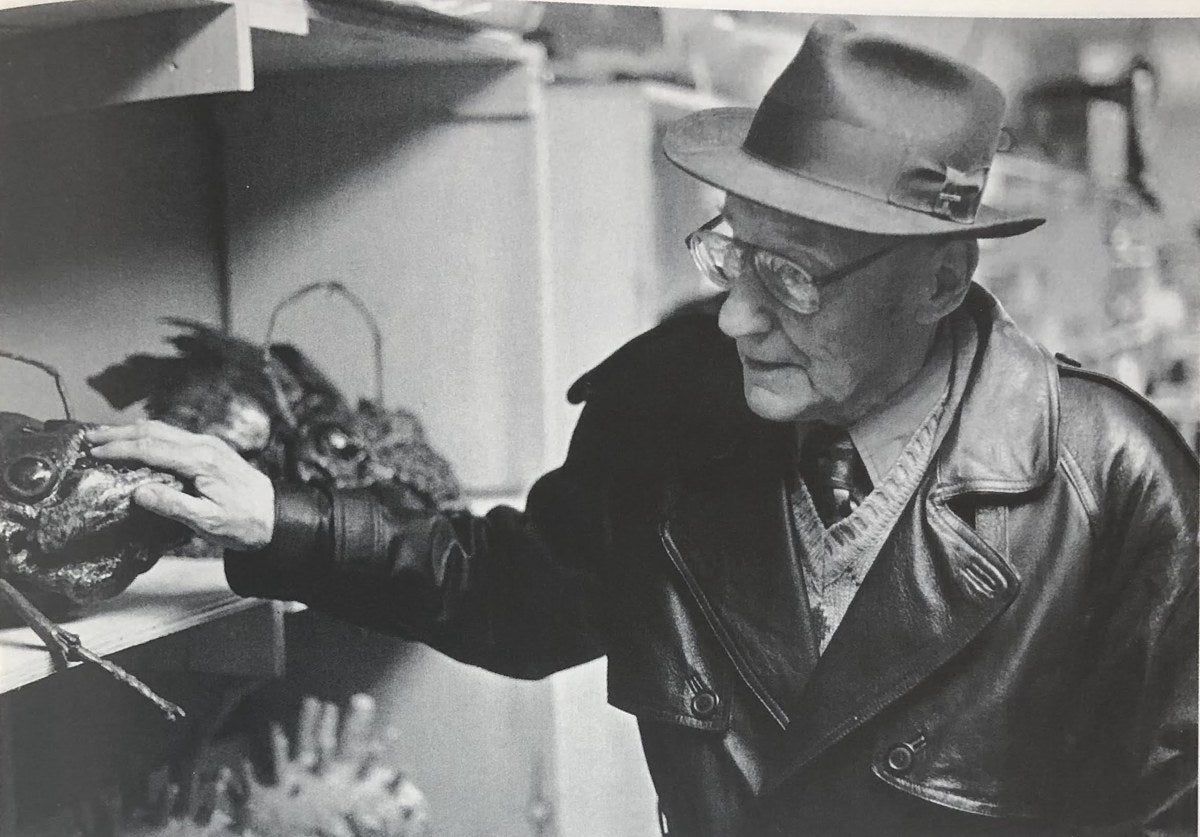
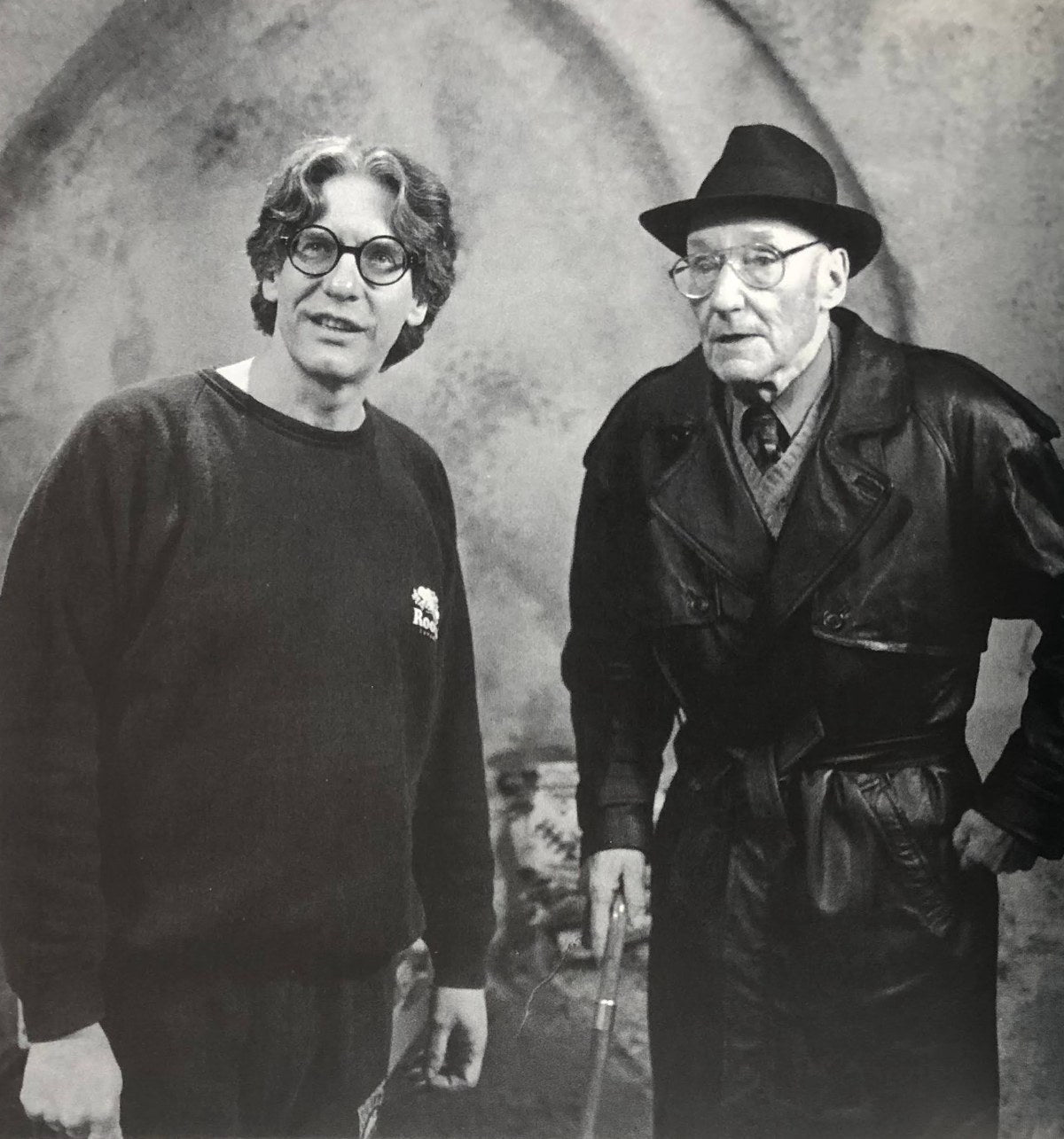
A hand on the creature makes scale and contact visible. The adjoining portrait changes the relationship again: two makers stand within the world built around their work. These photographs preserve encounters outside the fiction, while the fabricated object connects them to it.
Sources: Ira Silverberg, editor: Everything Is PermittedPalmer also describes Burroughs examining the Mugwumps during his set visit. His report gives the visit a working context: the author meets objects that other people have designed, fabricated and operated.
Sources: Robert Palmer: The Novelist, the Director, and the MugwumpsBack to collections ↑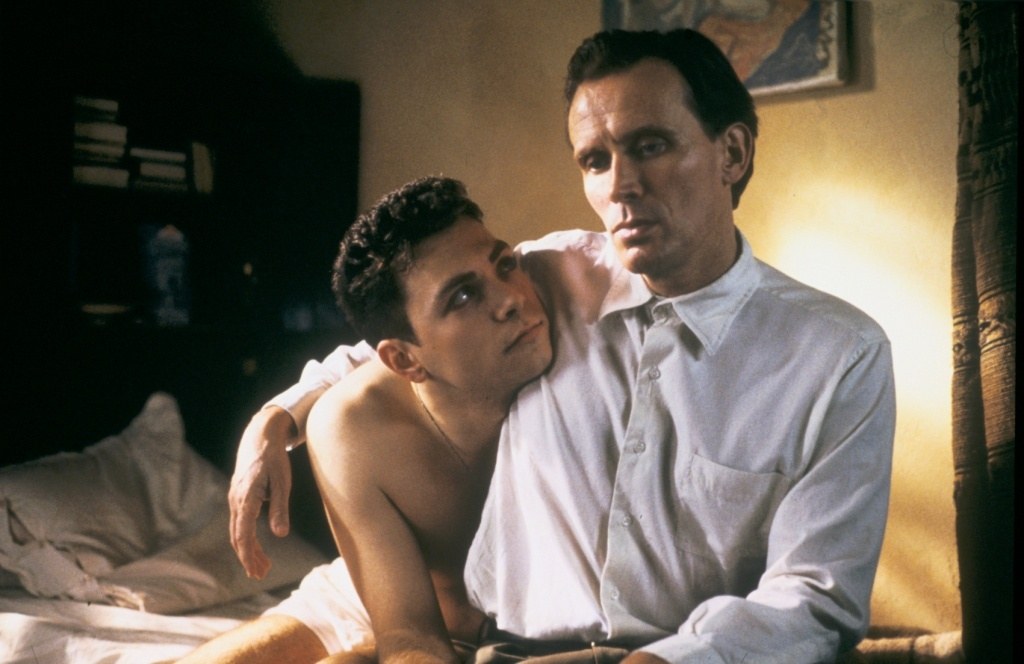
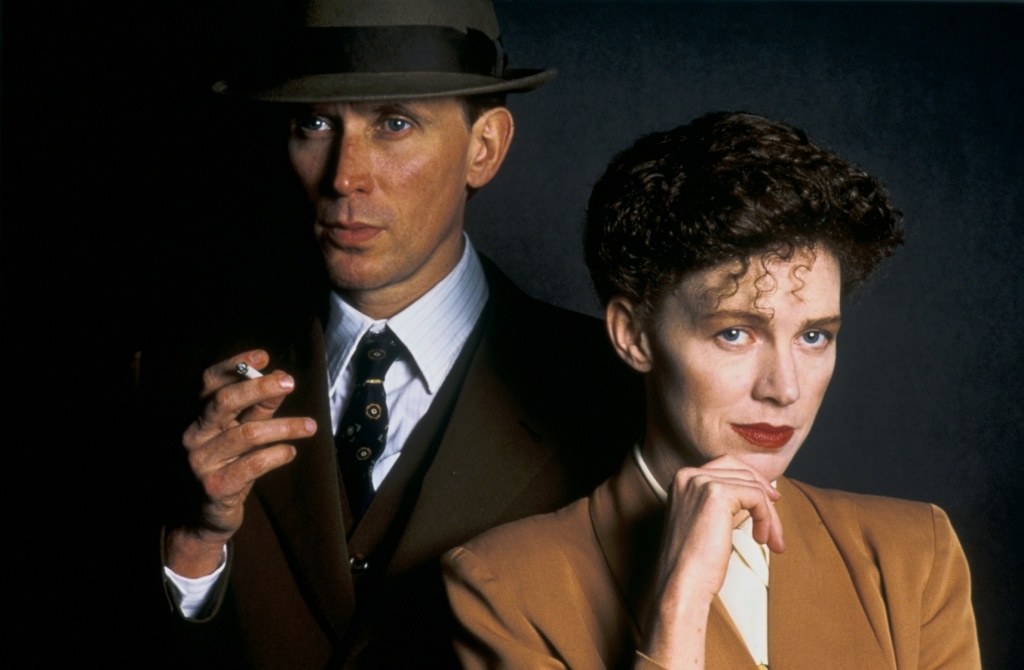
One publicity photograph folds two bodies together; the other arranges faces for the viewer. Shirt, tailoring, posture and gaze change the relationship before any dialogue is heard.
Sources: Arrow / Fetch: publicity and edition recordHampton’s account of the two Joans provides a useful companion to this comparison: repetition of a face does not mean repetition of a performance. Publicity can sell that familiar face, while the film makes recognition part of Bill’s disturbance.
Sources: Howard Hampton: Double ExtremityBack to collections ↑Film frames, cards, machine badges and border papers reveal the film’s graphic world. Gallery numbers identify individual reference images.
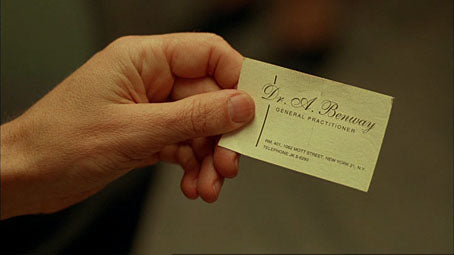
The card gives Benway’s name a decorative, sloping script. A thin vertical rule divides off the left side; the professional description uses much smaller capitals beneath the name. The address block sits lower still. Hierarchy does the work: the signature-like name is encountered first, the claim of medical practice second, the practical contact details last.
Scroll sideways to read all columns. Keyboard: focus the table, then use the arrow keys.
| Graphic element | Card | Office glass |
|---|---|---|
| Name | Dr. A. Benway, in script | The name and initial appear in tall capitals, reversed from the room’s interior. |
| Professional line | GENERAL PRACTITIONER, beneath the name | The same professional description appears as a smaller line beneath the arched name. |
| Arrangement | Small horizontal rectangle with a left rule and lower address block | Large translucent field that admits light beside the desk. |
| Story function | An identity that can be held and passed on | An identity fixed to the place of consultation. |
The card gives Benway’s practice a Mott Street address in the film’s New York. Beside the bottles, desk and conservative suit, it makes his authority look routine. The later Fadela reveal makes that composed identity newly suspect. Fadela reveal
Back to collections ↑The letter makes an intimate admission about dependence on something whose existence its writer doubts. A salutation locates a reader outside the room. Uneven impressions, overstruck letters and the misspelling withdrawl keep the act of typing visible. The paper has not become a clean literary artifact: it remains a worked surface inside a machine.
The second sheet begins directly with a recollection of horror, expressed through glands and the brain. Three closely spaced lines sit within a broad area of empty paper. The last visible line ends in a colon. That punctuation holds the passage open; the image makes an unfinished sentence into a physical object.
The two images also expose the equipment differently. In the letter frame, the machine’s front and paper guide partly obstruct the lower text. In the second, the metal type guide and numbered scale are prominently visible beneath the sheet. These details distinguish the photographed pages without requiring the machines to be identified from an unseen badge.
Sources: Naked Lunch: frame collection · Criterion Forum: 2013 Blu-ray frame galleryThe second sheet also carries a recognizable literary fragment. Follow its connection to Queer and Naked Lunch to see how the printed words acquire a history beyond the prop’s surface.
Back to collections ↑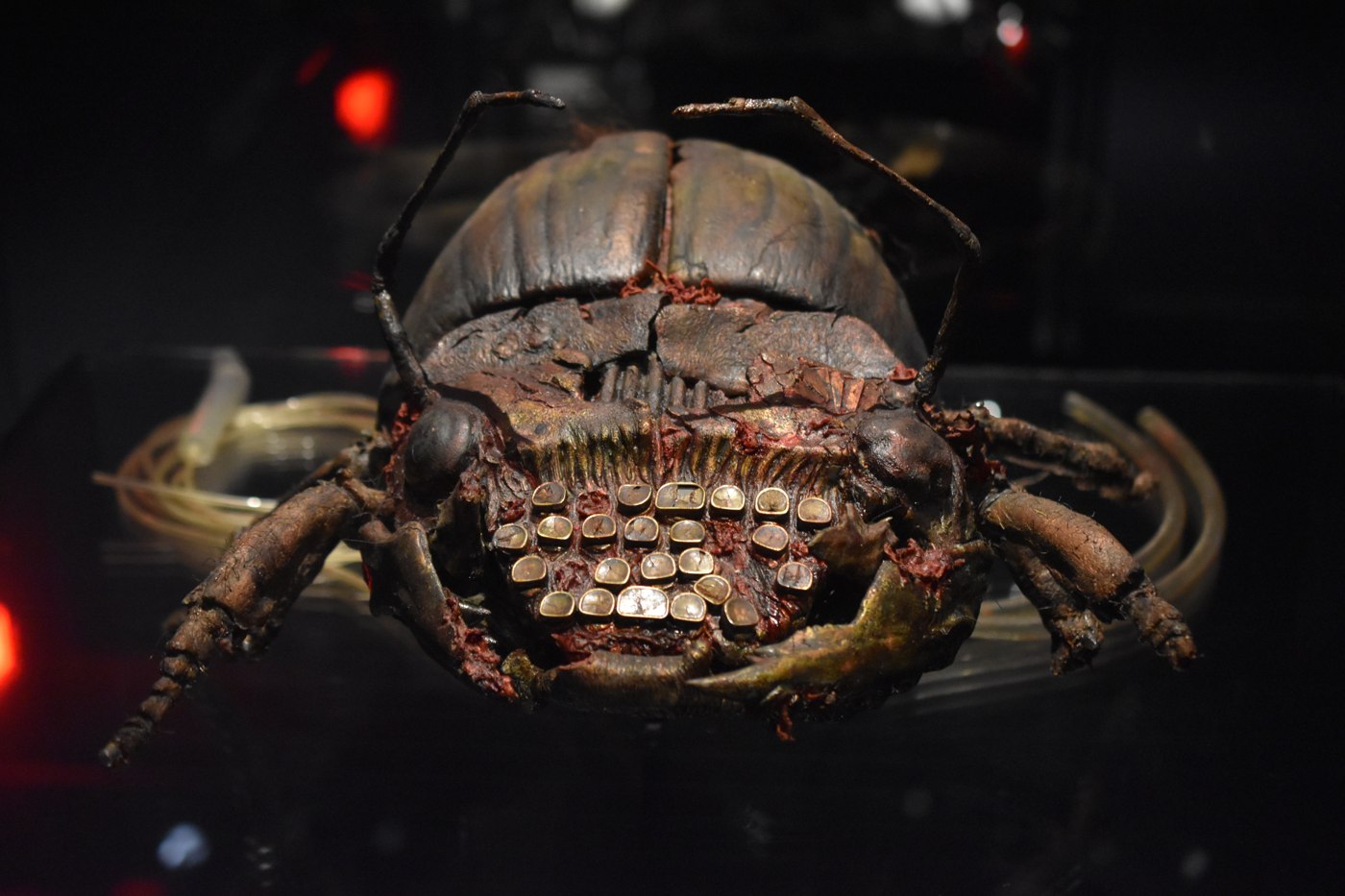
The front view makes the keyboard a face. Metal-rimmed keys spread between rounded eyes and curved appendages; the ordinary spacing of a writing machine has become an uneven field within the creature’s head. Above it, broken plates expose red fibrous material. The paired shell surfaces form a broad, ridged back.
The oblique view changes the emphasis. Coiled cables occupy the space behind and beneath the body, while the keyboard projects from its front. The creature’s outline and its operating equipment can be read together. This is the physical counterpart to the workshop accounts: a speaking presence on screen depends on an extended apparatus outside the frame.
Sources: Clark-Nova at the Academy Museum: front view · Clark-Nova at the Academy Museum: side view · Jody Duncan: Borrowed Flesh · Cinefantastique: production and effectsScroll sideways to read all columns. Keyboard: focus the table, then use the arrow keys.
| Record | What it makes visible | How to read it |
|---|---|---|
| 2013 Evolution catalogue | An intact hard-foam prop and a separately catalogued beaten, mechanized puppet. | The entries distinguish fabricated variants through materials, dimensions and credits. |
| 2024–25 exhibition photographs | The keyboard, fractured shell, exposed red fibres and cables of a displayed Clark-Nova. | These views record an object’s appearance on the photographed dates. Its visible damage invites comparison with the beaten variant. |
| Screen and workshop photographs | A character in an encounter, and operators working around its body. | The fictional character, the object that performs an action and the equipment used to operate it occupy different frames. |
Damage has two histories here. The effects workshop made a beaten version for the story; a surviving object also has a later material life. A cracked surface alone does not tell us when or why it broke. The useful comparison holds the catalogued beaten puppet beside the dated exhibition photographs, preserving the distinction between designed injury and subsequent condition.
In his 2025 conversation with Mia Lee Vicino, Cronenberg confirmed that he had visited the Academy display. He described the pleasure of seeing connections between objects gathered from his films. The museum turns a creature made for a particular scene into part of a larger body of work.
Sources: Cronenberg on seeing his objects in a museumReturn to the screen and workshop comparison, the history of specialized variants, or the distributed archive.
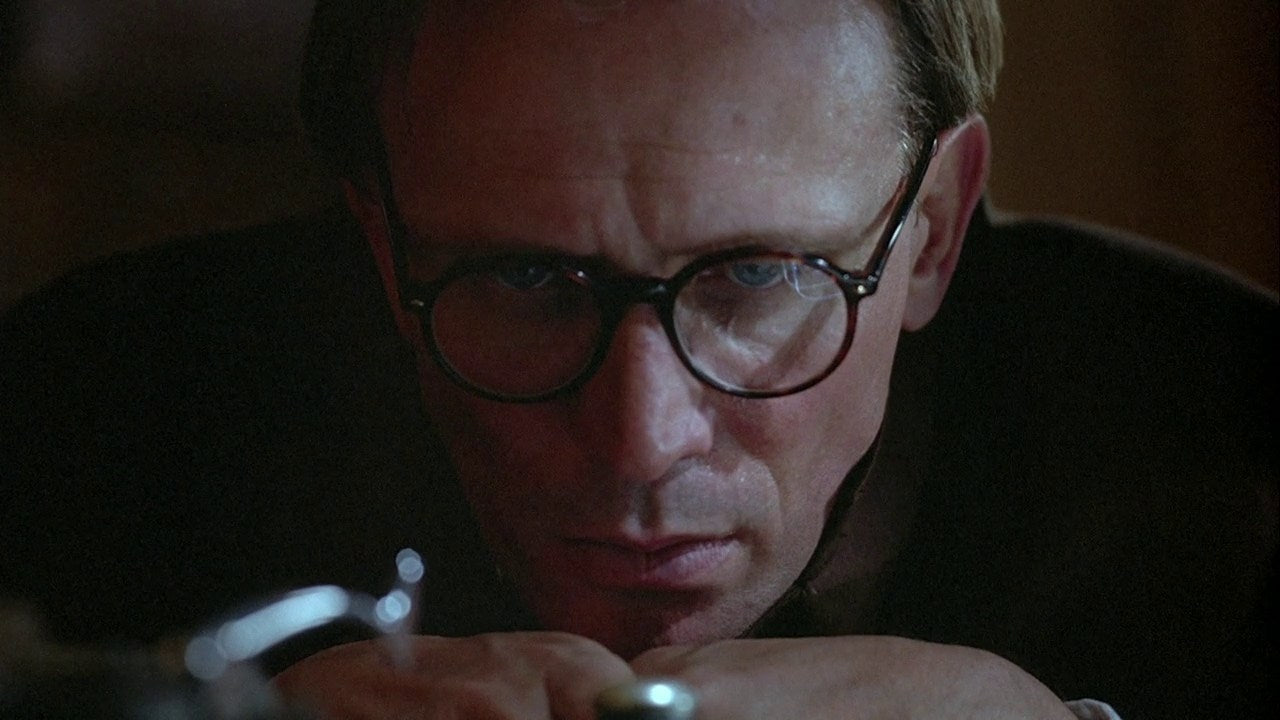
Weller’s face nearly fills the first image. One cheek and lens are comparatively bright, while the other side recedes into shadow. The round spectacles remain legible across that difference; their dark rims give the face a second contour. His hands form a low horizontal edge beneath his chin. The expression is held between these enclosing shapes, with little surrounding room to distract from it.
The second image opens the space. Bill’s blurred head and shoulder occupy the foreground, facing the creature across a desk. The Clark-Nova’s keys catch separate points of light, while broader highlights describe the ridged shell. A pale sheet rises between the lifted covers. Beneath it, the uneven surface of the body remains distinct from the smoother wooden plane supporting it.
Compare the illuminated edges with the exhibition photographs. The screen image selects a speaking face from a more extensive manufactured object. Paper, keys, shell and limbs belong to one encounter, while the operating apparatus remains outside this composition. Light gives the hybrid a readable surface; the desk gives it a place.
Sources: Naked Lunch: frame collectionRead with Suschitzky’s production account, these individual frames connect photography with the workshop’s work through their composition, surfaces and light. Suschitzky’s production account
Back to collections ↑Explore surviving props, set drawings, production photographs, screen details and printed editions. Each record connects its visual evidence with a source and a wider context.
A keyboard and paper carriage remain visible within an insect-shaped shell.
Clark-Nova hard-foam prop. David Cronenberg: Evolution (TIFF / Volumina, 2013), PDF leaf 57. Object photography: Maciek Linowski / Synthescape Art Imaging; drawing by James McAteer where identified.
Open reference ↗Keys, wires and mechanized components survive in the damaged version.
Clark-Nova beaten puppet. David Cronenberg: Evolution (TIFF / Volumina, 2013), PDF leaf 57. Object photography: Maciek Linowski / Synthescape Art Imaging; drawing by James McAteer where identified.
Open reference ↗The catalogue photograph includes the levers behind the speaking insect.
Case Officer Beetle puppet. David Cronenberg: Evolution (TIFF / Volumina, 2013), PDF leaf 57. Object photography: Maciek Linowski / Synthescape Art Imaging; drawing by James McAteer where identified.
Open reference ↗Characters added to the keys make an existing mechanism serve the film’s imagined world.
Mujahadeen Typewriter. David Cronenberg: Evolution (TIFF / Volumina, 2013), PDF leaf 57. Object photography: Maciek Linowski / Synthescape Art Imaging; drawing by James McAteer where identified.
Open reference ↗Joined figures stand on a small base, turning the creature into a display object.
Kiki and Mugwump prop. David Cronenberg: Evolution (TIFF / Volumina, 2013), PDF leaf 56. Object photography: Maciek Linowski / Synthescape Art Imaging; drawing by James McAteer where identified.
Open reference ↗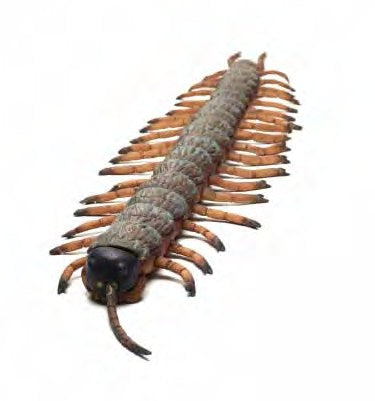
A long low body carries paired orange legs and a dark head.
Giant aquatic centipede prop. David Cronenberg: Evolution (TIFF / Volumina, 2013), PDF leaf 55. Object photography: Maciek Linowski / Synthescape Art Imaging; drawing by James McAteer where identified.
Open reference ↗Belts and chains organize the body for the dispensary environment.
Mugwump Dispensary model. David Cronenberg: Evolution (TIFF / Volumina, 2013), PDF leaf 58. Object photography: Maciek Linowski / Synthescape Art Imaging; drawing by James McAteer where identified.
Open reference ↗A busy interior is organized through converging lines and its central working area.
James McAteer: Bar Preliminary. David Cronenberg: Evolution (TIFF / Volumina, 2013), PDF leaf 56. Object photography: Maciek Linowski / Synthescape Art Imaging; drawing by James McAteer where identified.
Open reference ↗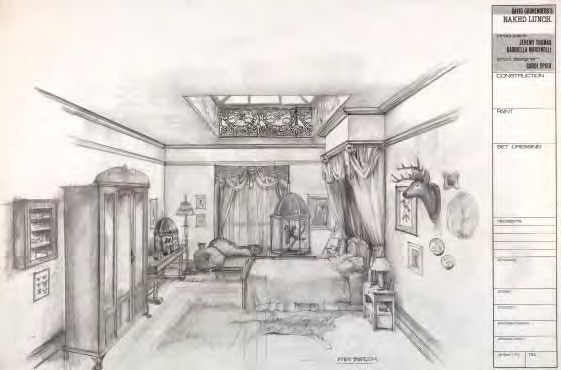
An enclosing room is worked out in a wide perspective drawing.
James McAteer: Yves Bedroom. David Cronenberg: Evolution (TIFF / Volumina, 2013), PDF leaf 56. Object photography: Maciek Linowski / Synthescape Art Imaging; drawing by James McAteer where identified.
Open reference ↗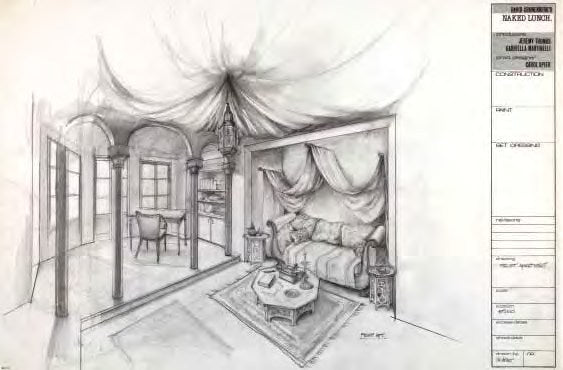
Rooms and furnishings are arranged around the apartment’s layered sightlines.
James McAteer: Frost Apartment. David Cronenberg: Evolution (TIFF / Volumina, 2013), PDF leaf 56. Object photography: Maciek Linowski / Synthescape Art Imaging; drawing by James McAteer where identified.
Open reference ↗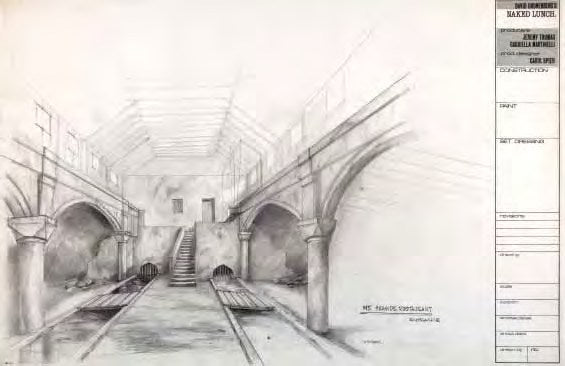
The drawing gives the approach to a social space its own architectural identity.
James McAteer: Int. Seaside Restaurant Entrance. David Cronenberg: Evolution (TIFF / Volumina, 2013), PDF leaf 56. Object photography: Maciek Linowski / Synthescape Art Imaging; drawing by James McAteer where identified.
Open reference ↗Overlapping facades and mixed drawing techniques assemble a city in depth.
James McAteer: Interzone Market #32. David Cronenberg: Evolution (TIFF / Volumina, 2013), PDF leaf 56. Object photography: Maciek Linowski / Synthescape Art Imaging; drawing by James McAteer where identified.
Open reference ↗Jim Isaac works on the Mugwump before its bar scene.
Jim Isaac prepares the Mugwump for its bar scene. Jody Duncan, Borrowed Flesh, Cinefex 49 (February 1992), p.28, image 03. Original article caption identifies Isaac. Exterior puppet preparation, not exposed internal machinery.
Open reference ↗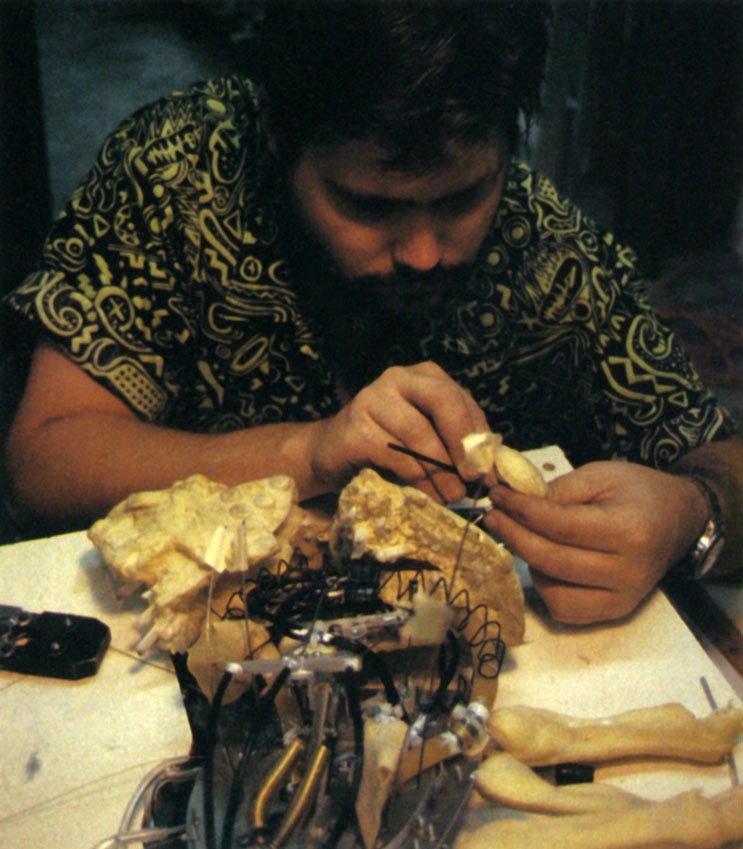
The technician works on exposed articulation mechanisms within an insect-typewriter assembly.
Harold Weed installs articulation mechanisms in an insect rig. Jody Duncan, Borrowed Flesh, Cinefex 49 (February 1992), p.31, image 02.
Open reference ↗Jim Isaac prepares the creatures’ surfaces before filming.
Jim Isaac dresses the Clark-Nova and Martinelli on set. Jody Duncan, Borrowed Flesh, Cinefex 49 (February 1992), p.32, image 02. The photograph records surface preparation, not the puppets in motion.
Open reference ↗A human appearance becomes a removable outer layer around Scheider’s body.
Roy Scheider and the Fadela disguise. Jody Duncan, “Borrowed Flesh,” Cinefex 49 (February 1992), p.39. Production/CWI photograph reproduced in the article.
Open reference ↗Lettering on frosted glass places the doctor’s name within a conventional professional interior.
Naked Lunch (1991), FilmGrab gallery image 10. Film frame reproduction; gallery sequence is the locator. Source image: https://film-grab.com/wp-content/uploads/photo-gallery/10 (745).jpg?bwg=1547238726
Open reference ↗A typed salutation gives Bill’s writing a specific addressee.
Naked Lunch (1991), FilmGrab gallery image 29. Film frame reproduction; gallery sequence is the locator. Source image: https://film-grab.com/wp-content/uploads/photo-gallery/29 (744).jpg?bwg=1547238726
Open reference ↗Writing furniture and an open doorway compress work and city into one room.
Naked Lunch (1991), FilmGrab gallery image 21. Film frame reproduction; gallery sequence is the locator. Source image: https://film-grab.com/wp-content/uploads/photo-gallery/21 (745).jpg?bwg=1547238726
Open reference ↗Hat, lapels and tie give Bill a stable outline within the changing world.
Naked Lunch (1991), FilmGrab gallery image 04. Film frame reproduction; gallery sequence is the locator. Source image: https://film-grab.com/wp-content/uploads/photo-gallery/04 (730).jpg?bwg=1547238726
Open reference ↗Closely related pale tones give Yves Cloquet’s outfit a controlled surface.
Naked Lunch (1991), FilmGrab gallery image 26. Film frame reproduction; gallery sequence is the locator. Source image: https://film-grab.com/wp-content/uploads/photo-gallery/26 (745).jpg?bwg=1547238726
Open reference ↗The dress’s small printed motif sits against the larger pattern of the sofa.
Naked Lunch (1991), FilmGrab gallery image 05. Film frame reproduction; gallery sequence is the locator. Source image: https://film-grab.com/wp-content/uploads/photo-gallery/05 (730).jpg?bwg=1547238726
Open reference ↗Bill’s pale jacket sits at the centre of arches, curtains and carefully arranged tables.
Naked Lunch (1991), FilmGrab gallery image 27. Film frame reproduction; gallery sequence is the locator. Source image: https://film-grab.com/wp-content/uploads/photo-gallery/27 (745).jpg?bwg=1547238726
Open reference ↗Typing hands encounter a red, folded surface in place of a rigid machine.
Naked Lunch (1991), FilmGrab gallery image 32. Film frame reproduction; gallery sequence is the locator. Source image: https://film-grab.com/wp-content/uploads/photo-gallery/32 (742).jpg?bwg=1547238726
Open reference ↗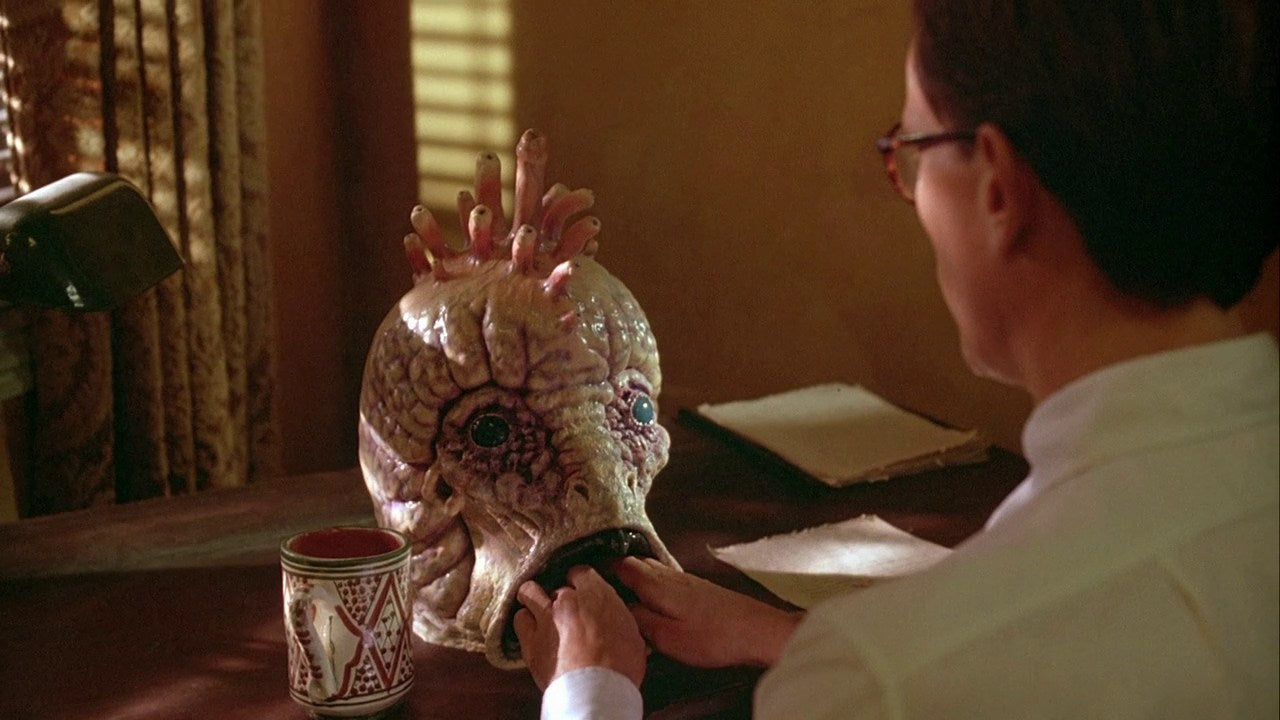
A Mugwump head makes its mouth the working entrance for Bill’s hands.
Naked Lunch (1991), FilmGrab gallery image 40. Film frame reproduction; gallery sequence is the locator. Source image: https://film-grab.com/wp-content/uploads/photo-gallery/40 (740).jpg?bwg=1547238726
Open reference ↗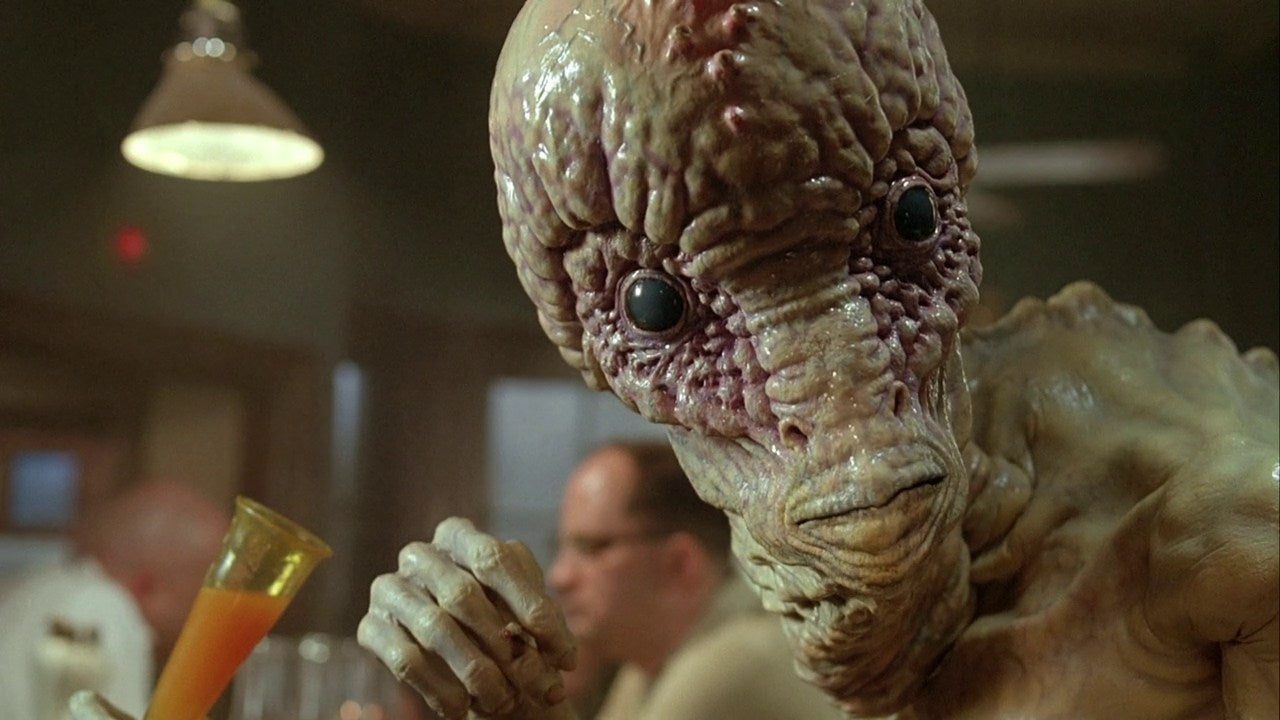
The creature’s face occupies the intimate scale of a conversation.
Naked Lunch (1991), FilmGrab gallery image 16. Film frame reproduction; gallery sequence is the locator. Source image: https://film-grab.com/wp-content/uploads/photo-gallery/16 (745).jpg?bwg=1547238726
Open reference ↗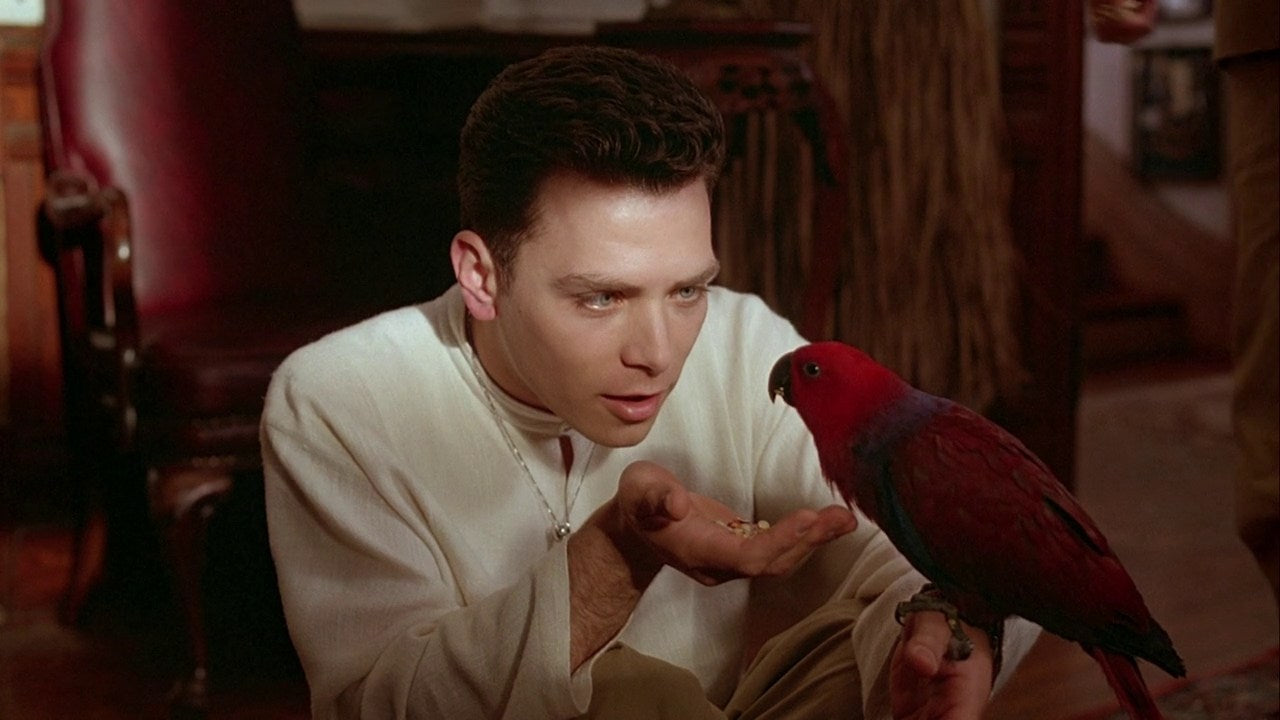
Kiki’s hand and a vivid red bird form a small exchange within the room.
Naked Lunch (1991), FilmGrab gallery image 43. Film frame reproduction; gallery sequence is the locator. Source image: https://film-grab.com/wp-content/uploads/photo-gallery/43 (731).jpg?bwg=1547238726
Open reference ↗Repeated hanging bodies turn the creature into part of an organized supply.
Naked Lunch (1991), FilmGrab gallery image 47. Film frame reproduction; gallery sequence is the locator. Source image: https://film-grab.com/wp-content/uploads/photo-gallery/47 (718).jpg?bwg=1547238726
Open reference ↗A car becomes the setting for an official demand to establish Bill’s occupation.
Naked Lunch (1991), FilmGrab gallery image 50. Film frame reproduction; gallery sequence is the locator. Source image: https://film-grab.com/wp-content/uploads/photo-gallery/50 (709).jpg?bwg=1547238726
Open reference ↗The typewriter takes the place of a face beneath a hat.
A draped insect body and human legs form an unsettling isolated figure.
Japanese B2 bug-style poster, 1992. Artwork credited to H Sorayama. Photograph: Eddie Shannon / Film on Paper.
Open reference ↗The later sleeve returns to Bill’s room, open shutters and the city beyond.
Rich Kelly sleeve for the 2016 Mondo / Howe vinyl edition. Official Howard Shore site publicity image.
Open reference ↗The creature joins an ordinary row of customers and stools.
Naked Lunch (1991), FilmGrab gallery image 15. Film frame reproduction; gallery sequence is the locator. Source image: https://film-grab.com/wp-content/uploads/photo-gallery/15 (745).jpg?bwg=1547238726
Open reference ↗The glasses hold a second image across the visible eyes.
Naked Lunch (1991), FilmGrab gallery image 33. Film frame reproduction; gallery sequence is the locator. Source image: https://film-grab.com/wp-content/uploads/photo-gallery/33 (742).jpg?bwg=1547238726
Open reference ↗A damaged wooden boat lies in sand inside an enclosed structure.
Naked Lunch (1991), FilmGrab gallery image 36. Film frame reproduction; gallery sequence is the locator. Source image: https://film-grab.com/wp-content/uploads/photo-gallery/36 (741).jpg?bwg=1547238726
Open reference ↗A small car follows a long curve through bare trees.
Naked Lunch (1991), FilmGrab gallery image 49. Film frame reproduction; gallery sequence is the locator. Source image: https://film-grab.com/wp-content/uploads/photo-gallery/49 (715).jpg?bwg=1547238726
Open reference ↗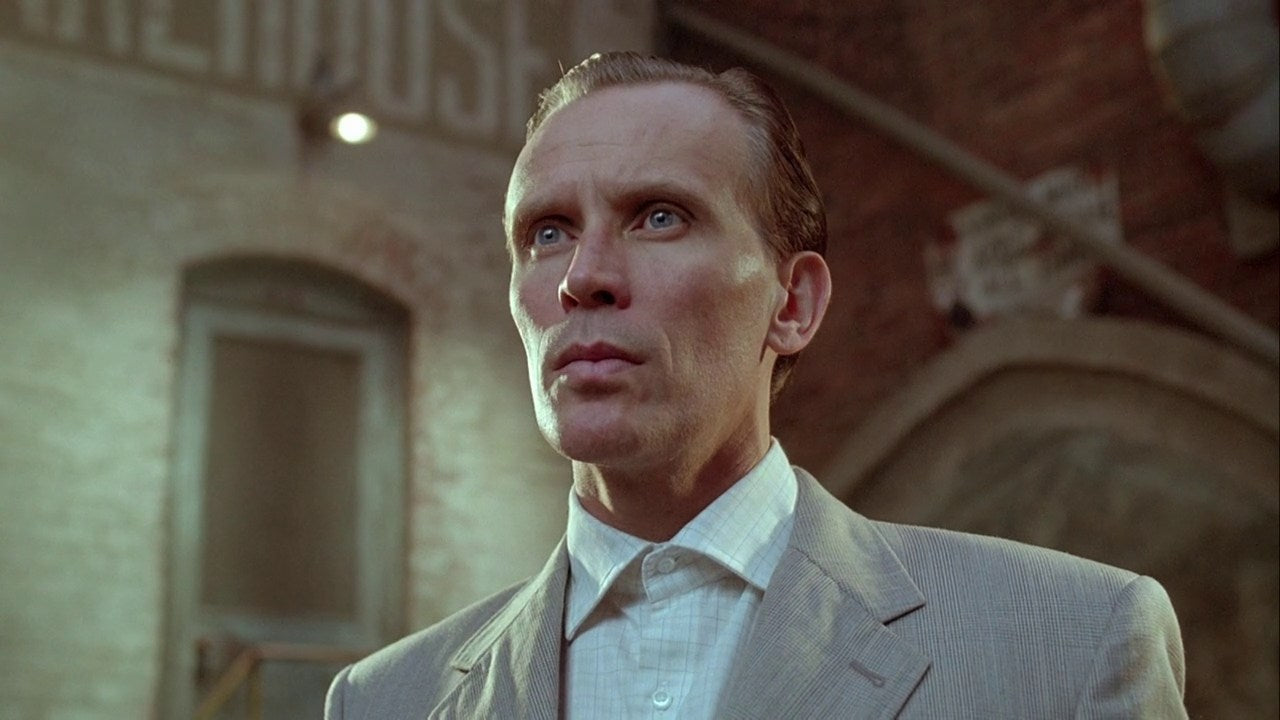
Bill wears a pale textured jacket with an open checked shirt.
Naked Lunch (1991), FilmGrab gallery image 31. Film frame reproduction; gallery sequence is the locator. Source image: https://film-grab.com/wp-content/uploads/photo-gallery/31 (739).jpg?bwg=1547238726
Open reference ↗
The title sits within offset panels against black.
Main-title frame cropped from the Art of the Title reference contact sheet. Randall Balsmeyer and Mimi Everett, Balsmeyer & Everett, Inc.
Open reference ↗One side of the reveal: a fabricated male torso beneath Fadela’s clothing.
Monique Mercure wearing the Benway chest; photograph accompanying Lawrence French, Special Effects, Cinefantastique, April 1992, p.16.
Open reference ↗The author touches the fabricated creature.
Photograph on p.57 of Everything Is Permitted (1992), edited by Ira Silverberg. Cropped from a photographed page.
Open reference ↗Cronenberg and Burroughs stand together inside the production.
Cronenberg and Burroughs on set, p.58 of Everything Is Permitted (1992), edited by Ira Silverberg. Photograph crop.
Open reference ↗The writer becomes an empty silhouette.
Arrow 2023 sleeve artwork by Gilles Vranckx. Distributor publicity packaging image, FCD2368.
Open reference ↗A formal arrangement of faces, tailoring and gaze.
Script lettering and a compact professional line make the doctor’s identity portable.
Naked Lunch business-card frame reproduced by John Coulthart, Paging Doctor Benway, image benway2.jpg. Image preserved at 454 × 255; no reconstruction or sharpening.
Open reference ↗Three typed lines end with a colon above the exposed mechanism.
Criterion Forum, Chris Galloway review, 9 April 2013; Criterion Blu-ray gallery image 12, nakedlunchblu00012.jpg. Reproduced gallery image, 900 × 506.
Open reference ↗A frontal exhibition photograph makes the creature’s metal-rimmed keys, fractured shell and exposed fibres legible.
Fred Cherrygarden, Academy Museum photograph dated 18 February 2025. Original 6000 × 4000 pixels. CC BY-SA 4.0; resized, full composition retained. The exhibition photograph is distinct from a film frame or accession record.
Open reference ↗Cronenberg performs the crushing insert while Suschitzky records the close view.
Cronenberg performs the case-officer crushing insert while Suschitzky films. Jody Duncan, Borrowed Flesh, Cinefex 49 (February 1992), p.27, image 03. Original caption identifies the action and filmmakers.
Open reference ↗Follow the production accounts, collection records and edition histories behind the dossier. Links within each entry return to the material it supports.
Entertainment Weekly, 17 January 1992.
Open source ↗Used in this dossier
Toronto contains two cities · The calm person in the impossible room
Fangoria 112, May 1992, pp.44–46, 66. Performance: p.46; script recollection: p.45.
Open source ↗Used in this dossier
Earlier films, revised objects · The calm person in the impossible room
Fangoria 110, March 1992, pp.26–29, 68. Creature performance: p.68.
Open source ↗Used in this dossier
The calm person in the impossible room
Fangoria Horror Spectacular 6 (1992), pp.26–29, 31; literary sources p.27; sets p.29.
Open source ↗Used in this dossier
Words that change their carrier · Toronto contains two cities
America and the Mediterranean (2003), pp.309–314; testimony pp.311–312 (PDF leaves 320–321); interview dated October 2001.
Open source ↗Used in this dossier
Toronto contains two cities
1998 conference discussion, transcribed and edited by Philip Brophy; Cinesonic, 1999.
Open source ↗Used in this dossier
Shore’s structure, Coleman’s voice
11 July 2017, Alice Tully Hall; PDF leaves 1–6. Shore note dated 1 May 2017; Coleman statement dated 17 December 1991.
Open source ↗Used in this dossier
Shore’s structure, Coleman’s voice
Film credits, 115-minute running time, 1.78:1 presentation and supplement inventory; cover by Neil Kellerhouse.
Open source ↗Used in this dossier
A book becomes a place to write · Words that change their carrier · Rights, drafts and a displaced production · The people of Interzone · Toronto contains two cities · The calm person in the impossible room · An office wardrobe among living machines · Frames, mirrors and the written page · The writer’s face and the insect’s body · Restoration changes the frame of reference · Two pages, two kinds of exposure · Bar Preliminary · Yves Bedroom · Frost Apartment · Seaside Restaurant Entrance · Interzone Market #32 · Bill’s hat and suit · Cloquet’s pale suit and hat · Joan Lee’s patterned dress · Bill in the restaurant
2013 catalogue: Naked Lunch on PDF leaves 54–58. Prop records and James McAteer drawings; object photography by Maciek Linowski / Synthescape Art Imaging.
Open source ↗Used in this dossier
Earlier films, revised objects · Toronto contains two cities · Four ways for a typewriter to have a body · The workshop beneath the hallucination · Where the film leaves material traces · Intact, speaking, damaged · A drawn market and a framed city · A creature becomes a display object · Packing material and control levers · Characters on keys, hands in flesh · One body, an organized population · The ordinary place reserved for a monster · The creature after the performance · Clark-Nova: intact prop · Clark-Nova: beaten puppet · Case officer beetle · Mujahadeen typewriter · Kiki and Mugwump miniature · Giant aquatic centipede · Mugwump dispensary model · Bar Preliminary · Yves Bedroom · Frost Apartment · Seaside Restaurant Entrance · Interzone Market #32 · Clark-Nova in the museum
Cinefex 49, February 1992, pp.24–39. Image locators: case officer p.27; Mugwump p.28; mechanisms p.31; preparation p.32; Mugwriter p.35; Benway p.39.
Open source ↗Used in this dossier
Words that change their carrier · Rights, drafts and a displaced production · Earlier films, revised objects · Who employs the writer? · Four ways for a typewriter to have a body · The workshop beneath the hallucination · Packing material and control levers · One body, an organized population · Professional authority as a covering · The ordinary place reserved for a monster · The creature after the performance · Mujahadeen typewriter · Preparing the Mugwump · Harold Weed fitting an insect rig · Dressing the typewriters · Benway beneath Fadela · Filming the case-officer impact
FilmGrab gallery, 9 December 2014. Image numbers identify this gallery’s sequence.
Open source ↗Used in this dossier
Words that change their carrier · Earlier films, revised objects · The people of Interzone · Who employs the writer? · Toronto contains two cities · The calm person in the impossible room · An office wardrobe among living machines · Frames, mirrors and the written page · Intact, speaking, damaged · A drawn market and a framed city · A creature becomes a display object · Packing material and control levers · Characters on keys, hands in flesh · One body, an organized population · Professional authority as a covering · The ordinary place reserved for a monster · A face becomes a screen · A landscape held inside a building · An open road and another test · A respectable name on card and glass · Two pages, two kinds of exposure · The creature after the performance · Light across a face, light across a shell · Benway’s consulting-room sign · Letter to Hank · Bill’s desk and balcony · Bill’s hat and suit · Cloquet’s pale suit and hat · Joan Lee’s patterned dress · Bill in the restaurant · The organic keyboard · Mugwriter · Mugwump at the bar · Cloquet’s parrot · Dispensary interior · Annexia border encounter · The Mugwump’s place at the counter · Reflections in Bill’s spectacles · The boat and indoor shore · The road toward the border · Bill’s open-collar street jacket
The Village Voice, 31 December 1991; interview conducted in November. Reprinted by RealityStudio with permission.
Open source ↗Used in this dossier
A book becomes a place to write · Rights, drafts and a displaced production · Earlier films, revised objects · The people of Interzone · Who employs the writer? · Toronto contains two cities · Frames, mirrors and the written page · Admiration and resistance
Esquire, February 1992, pp.112–116; RealityStudio reprint. A conversation about the encounter between two imaginations.
Open source ↗Used in this dossier
A book becomes a place to write
23 July 2016. Thomas recalls the Tangier reconnaissance trip with Burroughs, Cronenberg and James Grauerholz, and the subsequent Toronto shoot.
Open source ↗Used in this dossier
Rights, drafts and a displaced production · Earlier films, revised objects
Criterion, 2013; adapted from Rodley’s contribution to Everything Is Permitted (1992), edited by Ira Silverberg.
Open source ↗Used in this dossier
A book becomes a place to write
The New York Times, 27 December 1991; reprinted by Criterion.
Open source ↗Used in this dossier
The calm person in the impossible room · Admiration and resistance
Eighteen-track listing with separate composition credits for Ornette Coleman and Thelonious Monk material.
Open source ↗Used in this dossier
Shore’s structure, Coleman’s voice · Cloquet’s parrot
Naked Lunch discussion: Shore’s collaboration with Ornette Coleman and the relationship between structure and improvisation.
Open source ↗Used in this dossier
Shore’s structure, Coleman’s voice
2014 expanded edition, announced for 14 October, with sixteen minutes of previously unreleased Naked Lunch music.
Open source ↗Used in this dossier
Shore’s structure, Coleman’s voice
2016 two-LP edition, with artwork by Rich Kelly; Shore, Coleman and the London Philharmonic Orchestra.
Open source ↗Used in this dossier
Shore’s structure, Coleman’s voice · The writer’s face and the insect’s body · Rich Kelly vinyl sleeve
Orchestra and jazz trio; premiere in Belfast on 10 November 2000, with the Ulster Orchestra, Shore and Ornette Coleman.
Open source ↗Used in this dossier
Shore’s structure, Coleman’s voice
2023 restoration from the 35mm negative: Turbine with Arrow, supervised by Peter Suschitzky and approved by Cronenberg. Listed framing: 1.85:1.
Open source ↗Used in this dossier
Who employs the writer? · Restoration changes the frame of reference · An open road and another test
Two-disc Blu-ray presentation of the 4K restoration; 1.85:1; lossless stereo and 5.1; newly commissioned sleeve by Gilles Vranckx.
Open source ↗Used in this dossier
A disguise shared between two performers · The writer’s face and the insect’s body · Restoration changes the frame of reference · Intimacy and display
UK cinema and home-video submissions, including 1992 and 2023 theatrical timings.
Open source ↗Used in this dossier
Restoration changes the frame of reference
Eddie Shannon collection: 1991 US, double-sided; 26¾ × 39 11/16 inches for the recorded sheet.
Open source ↗Used in this dossier
The writer’s face and the insect’s body · Portrait, creature, territory · US one-sheet, 1991
Eddie Shannon collection: Japan, 1992, single-sided B2; artist H Sorayama; designer unidentified.
Open source ↗Used in this dossier
The writer’s face and the insect’s body · Portrait, creature, territory · Japanese bug-style B2, 1992
MSS.110, Group 3, Series IX, Box 46: drafts, shooting script, press kit, production and publishing paperwork.
Open source ↗Used in this dossier
Rights, drafts and a displaced production · Where the film leaves material traces
Museum of the Moving Image; David Schwartz, 11–12 January 1992. Writing: pp.2–4; music and video: pp.6–8; location revision: pp.8–9; production: p.14.
Open source ↗Used in this dossier
Words that change their carrier · Rights, drafts and a displaced production · Shore’s structure, Coleman’s voice · Restoration changes the frame of reference
Associated Press; The Pampa News, 26 January 1992, p.18. Newspaper scan preserved by Texas Tech University’s Southwest Collection.
Open source ↗Used in this dossier
The calm person in the impossible room
Sean Farnel’s entry: 35mm colour, production companies and grouped sound credits.
Open source ↗Used in this dossier
Rights, drafts and a displaced production · Shore’s structure, Coleman’s voice
Rolling Stone, 6 February 1992; author’s online reprint.
Open source ↗Used in this dossier
Frames, mirrors and the written page
American Cinematographer, April 1997; interview by Allen Daviau and Fred Elmes, edited by David E. Williams. Republished 27 January 2020. Naked Lunch discussion follows the opening question about naturalism.
Open source ↗Used in this dossier
Frames, mirrors and the written page · The ordinary place reserved for a monster
April 1992, vol.22 no.5: Gary Kimber, “Production Design,” p.18; Lawrence French, “Special Effects,” pp.15–17.
Open source ↗Used in this dossier
Earlier films, revised objects · Toronto contains two cities · The workshop beneath the hallucination · The calm person in the impossible room · A disguise shared between two performers · A landscape held inside a building · The creature after the performance · Mercure wearing the Benway chest
Picture Shop profile identifies her 1992 Genie for Naked Lunch’s creature sound work.
Open source ↗Used in this dossier
Shore’s structure, Coleman’s voice
Art of the Title, 8 June 2016; interview by Will Perkins. Balsmeyer & Everett, Inc.; Randall Balsmeyer and Mimi Everett.
Open source ↗Used in this dossier
Earlier films, revised objects · Colour before the hallucination · Opening title: overlapping colour planes
Jonathan Monovich interviews Tim Lucas for Film International; Naked Lunch passage.
Open source ↗Used in this dossier
Rights, drafts and a displaced production · Earlier films, revised objects
WalterFilm describes a 95-page, brad-bound fifth draft dated 20 January 1991.
Open source ↗Used in this dossier
Rights, drafts and a displaced production
The New Yorker, letters, 15 August 2022 issue; published online 8 August.
Open source ↗Used in this dossier
Shore’s structure, Coleman’s voice
Chicago Reader, 17 January 1992; author’s reprint dated 25 September 2024.
Open source ↗Used in this dossier
Admiration and resistance
Cinefantastique, April 1992, vol.22 no.5, printed p.10; scan leaf 4.
Open source ↗Used in this dossier
Admiration and resistance
American Film, January–February 1992, pp.32–37; reprinted in Contemporary Literary Criticism 143, printed pp.74–77 (PDF leaves 49–52).
Open source ↗Used in this dossier
Rights, drafts and a displaced production · Earlier films, revised objects · The author meets the manufactured world
Everything Is Permitted: The Making of Naked Lunch (1992), edited by Ira Silverberg. Selected page photographs published by Mining for Burroughs.
Open source ↗Used in this dossier
A book becomes a place to write · Where the film leaves material traces · The author meets the manufactured world · Burroughs with a Bugwriter · Author and director on set
Originally in Everything Is Permitted (1992); Criterion reprint, 9 April 2013.
Open source ↗Used in this dossier
A book becomes a place to write
Double Extremity: Judy Davis in Naked Lunch; Criterion, 5 February 2020.
Open source ↗Used in this dossier
The calm person in the impossible room · Intimacy and display
Toronto, November 1991; author’s republication of the Inner Views interview.
Open source ↗Used in this dossier
Frames, mirrors and the written page
2023 Arrow release FCD2368. Publicity gallery and packaging; new sleeve artwork by Gilles Vranckx.
Open source ↗Used in this dossier
A disguise shared between two performers · The writer’s face and the insect’s body · Restoration changes the frame of reference · Intimacy and display · Gilles Vranckx: Arrow sleeve · Davis and Weller: publicity portrait
German UHD/Blu-ray packages: 1.85:1 restoration and an SD open-matte 4:3 retroversion among the extras.
Open source ↗Used in this dossier
Restoration changes the frame of reference
Cinefantastique, April 1992, vol.22 no.5, pp.8–9,11,13–14,17,19. Casting and market visit: p.14; effects preparation: p.17; ending: p.19.
Open source ↗Used in this dossier
Rights, drafts and a displaced production · The calm person in the impossible room · Frames, mirrors and the written page
Cinefantastique, April 1992, vol.22 no.5, pp.12–13. Gysin/Balch, Mugwump, cameo and casting remarks.
Open source ↗Used in this dossier
A book becomes a place to write · Earlier films, revised objects
William S. Burroughs and Brion Gysin, The Third Mind (Viking, 1978). Gysin’s introductory note: PDF leaf 77; scenario excerpt: leaves 78–82, ending at B.G.
Open source ↗Used in this dossier
Earlier films, revised objects
Film Quarterly 45:3, Spring 1992, pp.2–6; reprinted in Contemporary Literary Criticism 143, pp.89–92, PDF leaves 64–67.
Open source ↗Used in this dossier
The calm person in the impossible room · Admiration and resistance
Scott Marks, San Diego Reader, 22 September 2016; exchange on Dead Ringers and Naked Lunch.
Open source ↗Used in this dossier
Toronto contains two cities
Chris Galloway’s review, 9 April 2013. Twenty-frame gallery for the Criterion Blu-ray; images 02 and 12 used here.
Open source ↗Used in this dossier
Words that change their carrier · The calm person in the impossible room · Frames, mirrors and the written page · Two pages, two kinds of exposure · Typed passage with an open ending
Paging Doctor Benway, 1 April 2015; Naked Lunch business-card image benway2.jpg and office frame benway1.jpg.
Open source ↗Used in this dossier
Who employs the writer? · A respectable name on card and glass · Benway’s business card
Transcr(é)ation 4 (2024), pp.1–23; especially pp.16–18 and notes 43–46. DOI: 10.5206/tc.v4i1.17189.
Open source ↗Used in this dossier
Words that change their carrier · Typed passage with an open ending
RealityStudio transcription of the routine from Naked Lunch; text above the reader comments.
Open source ↗Used in this dossier
Words that change their carrier
2013 paperback, ISBN 978-0-8021-2207-0; editors James Grauerholz and Barry Miles. Opening excerpt under and start west.
Open source ↗Used in this dossier
Words that change their carrier
2022 edition edited by Oliver Harris, ISBN 978-0-8021-6056-0. Publisher dates composition to 1952 and first publication to 1985.
Open source ↗Used in this dossier
Words that change their carrier
Just How Queer Is Luca Guadagnino’s Queer Anyway?, 27 November 2024; passage discussing the Duc de Ventre routine and Cronenberg.
Open source ↗Used in this dossier
Words that change their carrier
Crew and Cast sections: Peter Boretski’s creature voices and exterminator role; Bryan Day, Christine Hart, Veronica Ciandre and Ted Ross.
Open source ↗Used in this dossier
The people of Interzone · The calm person in the impossible room · A disguise shared between two performers · Shore’s structure, Coleman’s voice
Fresh Air, 18 March 1992. Discussion of the two Joans and contrasting roles, approximately 01:26–02:18 in the linked recording.
Open source ↗Used in this dossier
The calm person in the impossible room
Kosmorama 202, winter 1992, pp.10–12. Danish Film Institute scan; argument about adaptation and shifts of viewpoint.
Open source ↗Used in this dossier
Frames, mirrors and the written page · Admiration and resistance
Kosmorama 202, winter 1992, p.13. An adjoining essay on sexuality, bodily fear and recurring violence.
Open source ↗Used in this dossier
Admiration and resistance
Fred Cherrygarden, photograph dated 18 February 2025; original 6000 × 4000 pixels. Wikimedia Commons, CC BY-SA 4.0.
Open source ↗Used in this dossier
Where the film leaves material traces · The creature after the performance · Clark-Nova in the museum
BakedintheHole, photograph dated 6 October 2024; original 4080 × 3072 pixels. Wikimedia Commons, CC0.
Open source ↗Used in this dossier
Where the film leaves material traces · The creature after the performance · Clark-Nova in the museum
Mia Lee Vicino, Body of Work, Letterboxd Journal, 22 April 2025; exchange about the Academy Museum and TIFF archives.
Open source ↗Used in this dossier
The creature after the performance
Record 19895: 1991 US one-sheet, double-sided; artist Steve Twigger.
Open source ↗Used in this dossier
The writer’s face and the insect’s body · Portrait, creature, territory · US one-sheet, 1991
LACMA / Thames and Hudson, 1996; illustration p.160, checklist p.179, no.147.
Open source ↗Used in this dossier
The writer’s face and the insect’s body · Portrait, creature, territory · US one-sheet, 1991
UK quad, catalogued 1991; single-sided, 30 1/16 × 40 inches.
Open source ↗Used in this dossier
The writer’s face and the insect’s body · Portrait, creature, territory
Japan, 1992; red-style B2, single-sided, 20 6/16 × 28 14/16 inches.
Open source ↗Used in this dossier
The writer’s face and the insect’s body · Portrait, creature, territory
Version 4.0, UC San Diego, 2016; printed p.126, entry F14 (PDF leaf 135).
Open source ↗Used in this dossier
Where the film leaves material traces
Lindsay Coleman interview, June 2015, in The Cinematographer’s Voice, ed. Coleman and Roberto Schaefer (SUNY Press, 2022), pp.19–36; Naked Lunch discussion pp.25–26.
Open source ↗Used in this dossier
Frames, mirrors and the written page
Script City R0542; catalogued EARLY 2/12/90 1ST.
Open source ↗Used in this dossier
Rights, drafts and a displaced production
Script City A1704; catalogued 3/5/90 2ND. Compare NYU MSS.110, Box 46, Folder 29.
Open source ↗Used in this dossier
Rights, drafts and a displaced production
Springfield! Springfield!: opening employment/arrest passage, case-officer exchange, later Clark-Nova explanation, Benway and Annexia ending.
Open source ↗Used in this dossier
Who employs the writer?
From screen to collection
Collect the cinema that stays with you: original film material, identities from the screen and new CRONENDROME editions.

Original theatrical posters, Japanese chirashi, lobby cards and artist editions from our sister collections.
Enter the Museum ↗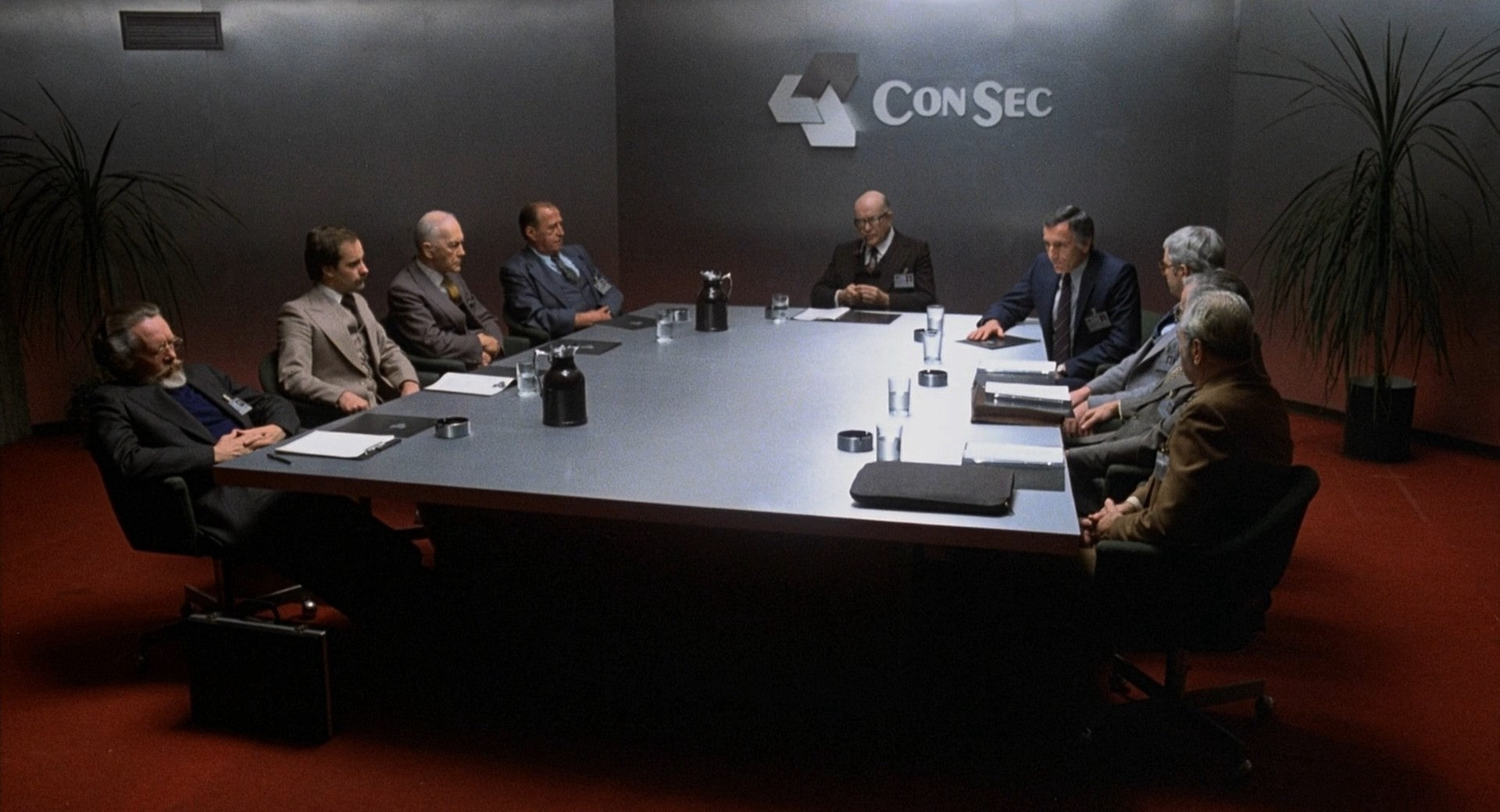
ConSec and other identities from the films, developed as shirts and everyday objects.
Explore Film merch ↗Original Cronendrome images in limited editions. Landscape and portrait. Framed or unframed.
Explore Art prints ↗
