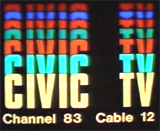
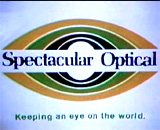
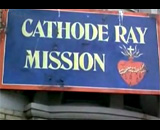
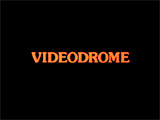
A television station. An optical corporation. A mission built around the cathode-ray tube. Videodrome turns an entire communications system into a struggle over the human body.
Case File 07 follows that system from its broadcast identities and recorded personalities to the cassettes, screens, rooms and special-effects objects that give it physical form. The dossier connects the film’s world with the people who designed, photographed, performed and sounded it.
CANADA / 1983WRITTEN & DIRECTED BY DAVID CRONENBERG1.85:1 / COLOR / MONOUNRATED EDITION: APPROX. 89 MINUTES
Find a person, effect, object, source or record ID. Choose a result to open its collection and evidence.
Opening-sequence frame grid: Art of the Title. Film Opticals receives the title credit. View the sequence ↗
FOLLOW YOUR CURIOSITY
Choose a way into the signal.
Eight collections. Open a subject, follow a photograph or document, then uncover the evidence beneath it.
EXPLORE / 01Signals, institutions & peopleEnter Civic TV, Spectacular Optical and the Cathode Ray Mission.Open collection+
INSTITUTIONS / PROGRAMS / CONTROL
The world inside the signal
Film reference · existing archive image
Civic TV
Explore this record
Max Renn’s station is introduced through a densely repeated wordmark, channel information and a bedside television advertisement. Its commercial identity is cheerful and intimate; its programming meetings are driven by a search for material that competitors will not show.
Civic is both workplace and distribution network. The office, satellite room, sales meetings and station graphics make the broadcaster feel operational before the conspiracy emerges.
Film reference · existing archive image
Spectacular Optical
Explore this record
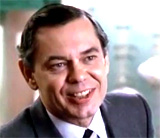
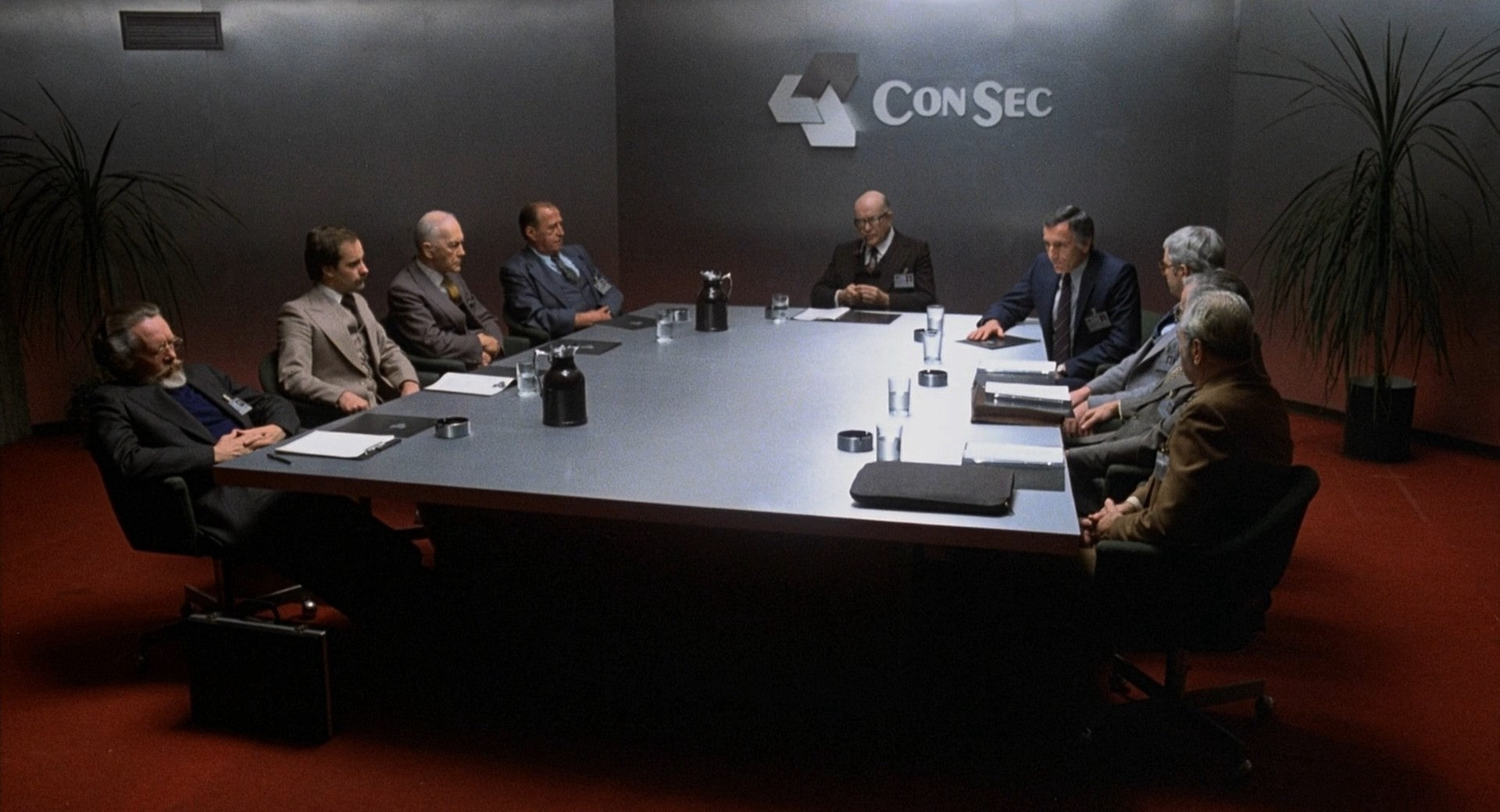
The optical business presents itself with an eye-shaped corporate mark. Its consumer-facing trade in vision sits beside a more coercive interest in controlling what viewers experience. Barry Convex moves easily between corporate video, retail consultation and convention performance.
The distinction matters: Spectacular is a whole institutional design system, with several settings and applications to document, rather than a single logo detached from the story.
Film reference · existing archive image
Cathode Ray Mission
Explore this record
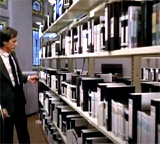
A blue exterior sign joins formal lettering to a heart-and-antenna emblem. Inside, television viewing is organized into individual stations. Bianca O’Blivion administers both this mission and an archive of her father’s recordings.
The room of tapes gives the film a second model of media power: a person can remain available as a carefully maintained sequence of recorded appearances.
Film reference · existing archive image
A catalogue of transmissions
Explore this record
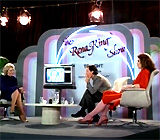
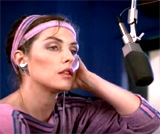
Samurai Dreams and Apollo and Dionysus belong to the station’s programming economy. The Rena King Show stages public debate about that economy. Nicki Brand’s Emotional Rescue belongs to the parallel world of call-in radio.
Videodrome is both a program title and the name associated with a signal that changes its viewers. Keeping the carrier program separate from the signal explains why the film’s struggle extends beyond one genre of content.
The film gives its competing systems different kinds of authority. Civic sells access, Spectacular makes vision into an instrument of discipline, and the Mission organizes an apparently charitable encounter with television. Max passes through all three. His job first makes him the person choosing images for other people; the conspiracy then makes his own choices the object of somebody else’s design.
Scroll sideways to read all columns. Keyboard: focus the table, then use the arrow keys.
Institution
Public face
Narrative pressure
Civic TV
Programming, advertising and audience demand
Acquisition creates the opening through which Harlan introduces the transmission. The station’s economic appetite is part of the mechanism.
Spectacular Optical
Consumer optics, demonstration and corporate hospitality
Convex makes control look like a service. His recorded introduction, consultation apparatus and convention performance are distinct ways of addressing an audience.
Cathode Ray Mission
Viewing access and the preservation of O’Blivion’s recorded identity
Bianca controls an archive as well as a room. Her intervention changes Max’s instructions, raising the question of who now directs the same body.
This is an interpretive map of the film’s institutions. Harkness’s contemporary review supplies an especially useful counterweight to a simple rescue narrative: it asks whether Bianca frees Max or recruits him into another program. The difference between those readings is part of the film’s structure.
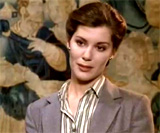
Harry’s performance moves between a person in a room and a presence on a screen without losing its composure. Howard Hampton’s essay examines that controlled register and its relationship to her existing pop persona. The film’s media roles also form a working hierarchy: supplier, technician, programmer, host, theorist, archivist and corporate executive.
Woods with effects artist Rick Baker · on-set photograph, CFQ 14:2, p. 37. Open original page ↗
Max: a stable person inside unstable events
Explore this record
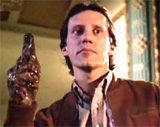
Woods’s account gives the restrained performance a practical logic: Max can treat an impossible event as a hallucination. That keeps the character from restarting at maximum shock every time the film changes the rules. Woods also describes Max trying to choose between incompatible moral systems. His performance supplies continuity where an external explanation would dissolve the experience.
Nicki operates in several media registers: radio conversation, the public talk show, physical intimacy and television image. Harry’s accounts of rehearsal, movement and repeated takes make that performance concrete. Her recollection that the character became more sympathetic during production belongs beside the film’s controlled, sometimes distant presentation of her.
Bianca occupies the archive, manages access and decides which recorded appearances remain available. A discarded costume merge with Nicki reveals another direction the character took during development.
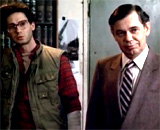
Bridey turns workplace communication into a bedside recording. Masha connects Max to a larger programming market; Harlan controls the technical encounter with it. Rena organizes the public argument that the film subsequently makes physical. These supporting roles establish the everyday communication system before its familiar routines become threatening.
Additional credited performers
Scroll sideways to read all columns. Keyboard: focus the table, then use the arrow keys.
In his 1997 conversation with Gavin Smith, Cronenberg describes the conspirators’ confidence as exceeding their control. His performance references connect Convex with televangelism and Harlan with eager ideological commitment. Read the three accounts together in VD-R206–208.
Two 1983 interviews illuminate different stages of Nicki’s development. Harry’s November account describes the changing conception during filming; her May interview distinguishes the shot material from the edit. These are dated performer accounts, read alongside the screenplay and surviving footage.
Scroll sideways to read all columns. Keyboard: focus the table, then use the arrow keys.
Interview
Research connection
Lisa Robinson / Starlog, May 1983
Editing and on-set practice: VD-R213–214. Her technical approach also strengthens VD-R041.
Cynthia Rose / NME, November 1983
Earlier allegiance, deadline pressure and interpretation: VD-R210–212.
Costume: character, light and the designer’s archive
Published portfolio detail · Delphine White / BeSpoke 12, p. 10. Open original page ↗
Delphine White’s 2019 BeSpoke profile brings her working method into the archive: costume develops through character, setting and the light in which it will appear. The accompanying portfolio montage places a Videodrome poster beside drawings and photographs, opening a route back to the individual design sheets.
Scroll sideways to read all columns. Keyboard: focus the table, then use the arrow keys.
Source
What it contributes
Portfolio montage, printed p. 10
A visual acquisition lead: VD-R215. Individual drawings are uncaptioned at this scale.
Interview, printed pp. 11–12
White’s career-wide design practice: VD-R216, distinct from a film-specific costume explanation.
A deleted scene brought the two women together through costume and hair. Sonja Smits appears in Nicki’s red dress and hairstyle while addressing Max on videotape. The monochrome photograph records the silhouette and styling; the original magazine caption identifies the dress as red. This belongs to the film’s abandoned character design, alongside the released costumes.
A deleted costume connection Sonja Smits as Bianca O’Blivion in a deleted scene, wearing Nicki Brand’s hairstyle and dress. The original caption identifies the dress as red; the photograph is monochrome. Cinefantastique 14:2, p. 46 ↗
Costume beyond the screen
Videodrome also appears in the roster for Otherworldly: The Art of Canadian Costume Design, the CAFTCAD and TIFF Bell Lightbox exhibition announced for September 2011. Delphine White participated in the exhibition and its educational programme. This exhibition history provides another route into the film’s wardrobe archive.
Deborah Harry studying her lines · Cinefantastique 14:2, p. 36. Open original page ↗
PERFORMANCE / A DELETED CHARACTER CONNECTION
Nicki at the Mission
Harry studies her lines on the Cathode Ray Mission set. The magazine caption identifies the scene as deleted and says that it revealed Nicki as Brian O’Blivion’s business partner. The photograph records preparation for that scene; the caption supplies its intended story function.
This is one concrete trace of Nicki’s changing role. Read it alongside Harry’s account of developing the character, while keeping the abandoned relationship distinct from the released film.
The Cinémathèque québécoise catalogues fifteen Videodrome photographs. Thirteen carry Rick Porter’s credit, connecting the film’s publicity imagery to named archival objects. The index below identifies costume, set and effects references by accession number.
Scroll sideways to read all columns. Keyboard: focus the table, then use the arrow keys.
EXPLORE / 02Making the New FleshEffects photographs, appliances, workshop experiments and the crew’s accounts.Open collection+
THE PEOPLE BEHIND THE OBJECTS
Production craft
Art direction and set identity
Explore this record
Carol Spier’s art direction and Angelo Stea’s set decoration connect ordinary workplaces to increasingly impossible events. The credits also identify scenic artist Nick Kosonic and costume designer Delphine White.
Tim Lucas records a particularly revealing illusion: the Mission location’s colored window trim was made with gels rather than actual stained glass. The effect works because it belongs convincingly to the room.
Mark Irwin describes a direct photographic approach that lets the strange event arrive inside an apparently ordinary shot. He also explains the practical problem of matching the reflectivity of an appliance to skin.
Irwin’s retrospective identifies an Hitachi SK-91 and two-inch tape; Lucas specifies one-inch C-format recording for the Samurai Dreams session. Monitor playback was photographed onto film, carrying video’s irregularity into the image.
Rick Baker is credited with special makeup design and creation; Michael Lennick with special video effects; Frank Carere with special effects. Steve Johnson and Bill Sturgeon are among the credited makeup artists.
These distinctions are essential to an object history. A flexible screen, a cassette appliance, a video insert and a mechanical action can meet in the same shot while coming from different departments.
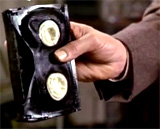
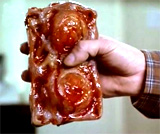
The film turns a storage medium into a bodily interface. A recognizable cassette shape makes the transformation legible before the surface becomes organic. The ordinary and transformed forms belong in the same artifact record.
The cassette’s Betamax proportions are integral to its recognizable form.
Howard Shore describes writing the score by hand, entering it into a Synclavier II and assigning sounds that included altered industrial and animal material. This approach links formal composition to the unstable identity of the sound itself.
Shore’s later accounts connect Videodrome to his use of the studio as an instrument. He recalls Cronenberg accepting the score without changes to its notes.
In his Cinema Canada interview, Irwin explains a collaborative method that develops coverage from the actors’ movement in the room. He distinguishes Videodrome’s lens approach from Scanners and The Dead Zone rather than treating all three as one reusable horror style.
This makes frame comparison productive: the camera’s distance, a screen’s place in a room and the actor’s relation to an object are all part of the design evidence.
Drawings, workshop rigs and film frames reveal how the practical effects developed from concept to performance. Compare the designs and mechanisms, and open each image for a closer view.
Fabricated effects / workshop demonstration
Demonstrating the breathing cassettes
Baker demonstrates the breathing-cassette mechanism to Cronenberg. Cinefantastique credits Bill Sturgeon’s PVC casting and describes black and flesh-toned versions inflated with squeeze bulbs. Its caption identifies these as versions removed during editing.
Left: Baker adds blood to the earlier dummy. The caption says that shot was discarded because the convention audience would appear to witness an ordinary killing rather than Renn’s hallucination. Right: the later cancer effect. These images document different setups.
Magazine photographs reveal the constructed sets, fitted appliances and mechanisms behind the film. Each image opens separately for closer inspection; the source link returns to its original page.
Planning the chamber Cronenberg, John Board and Mark Irwin confer beside the textured chamber wall. Cinefantastique 12:2/3, p. 7 ↗The chamber as a working set Mark Irwin frames James Woods and the Flesh TV on the chamber set. Cinefantastique 14:2, p. 34 ↗Building the Flesh TV Rick Baker works with a television-effects assembly. Cinefantastique 14:2, p. 39 ↗Fitting the abdominal appliance Steve Johnson and Rick Baker fit Woods with the artificial torso. Cinefantastique 14:2, p. 44 ↗Staging the hand transformation Art Austin wears the torso rig during preparation for the hand-transformation insert. Cinefantastique 14:2, p. 45 ↗Operating the flesh-gun arm Tom Hester holds the mechanical arm used in the transformation setup. Cinefantastique 14:2, p. 42 ↗A rejected flesh-gun design Rick Baker’s unused organic gun concept, reproduced as an inset in the original feature. Cinefantastique 14:2, p. 42 ↗The effects control keyboard The keyboard-and-tubing assembly used to control the Flesh TV’s air bladders. Cinefantastique 14:2, p. 47 ↗
The magazine photographs preserve the production’s workshop detail and the rejected flesh-gun concept.
OBJECT BIOGRAPHIES / MAKERS / PHOTOGRAPHY
How the New Flesh was made
The film’s central effects are collaborations between design, sculpting, mechanics, video and cinematography. Each object has a history of its own.
Scroll sideways to read all columns. Keyboard: focus the table, then use the arrow keys.
Object or system
Construction history
Design and construction
Breathing television
Baker describes a flexible urethane cabinet, internal inflation and a projected image on a thin screen membrane. Contemporary reporting adds Sturgeon and Brennan’s variants and Carere’s pneumatic operation.
Cabinet, moving screen, playback image and operating mechanism combine to make the Flesh TV. VD-R022VD-R136
Organic cassette
The recognizable Betamax envelope makes the object readable before it becomes bodily. A contemporary caption identifies Sturgeon’s PVC construction.
Format, material and animated state need separate documentation. A newly fabricated collectible should preserve the reference proportions even when its proposed material differs.
Baker’s design development leads into Hester’s glove and arm construction. Irwin’s account explains how Woods’s real arm could be concealed for the photographed illusion.
The rejected concept drawing combines facial and genital features.
The effect combines a performed scene, a physical aperture and shot-specific arrangements for inserting a hand, weapon or cassette. Art Austin is documented as a torso-insert performer.
The performance connects Woods, the insert double, shooting rigs and the appliance later exhibited. VD-R026VD-R111VD-R131VD-R186
Harlan’s transformed hand
The transformation moved from Max in earlier writing to Harlan in the released narrative. Kevin Brennan’s sculpting is recorded.
A character assignment can change while an effects idea survives. Track the draft owner and the constructed screen effect in parallel.
The production record contains several proposed or tested approaches, including inflation and spreading forms. Lucas also records hands-on cable operation during photography.
The helmet is a surviving collection object. The image-processing account identifies NEC equipment; the earlier screenplay gives the apparatus a broader demonstration context.
The physical shell, generated imagery and scripted function are three different kinds of evidence. Only measured object documentation can establish replica dimensions.
The development record includes scripts, fabricated appliances, workshop testimony and the released film. Each witness contributes a different part of the history:
Scroll sideways to read all columns. Keyboard: focus the table, then use the arrow keys.
History
Documented state
Identification
Cannom epilogue appliances
Foam-latex appliances arrived and were demonstrated in the workshop; the epilogue was abandoned.
The photographs document the appliance’s fabrication and demonstration. VD-R001VD-R016VD-R159
BX boat-ending pages
The separately numbered script ending describes reciprocal sexual transformations.
This is a written ending. The manuscript witness has to be collated before it can be assigned to a dated revision sequence.
Making the impossible photograph as ordinary matter
Irwin’s direct framing lets a transformation occupy the same visual world as an office conversation. Surface reflectivity, a performer’s blocked movement and the position of the apparatus are therefore part of the effect, not finishing touches. The same principle reaches sound: the abdominal action was intended to have a restrained physical presence rather than announcing itself with an oversized noise.
Michael Lennick’s creator upload gives the effects chapter a directly accessible companion. The locators below connect its workshop accounts to the research ledger.
Scroll sideways to read all columns. Keyboard: focus the table, then use the arrow keys.
An effects object has several identities at once. It is a designed form, a thing that has to move, a surface photographed by a camera and an event completed by a performer. Reading those identities together explains why a finished frame is only one part of the production record.
The useful comparison is between inputs and visible results. What does the operator control? Where does the moving image come from? Which surface carries it? Where can the performer stand or place a hand? These questions turn a collection of impressive objects into an account of how a shot works. They also give each photograph a purpose: an overall view establishes the spatial arrangement; a detail shows a joint or texture; a sequence of frames records a changing state.
Woods’s performance belongs in the same account. Cronenberg’s conversation with Lynn Snowden connects the physical appliance to the experience of performing with it. His interpretation is indexed separately so that a statement about Max’s bodily experience remains distinct from a workshop description.
The abandoned effects survive in different kinds of evidence: script pages, workshop reporting, retrospective testimony and photographs. Comparing their body locations and production stages keeps each proposed transformation attached to its source.
Scroll sideways to read all columns. Keyboard: focus the table, then use the arrow keys.
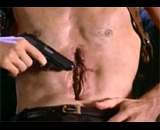
Max’s hands enter openings in Nicki’s back; her hand enters his stomach slit. The transformed parts are hands. The last camera movement approaches the television’s screen slit.
Workshop and on-set photographs document abdominal-appliance work.
Workshop and on-set abdominal-appliance photographs.
The following magazine images show the rejected flesh-gun concept and abdominal-appliance work.
Rejected weapon design A drawing of a proposed gun. It identifies a weapon concept, not an abdominal prosthesis. Cinefantastique 14:2, p. 42 ↗Photographed torso fitting Baker and Johnson fitting Woods with the torso appliance. Cinefantastique 14:2, p. 44 ↗
The helmet: design meets performance
Carol Spier’s recollection connects the helmet’s prolonged development with its physical burden on the actor. VD-R205 places that testimony beside the surviving-object and video-processing records.
Videodrome film image illustrated in Violet Lucca’s interview with Carol Spier. Published scene reference; edition and frame position unspecified.
EXPLORE / 03Script, spaces & soundFollow the screenplay into rooms, Toronto locations and Howard Shore’s score.Open collection+
DEVELOPMENT / DRAFTS / RELEASED VERSIONS
From Network of Blood to Videodrome
PDF p. 1 · archive.org
Cronenberg describes the initial premise in terms of weak, strange late-night signals received by a television antenna. As he wrote, the investigation expanded into altered perception and physical transformation. His account appears in the Cronenberg on Cronenberg extracts reproduced in Arrow’s booklet.
Scroll sideways to read all columns. Keyboard: focus the table, then use the arrow keys.
Document or version
Production history
Network of Blood / early draft
An earlier, more extreme phase of the screenplay, described by Cronenberg and Tim Lucas.
Production rewriting
Lucas documents an unfinished second draft and continuing revisions during production.
Unfilmed or altered effects
Draft material includes transformations and an epilogue outside the released narrative.
US theatrical / unrated director’s cut
Arrow’s edition identifies and presents both versions.
Television version
Pirated Signals collects deleted and alternate television-version material.
Online dialogue transcript
A navigable transcription of dialogue, without authenticated production-draft provenance.
Read development along several axes: names, physical objects, character functions and the point at which information reaches Max. The annotated scan uses GT pagination followed by a separately numbered BX ending. That join is essential to the document’s identity.
Scroll sideways to read all columns. Keyboard: focus the table, then use the arrow keys.
Development thread
Draft or production witness
Released-film relationship
Opening experience
A dream appears before the recorded wake-up sequence.
The released opening makes mediation visible through title disturbance, station graphics and Bridey’s recording. Compare the order of information as well as the dialogue.
KRAM / KayRAM and a branded towel belong to the script witness.
The draft uses KRAM / KayRAM; other sources render the station as CHAM or CRAM. · VD-R119 · VD-R120
Mission administration
Meal hours, staff signs and cubicle menus are specified in the draft.
The draft specifies service graphics that extend the Mission’s institutional identity. · VD-R121
Max as an investigator
A notebook records transmission patterns.
The notebook gives Max’s investigation a physical form on the page. · VD-R122
Television mobility and branding
An Electrohome cabinet changes identity; another passage makes the television mobile.
Etchison also recalls seeing moving-television footage, adding an adaptation witness to the scripted idea. · VD-R051 · VD-R123 · VD-R124
The optical company
The earlier showroom and military demonstration expand the corporate apparatus.
The earlier showroom and military demonstration extend the company beyond the consultation and convention spaces of the released film. · VD-R125 · VD-R126
Nicki and Bianca
Their functions, appearances and fates change across development; a costume photograph preserves part of that overlap.
A production photograph preserves the abandoned costume merge; the released characters occupy distinct institutional positions. · VD-R015 · VD-R127 · VD-R135
The final action
Boat transformation, epilogue demonstration, filmed alternatives and the released conclusion have different witnesses.
The released screen/body repetition concludes a development history that includes written variants and filmed alternatives. · VD-R016 · VD-R044 · VD-R045 · VD-R046 · VD-R128 · VD-R159
Rewriting continued after the initial shoot
Woods remembers receiving an incomplete script; Etchison received multiple drafts for his novelization. Their accounts show how the text continued to change across performance and adaptation.
The same discipline clarifies version history. A television edit can contain additional material while also softening explicit passages. Its alternate phone call or reflection shot is not explained by a simple longer-versus-shorter runtime comparison.
Scroll sideways to read all columns. Keyboard: focus the table, then use the arrow keys.
Place
Setting and significance
Civic TV
Civic’s offices, equipment room and ident form a fictional broadcaster that Irwin connects with Toronto’s Citytv.
Cathode Ray Mission
Lucas identifies a building at Bathurst and Adelaide used as a central production location. Its prior uses and applied window treatment help explain how the set was made.
Nicki’s radio studio
Cinema Canada reports filming the radio-studio scene at CKEY in the Toronto Star building. The report calls the fictional station CHAM; the dialogue transcription uses CRAM.
Spectacular Optical
Corporate video, retail space and convention performance give Spectacular Optical three distinct settings.
The red chamber
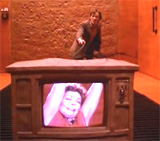
A controlled video environment that recurs inside other screens. Compare the feature’s monitor framing with the unedited supplement footage.
The final vessel
A derelict waterfront vessel provides Max’s refuge and the setting for the ending.
Lucas also records convention filming at the Constellation Hotel during his visit on 16 December 1981. The convention material therefore has more than one production setting in the published accounts.
Lucas specifies one-inch C-format recording for Samurai Dreams; Irwin’s broader retrospective identifies an Hitachi SK-91 and two-inch tape. · VD-R027 · VD-R028 · VD-R029 · VD-R187
Convention choreography
How did music and movement meet?
The performance was filmed against temporary music, with Shore’s synchronized composition supplied later. Costumes also have a specific departmental attribution.
Videodrome’s sound is often summarized as electronic. The production record is more specific: written composition, programming, recorded performances, processing and mixing all contribute to what reaches the listener.
Scroll sideways to read all columns. Keyboard: focus the table, then use the arrow keys.
Layer
Documented work
Why it matters
Composition
Shore wrote the score on paper before programming it.
Shore’s written musical structure shaped its electronic realization. VD-R053VD-R170VD-R171
Sound generation
The Synclavier II combined the written score with a palette that could include transformed recorded sounds.
A familiar source can lose its identity as it becomes musical material.
Shore recalls Cronenberg accepting the score without note changes. Its later life includes cue placement, sound editing, re-recording and a separate album presentation.
Thirty-six records track graphics, hardware, performances on screens and designed environments. Each record names its appearance and links outward to the relevant evidence.
Identities, graphics & broadcast · 14
Small film-frame reference · Filmsite / Tim Dirks
V-A01 / BROADCAST IDENTITY
Civic TV station ident
Explore this record
Repeated block lettering in stacked colors, with Channel 83 and Cable 12 below. The repetition makes the image feel like a signal as well as a station identifier.
Appearance and design
Opening ident before Bridey’s recorded wake-up message.
A concentric eye surrounds the wordmark in the company’s video presentation. The horizontal name band makes the lettering part of the symbol’s structure.
Appearance and design
Corporate video shown during Max’s limousine journey.
A framed blue sign with light serif capitals, a contrasting border and a small emblem. Its typographic restraint belongs to the Mission’s institutional character.
An illustrated bed, television, occupants and teddy bear turn viewing into an intimate domestic routine. It is a separate piece of artwork from the station’s geometric ident.
Appearance and design
Station promo immediately after the opening Civic ident.
The title appears inside an acquired program, establishing another graphic voice within the broadcast world. Complete supplement footage offers a different viewing context from the feature’s monitor insert.
Appearance and design
Early acquisition screening and the title within the Japanese program.
The convention setting takes the optical company from a private consultation to a public stage. Backdrop, lectern, product presentation and performance form a single event environment.
Appearance and design
Convex’s optical trade presentation near the climax.
A decorative show-name graphic is built into the panel set. Its pastel framing contrasts with Civic’s saturated ident and Spectacular’s controlled corporate presentation.
Appearance and design
Television panel with Max, Nicki and the mediated O’Blivion.
Rows of tape cases transform a collection of appearances into the physical presence of an absent person. Labels, cases, shelves and sequence are all parts of the system.
Appearance and design
Bianca reveals the shelves of her father’s recorded appearances.
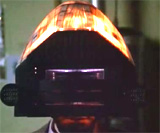
The enclosed head apparatus is visible during Convex’s examination of Max. Accumicon is the name used in production discussion; the dossier keeps that naming provenance distinct from visible prop lettering.
Appearance and design
Convex fits the enclosed head apparatus during the optical-shop sequence.
The cabinet remains recognizable while the screen’s behavior changes. Controls, grille, bezel and depth make it a specific object rather than a generic icon of television.
Appearance and design
Opening wake-up message, O’Blivion tapes and the swelling screen.
A colleague appears as a timed recording within Max’s domestic routine. The sequence brings workplace communication into the same hardware used for entertainment and later intrusion.
A familiar cassette envelope becomes a soft, irregular object. Its ordinary, pulsing and fully transformed states provide different silhouettes and surfaces to document.
Appearance and design
Convex’s programming scene and Harlan’s later cassette attempt.
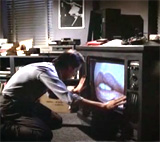
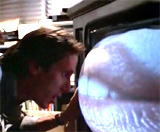
A rigid viewing surface behaves like a membrane. Cabinet edges give the deformation scale, while the image on the surface turns approach and contact into a physical event.
Appearance and design
Max approaches Nicki’s enlarged image on the television.
The object progresses from an ordinary weapon to an integrated bodily form. Connecting strands and the changing hand silhouette are central to the transformation’s design.
Appearance and design
The hand-and-weapon fusion after Max’s programming.
A confined red-orange environment recurs inside the transmissions. Its walls, openings and repeated viewpoint contribute to the program’s stark visual identity.
Appearance and design
The red-orange chamber within the transmitted footage.
EXPLORE / 05Versions, release & campaignCompare editions and explore the film’s life in posters, print and home video.Open collection+
CUTS / EDITIONS / EVIDENCE
Which Videodrome are you watching?
Article image · criterion.com
The version of the film, the restoration used to present it and the extras packaged beside it are separate questions. This guide connects the documented distinctions without treating every longer assembly as a definitive version.
Scroll sideways to read all columns. Keyboard: focus the table, then use the arrow keys.
Version map and the evidence behind it
Version or witness
Edition details
Source
Version context
US theatrical / R-rated cut
Arrow’s 2022 edition explicitly includes the US theatrical cut alongside the full-length director’s cut.
Neither category establishes that a completed scene existed in a released cut.
Where the cuts change the experience
Brad Stevens identifies changes to Samurai Dreams, transmitted violence, ear piercing, the intimate scene’s transition, and the partner and Convex deaths. Television additions also alter how Max receives information. His comparison appears on pp. 35–37 of Arrow’s booklet. · Published comparison, pp. 35–37 ↗
A restoration is not another narrative cut
Arrow’s 4K restoration combines a camera-negative scan with intermediate elements for director’s-cut passages. Its earlier HD transfer used an interpositive. · VD-R168 · VD-R169
Scroll sideways to read all columns. Keyboard: focus the table, then use the arrow keys.
Two complementary routes into the production record
Edition
Supplements
Criterion 4K + Blu-ray
Cronenberg/Irwin and Woods/Harry commentaries; Effects Men audio interview; Bootleg Video material.
Arrow 2022 4K
Tim Lucas commentary; both feature cuts; Pirated Signals television scenes; Helmet-Cam Test and Why Betamax?
Classification and presentation
British and Australian classification records document individual submissions with their own dates, formats and runtimes. The theatrical, unrated and television edits also differ in scene content. · VD-R066 · VD-R067 · VD-R068 · VD-R069 · VD-R070 · VD-R071 · VD-R072
1983 / CIRCULATION / REASSESSMENT
A film that changes with its medium
Article image · arrowfilms.com
The contemporary response already recognized that Videodrome’s form was part of its subject. Paul Taylor’s November 1983 review describes a film whose disruptions are built into its narrative experience, rather than separated into reassuring dream sequences. Later essays by Carrie Rickey and Gary Indiana place that instability within Cronenberg’s developing account of technology, perception and bodily identity.
The release objects tell another story. The US one-sheet, British quad and French grande use different formats and visual emphases. Melki’s own account supports the French attribution. The Film on Paper catalogue separately credits Harry Wilson’s art and Red Square’s design for its British quad. Territory, format and each contributor’s role belong with the individual object.
Criterion pairs the restored film with filmmaker and performer commentaries. Arrow adds a Tim Lucas commentary, interviews and television-version material.
The U.S., British, French and Japanese campaigns give Videodrome distinct territorial identities through their formats, imagery, typography and distribution credits.
Scroll sideways to read all columns. Keyboard: focus the table, then use the arrow keys.
Campaign witness
Attribution or identifier
Comparison
US one-sheet
NSS 830004; 27 × 41 inches; artist unattributed in the selected object catalogue
Use the identifier to match a physical example before tracing its artwork or lettering.
British quad
Harry Wilson artwork / Red Square design in the collector’s record
The separate artist and designer fields preserve the division of credit.
French poster
Melki; 160 × 120 format in the institutional record
Melki’s account places the work within the freedom to reinterpret campaigns for France.
Contemporary sources preserve anticipated opening dates alongside continued production and editing. The shifting release plans trace the film’s postproduction history.
The Japanese B2 supplies a fourth territory record. Propstore dates the selected object to 1985 and leaves its artist unattributed. VD-R209 preserves its catalogue identity.
Mick Garris’s featurette accompanies the original interview material. Its caption index points to the premise around 0:51, pop persona around 2:28, effects around 3:39 and characterization around 5:03.
A sequence in print · The Movie Magazine, p. 9. Preserved in the 19 November 1982 Technician issue at NC State. Open original page ↗
Before the film reached cinemas
The period Movie Magazine preview adds a pre-release director interview to the later oral histories. Read it beside the production chronology; its reported schedule captures what was expected at that moment.
EXPLORE / 07Research indexSearch 222 records by person, object or research area, grouped around their sources.Open collection+
RESEARCH INDEX / DEVELOPMENT TO CIRCULATION
Inside the production record
Explore individual production accounts, interviews and contemporary reporting, with links to the original sources.
FROM WORKSHOP TO SCREEN
Made, tested, abandoned
The unused-effects records follow an idea through its documented production stage. Read the epilogue appliances, abandoned television work, alternate transformations and surviving effects as separate histories.
Harry describes adapting to repeated takes and crew intervention in makeup, clothing and hair. In Starlog she emphasizes small gestures and technical precision.
In scene 73, Max inserts his hands into openings in Nicki’s back; Nicki inserts one hand into his stomach slit. Their hands emerge transformed. The final camera move approaches a slit in the television screen.
The p. 43 caption credits Bill Sturgeon’s PVC cassettes and describes air bladders inflated with squeeze bulbs. It distinguishes black and fleshy versions and reports their removal during editing; the accompanying image shows Baker demonstrating the mechanism to Cronenberg.
Harry says she sought a more sympathetic character and describes Cronenberg’s willingness to let the conception change. The photograph on the same page shows her studying lines at the Cathode Ray Mission. Its caption identifies a deleted scene in which Nicki was Brian O’Blivion’s business partner; that relationship is not assigned to the released film.
Andrew Dowler’s February 1983 review compares the film’s seriousness to The Conversation and connects its light, spaces and performances to television’s power.
In December 1983, Cronenberg accepts a broad political reading of mediated reality while distinguishing Videodrome from an explicitly partisan argument.
When Breskin includes Max among Cronenberg’s protagonists, the director stresses his ironic distance from these repressed men rather than presenting them as ideals.
The Cinémathèque française credits Bob Church as the TV presenter, Jayne Eastwood as the telephone caller, and Harvey Chao and David Tsubouchi as Japanese salesmen.
In the same preview, Cronenberg describes audience screenings as a way to identify passages needing refinement and says the additional editing did not trouble him.
Cronenberg tells The Movie Magazine that acting and story should sustain the opening before the major effects; he argues for a film with appeal beyond its transformations.
In Snowden’s 1992 interview, Cronenberg challenges a reading of Max’s abdominal opening as simple genital revulsion. He recalls Woods joking to Harry about becoming the carrier of an appliance, and her reply connecting that experience to being a woman.
Harry describes an earlier Nicki who knowingly helped entrap Max, then changed allegiance through love. She says the more ambiguous conception developed during filming.
The portfolio montage beside White’s BeSpoke interview places a Videodrome poster alongside costume drawings and character photographs. The small, individually uncaptioned images provide leads for locating original artwork.
Discussing Night of the Demons, Steve Johnson compares its lipstick effect to Woods’s abdominal opening in Videodrome and emphasizes the contribution of camera work.
CAFTCAD’s Fall 2011 announcement lists Videodrome and Delphine White among the films and designers represented in Otherworldly at TIFF Bell Lightbox, with a public opening on September 2, 2011.
The Cinémathèque québécoise displays fifteen Videodrome photographs under individual accession numbers; thirteen in the 1995.2901.PH sequence are credited to Rick Porter.
In 2015, Cronenberg recalled financing arriving before the script was ready, effects delays and anxious crew members. He said explaining the difficulties openly helped restore their confidence.
Asked in 2003 whether Videodrome predicted reality television, Cronenberg resisted that comparison. He acknowledged others’ claims of anticipation but said he had not analyzed them. The exchange records the film’s changing reception.
Production stages belong to individual objects or scenes. A workshop test is distinct from a photographed prop, a filmed take and a released shot. First-person recollections and critical interpretations retain their attribution. Edition listings point to materials available for consultation.